OE
Threads by month
- ----- 2026 -----
- July
- June
- May
- April
- March
- February
- January
- ----- 2025 -----
- December
- November
- October
- September
- August
- July
- June
- May
- April
- March
- February
- January
- ----- 2024 -----
- December
- November
- October
- September
- August
- July
- June
- May
- April
- March
- February
- January
- ----- 2023 -----
- December
- November
- October
- September
- August
- July
- June
- May
- April
- March
- February
- January
- ----- 2022 -----
- December
- November
- October
- September
- August
- July
- June
- May
- April
- March
- February
- January
- ----- 2021 -----
- December
- November
- October
- September
- August
- July
- June
- May
- April
- March
- February
- January
- ----- 2020 -----
- December
- November
- October
- September
- August
- July
- June
- May
- April
- March
- February
- January
- ----- 2019 -----
- December
- November
- October
- September
- August
- July
- June
- May
- April
- March
- February
- January
- ----- 2018 -----
- December
- November
- October
- September
- August
- July
- June
- May
- April
- March
- February
- January
- ----- 2017 -----
- December
- November
- October
- September
- August
- July
- June
- May
- April
- March
- February
- January
- ----- 2016 -----
- December
- November
- October
- September
- August
- July
- June
- May
- April
- March
- February
- January
- ----- 2015 -----
- December
- November
- October
- September
- August
- July
- June
- May
- April
- March
- February
- January
- ----- 2014 -----
- December
- November
- October
- September
- August
- July
- June
- May
- April
- March
- February
- January
- ----- 2013 -----
- December
- November
- October
- September
- August
- July
- June
- May
- April
- March
- February
- January
- ----- 2012 -----
- December
- November
- October
- September
- August
- July
- June
- May
- April
July 2017
- 1 participants
- 32 discussions

7/20/17: Forrester/Spong: What does it mean to speak of God’s reign?; Spong revisited
by Ellie Stock via OE 22 Jul '17
by Ellie Stock via OE 22 Jul '17
22 Jul '17
<div id="AOLMsgPart_2_f1d83d96-3fb6-480d-8570-520445871391">
<div id="AOLMsgPart_2_da4b51c5-dd6f-4b31-8f38-e33d8f981b96">
<style type="text/css">#AOLMsgPart_2_da4b51c5-dd6f-4b31-8f38-e33d8f981b96 td{color: black;} .aolReplacedBody #aolmail_outlook a{ padding:0; } .aolReplacedBody { width:100% !important; } .aolReplacedBody { -webkit-text-size-adjust:none; } .aolReplacedBody { margin:0; padding:0; } .aolReplacedBody img{ border:none; font-size:14px; font-weight:bold; height:auto; line-height:100%; outline:none; text-decoration:none; text-transform:capitalize; } .aolReplacedBody #aolmail_backgroundTable{ height:100% !important; margin:0; padding:0; width:100% !important; } .aolReplacedBody ,.aolReplacedBody #aolmail_backgroundTable{ background-color:#FAFAFA; } .aolReplacedBody #aolmail_templateContainer{ border:1px solid #4487cf; } .aolReplacedBody h1,.aolReplacedBody .aolmail_h1{ color:#202020; display:block; font-family:Arial; font-size:34px; font-weight:bold; line-height:100%; margin-top:0; margin-right:0; margin-bottom:10px; margin-left:0; text-align:left; } .aolReplacedBody h2,.aolReplacedBody .aolmail_h2{ color:#202020; display:block; font-family:Arial; font-size:30px; font-weight:bold; line-height:100%; margin-top:0; margin-right:0; margin-bottom:10px; margin-left:0; text-align:left; } .aolReplacedBody h3,.aolReplacedBody .aolmail_h3{ color:#202020; display:block; font-family:Arial; font-size:26px; font-weight:bold; line-height:100%; margin-top:0; margin-right:0; margin-bottom:10px; margin-left:0; text-align:left; } .aolReplacedBody h4,.aolReplacedBody .aolmail_h4{ color:#202020; display:block; font-family:Arial; font-size:22px; font-weight:bold; line-height:100%; margin-top:0; margin-right:0; margin-bottom:10px; margin-left:0; text-align:left; } .aolReplacedBody h5,.aolReplacedBody .aolmail_h5{ color:#202020; display:block; font-family:Arial; font-size:12px; font-weight:bold; line-height:100%; margin-top:15px; margin-right:0; margin-bottom:10px; margin-left:0; text-align:left; text-transform:uppercase; } .aolReplacedBody #aolmail_templatePreheader{ background-color:#ffffff; } .aolReplacedBody .aolmail_preheaderContent div{ color:#505050; font-family:Arial; font-size:10px; line-height:100%; text-align:left; } .aolReplacedBody .aolmail_preheaderContent div a:link,.aolReplacedBody .aolmail_preheaderContent div a:visited{ color:#336699; font-weight:normal; text-decoration:underline; } .aolReplacedBody #aolmail_templateHeader{ background-color:#D8E2EA; border-bottom:0; } .aolReplacedBody .aolmail_headerContent{ color:#202020; font-family:Arial; font-size:34px; font-weight:bold; line-height:100%; padding:0; text-align:center; vertical-align:middle; } .aolReplacedBody .aolmail_headerContent a:link,.aolReplacedBody .aolmail_headerContent a:visited{ color:#336699; font-weight:normal; text-decoration:underline; } .aolReplacedBody #aolmail_headerImage{ height:auto; max-width:600px !important; } .aolReplacedBody #aolmail_templateContainer,.aolReplacedBody .aolmail_bodyContent{ background-color:#FDFDFD; } .aolReplacedBody .aolmail_bodyContent div{ color:#000000; font-family:Georgia; font-size:16px; line-height:150%; text-align:left; } .aolReplacedBody .aolmail_bodyContent div a:link,.aolReplacedBody .aolmail_bodyContent div a:visited{ color:#336699; font-weight:normal; text-decoration:underline; } .aolReplacedBody .aolmail_bodyContent img{ display:inline; height:auto; } .aolReplacedBody #aolmail_templateFooter{ background-color:#FDFDFD; border-top:0; } .aolReplacedBody .aolmail_footerContent div{ color:#707070; font-family:Arial; font-size:12px; line-height:125%; text-align:left; } .aolReplacedBody .aolmail_footerContent div a:link,.aolReplacedBody .aolmail_footerContent div a:visited{ color:#336699; font-weight:normal; text-decoration:underline; } .aolReplacedBody .aolmail_footerContent img{ display:inline; } .aolReplacedBody #aolmail_social{ background-color:#FAFAFA; border:0; } .aolReplacedBody #aolmail_social div{ text-align:center; } .aolReplacedBody #aolmail_utility{ background-color:#FDFDFD; border:1px dashed #d3d3d3; } .aolReplacedBody #aolmail_utility div{ text-align:center; } .aolReplacedBody #aolmail_monkeyRewards img{ max-width:190px; } .aolReplacedBody ,.aolReplacedBody #aolmail_backgroundTable{ background-color:#ffffff; } .aolReplacedBody h1,.aolReplacedBody .aolmail_h1{ color:#003d4a; font-family:Georgia; font-weight:normal; } .aolReplacedBody h2,.aolReplacedBody .aolmail_h2{ color:#4487cf; font-family:Georgia; font-weight:normal; } .aolReplacedBody h3,.aolReplacedBody .aolmail_h3{ color:#4487cf; font-family:Georgia; font-weight:normal; } .aolReplacedBody h4,.aolReplacedBody .aolmail_h4{ color:#4487cf; font-family:Georgia; font-weight:normal; } .aolReplacedBody .aolmail_preheaderContent div a:link,.aolReplacedBody .aolmail_preheaderContent div a:visited{ color:#4487cf; text-decoration:none; } .aolReplacedBody .aolmail_headerNavigation div a:link,.aolReplacedBody .aolmail_headerNavigation div a:visited{ color:#4487cf; text-decoration:none; } .aolReplacedBody .aolmail_headerContent a:link,.aolReplacedBody .aolmail_headerContent a:visited{ text-decoration:none; } .aolReplacedBody #aolmail_templateContainer,.aolReplacedBody .aolmail_bodyContent{ background-color:#ffffff; } .aolReplacedBody .aolmail_bodyContent div a:link,.aolReplacedBody .aolmail_bodyContent div a:visited{ color:#4487cf; }</style><div style="-webkit-text-size-adjust: none;margin: 0;padding: 0;background-color: #ffffff;width: 100% !important;" class="aolReplacedBody">
<center>
<table border="0" cellpadding="0" cellspacing="0" height="100%" width="100%" id="aolmail_backgroundTable" style="margin: 0;padding: 0;background-color: #ffffff;height: 100% !important;width: 100% !important;">
<tbody><tr>
<td align="center" valign="top">
<table border="0" cellpadding="0" cellspacing="0" width="600" id="aolmail_templatePreheader" style="background-color: #ffffff;">
<tbody><tr>
<td valign="top" class="aolmail_preheaderContent">
<table border="0" cellpadding="0" cellspacing="0" width="100%">
<tbody><tr>
<td valign="top"><div style="color: #505050;font-family: Arial;font-size: 10px;line-height: 100%;text-align: left;">
</div></td>
<td valign="top" width="190">
<div style="color: #505050;font-family: Arial;font-size: 10px;line-height: 100%;text-align: left;"><a target="_blank" style="color: #4487cf;font-weight: normal;text-decoration: none;" rel="noopener noreferrer" href="http://johnshelbyspong.us2.list-manage1.com/track/click?u=b51b9cf441b059bb2…"><img style="border: none;font-size: 14px;font-weight: bold;height: auto;line-height: 100%;outline: none;text-decoration: none;text-transform: capitalize;" src="http://gallery.mailchimp.com/b51b9cf441b059bb232418480/images/print.png"></a></div>
</td>
</tr>
</tbody></table>
</td>
</tr>
</tbody></table>
<table border="0" cellpadding="0" cellspacing="0" width="600" id="aolmail_templateContainer" style="border: 1px solid #4487cf;background-color: #ffffff;">
<tbody><tr>
<td align="center" valign="top">
<table border="0" cellpadding="0" cellspacing="0" width="600" id="aolmail_templateHeader" style="background-color: #D8E2EA;border-bottom: 0;">
<tbody><tr>
<td class="aolmail_headerContent" style="color: #202020;font-family: Arial;font-size: 34px;font-weight: bold;line-height: 100%;padding: 0;text-align: center;vertical-align: middle;">
<img alt="" border="0" style="margin: 0;padding: 0;max-width: 600px;border: none;font-size: 14px;font-weight: bold;height: auto;line-height: 100%;outline: none;text-decoration: none;text-transform: capitalize;" src="http://gallery.mailchimp.com/b51b9cf441b059bb232418480/images/newsletter_he…">
</td>
</tr>
<tr>
<td valign="top" class="aolmail_headerNavigation">
<h5 style="color: #202020;display: block;font-family: Arial;font-size: 12px;font-weight: bold;line-height: 100%;margin-top: 15px;margin-right: 0;margin-bottom: 10px;margin-left: 0;text-align: left;text-transform: uppercase;"> <a style="color: #4487cf;text-decoration: none;" target="_blank" rel="noopener noreferrer" href="http://johnshelbyspong.us2.list-manage.com/track/click?u=b51b9cf441b059bb23…">Homepage</a> <a style="color: #4487cf;text-decoration: none;" target="_blank" rel="noopener noreferrer" href="http://johnshelbyspong.us2.list-manage2.com/track/click?u=b51b9cf441b059bb2…">My Profile</a> <a style="color: #4487cf;text-decoration: none;" target="_blank" rel="noopener noreferrer" href="http://johnshelbyspong.us2.list-manage.com/track/click?u=b51b9cf441b059bb23…">Essay Archive</a> <a style="color: #4487cf;text-decoration: none;" target="_blank" rel="noopener noreferrer" href="http://johnshelbyspong.us2.list-manage2.com/track/click?u=b51b9cf441b059bb2…">Message Boards</a> <a style="color: #4487cf;text-decoration: none;" target="_blank" rel="noopener noreferrer" href="http://johnshelbyspong.us2.list-manage.com/track/click?u=b51b9cf441b059bb23…">Calendar</a></h5></td>
</tr>
</tbody></table>
</td>
</tr>
<tr>
<td align="center" valign="top">
<table border="0" cellpadding="0" cellspacing="0" width="600" id="aolmail_templateBody">
<tbody><tr>
<td valign="top" class="aolmail_bodyContent" style="background-color: #ffffff;">
<table border="0" cellpadding="20" cellspacing="0" width="100%">
<tbody><tr>
<td valign="top">
<div style="color: #000000;font-family: Georgia;font-size: 16px;line-height: 150%;text-align: left;"><h1 style="color: #003d4a;display: block;font-family: Georgia;font-size: 34px;font-weight: normal;line-height: 100%;margin-top: 0;margin-right: 0;margin-bottom: 10px;margin-left: 0;text-align: left;">What does it mean to speak of God’s reign?</h1>
<h3 class="aolmail_null" style="color: #4487cf;display: block;font-family: Georgia;font-size: 26px;font-weight: normal;line-height: 100%;margin-top: 0;margin-right: 0;margin-bottom: 10px;margin-left: 0;text-align: left;">By Kevin G. Thew Forrester, Ph.D.</h3>
<p><a style="color: #4487cf;font-weight: normal;text-decoration: underline;" target="_blank" rel="noopener noreferrer" href="http://johnshelbyspong.us2.list-manage1.com/track/click?u=b51b9cf441b059bb2…"><img align="left" class="aolmail_alignleft aolmail_size-full aolmail_wp-image-49801" height="125" style="border: 0px;float: left;width: 125px;height: 125px;margin: 0px 10px 0px 0px;font-size: 14px;font-weight: bold;line-height: 100%;outline: none;text-decoration: none;text-transform: capitalize;display: inline;" width="125" src="https://gallery.mailchimp.com/b51b9cf441b059bb232418480/images/00b950f5-89f…"></a>One of the most characteristic features of Rabbi Jesus’ teaching is his experience of the reign of God as present here and now. This manifestation of God’s reign is not a reality to be feared, but as we hear in the synoptic gospels, is to be received as “good news.” But why? What are some of the qualities of the reign of God that tell of its goodness in our lives? And what does it even mean to speak of “God’s reign” in the 21st century within a culture in which kingdoms and monarchs do not exist, and resonate within our imagination and lives as antiquated and oppressive?</p>
<p>Let’s begin by exploring a few of the essential qualities we can associate with the reign of God. These qualities might then enable us to briefly reconsider what we mean when we invoke these biblical words. I am going to draw from several early childhood experiences with my own father, because they are experiences, I now know, that introduced me to qualities of God. There is not necessarily anything gender-specific about these experiences; what is key is that a nurturing adult in my young life invited me to realize within my quotidian existence the presence of Being itself in all of its goodness.</p>
<p>When I was about 4 years old, I awoke early one summer weekend morning and strolled quietly to my parents’ bedroom. My mother was already downstairs with her coffee, but with the door slightly ajar, I could see my dad lying peacefully upon the bed, the covers pulled down to his waist to receive the cooling morning breeze through the open window. I tiptoed in, climbed up beside him – not knowing if he were sleeping – and laid my wondering boy head upon the nest of curly hair on his belly. As I ran my little hands through his hair my head floated upon the undulating movement of his belly, his breath gently coming and going. The sun ever so slowly continued its morning climb, its warmth, like that of my dad’s body, melted any distance there may have been between his heart and mine. A golden sense of Oneness arose, lying pleasurably upon the bed, our single being unencumbered by any edges, expanding endlessly like the azure sky of dawn.</p>
<p>This is one of my earliest experiences of realizing union of heart and soul in all its golden wonder. My father was this tender, strong, inviting gate into the endless expanse of the beauty of creation. I was tasting the gift of being one with the ground of Being in and through the specific being of this young man, my father. There is a basic and undeniable goodness in the melting of hearts that invites us on the lifelong path of letting go and experience the golden quality of merging with Being at the center of our own being. Here is the taproot of Jesus’ realization that he and his Beloved are one.</p>
<p>About a year later, I was with my dad at a football game on a Friday evening in southeastern Michigan. Standing beside him, we were engulfed in an arboreal sea of humanity. As I looked around, I felt as if I were deep inside a forest of giant trees swaying vigorously from a strong wind. I sensed myself as tiny, week, disoriented and vulnerable. I had no idea where to turn. The next moment I was being scooped up and planted firmly upon my dad’s broad shoulders, like a small chickadee suddenly finding a secure perch on a steady oak in a storm. Now, with my skinny little legs within the firm grasp of my dad’s hands I surveyed the scene. My heart relaxed and my eyes excitedly widened; I had embarked on an adventure. I wasn’t simply tolerating the crowd, I was enjoying, even relishing, the excitement. The vital strength of my father’s heart was coursing through my body. The strength of his soul was now mine. I knew that “I can do this.” We strode together, as if he were one of Tolkien’s Ents bearing a hobbit, with the swaying trees of humanity seeming to part as needed as we wandered about.</p>
<p>Strength – knowing that we can do what needs to be done – is an essential quality of being a human being. Without it we withdraw and cower and feel we are without capacity to engage whatever is before us. Strength is an essential quality of the reign of God, and it is critical that we have caregivers in our lives who introduce us to our capacity to do what needs to be done. Over again, Rabbi Jesus’ encounters with people results in the astonishing realization of the strength of their being. Jesus mixes spittle and mud, applies it to the man’s blind eyes, and he discovers the strength to see clearly.</p>
<p>One final vignette. The summer after I turned seven, my parents gifted my older sister, brother and I with an unescorted train trip from Michigan to Illinois. Illinois may well have been China for me; it was a far away land that we would reach by rail after many hours. Such pride: we had been deemed capable of making an exotic trip without our parents aboard. The evening before our departure, neighbors joined us for a celebratory spaghetti dinner. As the eating and partying progressed I found myself feeling worse and worse; I quietly stole away into a corner alone in what quiet could be found. It didn’t take long before my mother discovered me curled up. My temperature had soared and my tummy had become exquisitely tender to the touch. Dad scooped me up and drove me to the emergency room. There I sat upon the vinyl clad examination table, covered by that crunchy white paper in place to ward off germs. The room was cold and sterile. The doctor probed and prodded and muttered to himself until finally he said to me, “son, you aren’t going anywhere. Your appendix is infected and about to burst. You need to have surgery right away.” I sat stunned and crushed, with tears rolling down my ashen cheeks. The adventure had vanished as if it had been a midnight dream. My dad came and stood in front of me as I sat on the table. He held the gaze of my eyes gently but firmly and said, “I think you should be the one to call and tell your mom.” Without question, my heart knew that he was right. But even more, I knew, even though I was in tears and heartbroken, that I could do it. There was a powerful peace in my dad’s gaze and it held me and touched me and assured me of my own power to be with what was happening. Nothing was being denied – not the pain, not the sorrow, not the lost dream. It was all there and I hated much of it; but it was there held within the power of my little being to endure.</p>
<p>Essential to the reign of God is the realization of the power to be the truth of who we are within the circumstances of where we are. In this most simple and intimate exchange between my dad and I, he was inviting me to discover the power that is woven into the very substance of my soul. This power was not reactive. This power was the response of Being as my being. It was the same power that enabled Rabbi Jesus to accept the cup before him in the Garden of Gethsemane.</p>
<p>Union. Strength. Power. These are essential qualities of the reign of God. They do not come to us magically out of the blue, but are introduced to us through the significant people in our lives who don’t miss the chance when the chances arise. Nature is grace, but we often fail to perceive and respond. History is God manifest, but often unrecognized and unseen. On these three occasions, my dad was graciously attuned to the present moment. He had no conscious idea of the mystery he was inviting me to discover. But, because his own heart was soft and open, Love drew his heart and soul to mine in an act of trust in its wisdom to guide us both.</p>
<p>What happens when we don’t have someone to introduce us to these qualities of the reign of God in our lives? We can become like ashes, without substance, and a victim to the forces that blow all about us and through us. Without a sense of union, strength, and power (and these are just a few of the qualities of God’s reign), we can feel unbearably thin and without the capacity to engage life. Like Peter, when confronted with the unknown we can seek the shadows or find ourselves sinking below the turbulent waves of life.</p>
<p>In their book, <em>Proverbs of Ashes</em>, Brock and Parker describe such ashes in the lives of women who experience themselves with no strength or power to act in order to relieve themselves from violently oppressive relationships. To add insult to injury, they find in such language as “the reign of God,” religious justification to remain powerless and seemingly disunited from God. They believe they need to suffer the blows and indignities of abuse, because that is what they think Jesus did – the reign of God demands acquiescence. If we suffer like Jesus, perhaps we will then be graced with the chance to rest our heads in peace and know the union we long for.</p>
<p>Here is where we need to return to the matter of what we mean by the reign of God, which is simply a poetic way of speaking about Divine Presence. Rabbi Jesus is a wisdom teacher who invites us to discover that <em>within</em> our daily interactions we can come to experience and know directly the living and abiding Presence of the Beloved; not apart from nature and history; not above nature and history; but as the very warp and woof of nature and history. There is a depth to reality we tend to overlook in our habitual ways of skating along on the surface. This depth is the Divine heart of <em>this</em> life. This Presence, Jesus teaches, can come to reign in our lives as our way of living, which means we can come to know Being as our being, as the true nature of our own human nature; as the sure and strong beat of our own powerful heart.</p>
<p>We each need living, breathing, human beings to introduce us to the essential goodness of life. Jesus is such a human being in the lives of the disciples. There is nothing magical about his interactions, nor those of my father. But when those relationships don’t exist, tragedy arises in history as human ashes. Divine Presence, the reign of God, has many essential qualities that enable us to experience the goodness of our own human fullness. Three of these are union, strength, and power.</p>
<p>~ Kevin G. Thew Forrester, Ph.D.
Read the essay online <a target="_blank" style="color: #4487cf;font-weight: normal;text-decoration: underline;" rel="noopener noreferrer" href="http://johnshelbyspong.us2.list-manage.com/track/click?u=b51b9cf441b059bb23…">here</a>.</p>
<p><strong>About the Author</strong></p>
<p>Kevin G. Thew Forrester is an Episcopal priest, a student of the Diamond Approach for over a decade, as well as a certified teacher of the Enneagram in the Narrative Tradition. He is the founder of the Healing Arts Center of <a style="color: #4487cf;font-weight: normal;text-decoration: underline;" target="_blank" rel="noopener noreferrer" href="http://johnshelbyspong.us2.list-manage.com/track/click?u=b51b9cf441b059bb23…">St. Paul’s Church </a>in Marquette, Michigan, and the author of five books, including “I Have Called You Friends“, “Holding Beauty in My Soul’s Arms“, and “My Heart is a Raging Volcano of Love for You” and “<a style="color: #4487cf;font-weight: normal;text-decoration: underline;" target="_blank" rel="noopener noreferrer" href="http://johnshelbyspong.us2.list-manage.com/track/click?u=b51b9cf441b059bb23…">Beyond my Wants, Beyond my Fears: The Soul’s Journey into the Heartland</a>“.</p>
</div>
</td>
</tr>
</tbody></table>
<table border="0" cellpadding="20" cellspacing="0" width="100%">
<tbody><tr>
<td valign="top">
<div style="color: #000000;font-family: Georgia;font-size: 16px;line-height: 150%;text-align: left;"><hr>
<h2 style="color: #4487cf;display: block;font-family: Georgia;font-size: 30px;font-weight: normal;line-height: 100%;margin-top: 0;margin-right: 0;margin-bottom: 10px;margin-left: 0;text-align: left;">Question & Answer</h2>
<p>
<span style="font-size:18px">NJ via FaceBook, writes:</span></p>
<h4 style="color: #4487cf;display: block;font-family: Georgia;font-size: 22px;font-weight: normal;line-height: 100%;margin-top: 0;margin-right: 0;margin-bottom: 10px;margin-left: 0;text-align: left;">
Question:</h4>
<p>How is it that liberal-minded people who claim that they are open to allowing people to believe what they want and live the way that they want attack people like me who stand on the Bible? That's real tolerant now isn't it?</p>
<h4 style="color: #4487cf;display: block;font-family: Georgia;font-size: 22px;font-weight: normal;line-height: 100%;margin-top: 0;margin-right: 0;margin-bottom: 10px;margin-left: 0;text-align: left;">
<span style="font-size:20px">Answer: By Rev. David M. Felten</span></h4>
<p><a style="color: #4487cf;font-weight: normal;text-decoration: underline;" target="_blank" rel="noopener noreferrer" href="http://johnshelbyspong.us2.list-manage.com/track/click?u=b51b9cf441b059bb23…"><img class="aolmail_alignleft aolmail_size-medium aolmail_wp-image-49812" height="156" style="border: 0px;float: left;width: 125px;height: 156px;margin: 0px 10px 0px 0px;font-size: 14px;font-weight: bold;line-height: 100%;outline: none;text-decoration: none;text-transform: capitalize;display: inline;" width="125" src="https://johnshelbyspong.com/wp-content/uploads/2017/03/David-Felten-242x300…"></a></p>
<p>Dear NJ,
First off, allowing people to believe what they want is just one characteristic of “liberal-minded people.” But to characterize liberalism as some willy-nilly-believe-what-you-want perspective is a false claim. True, liberals are OK with people believing what they want – but only insofar as those beliefs respect the basic dignity of other people and doesn't do others harm. That's a big difference. I've also heard it said that liberals tolerate anything but intolerance. I think that's about right.</p>
<p>And let's be clear, you're probably not being "attacked" for being a person who "stands on the Bible," but for being a person who's "stand" on the Bible is not in keeping with other peoples' "stand" on the Bible.</p>
<p>Let me remind you that people "stood on the Bible" to defend slavery, they "stood on the Bible" to keep women from having the vote, they "stood on the Bible" to defend segregation. Without "liberals" who opposed those racist, misogynist, and un-American practices, our world would be a very different place indeed (and not for the better). Many of those appalling liberals, by the way, were faithful Christians who appealed to the Bible to further the causes of freedom and basic human rights. I’m going to assume that, in these areas, you agree with them and their “liberal” interpretation of the Bible.</p>
<p>Among today’s front line issues of defense on behalf of basic human dignity and human rights are LGBTQ rights and reproductive choice. Bizarre Biblical attitudes toward women and sexuality notwithstanding, neither of these (as we currently understand them) are topics in the Bible (uh-oh, no place to “stand”!). Similarly, although there’s no mention of cultural practices like female genital mutilation and sex-trafficking in the Bible, many conservatives “stand” with liberals in opposition to these sex-related challenges – and do so on the grounds of that eminently liberal notion of human rights.</p>
<p>Then, if you manage to filter out all the propaganda, cultural prejudices, and superstitions from the Bible, there are plenty of examples of where scripture is clearly aligned with what you would call today’s “liberal agenda.” Opposing racial injustice and the U.S.’s unjust immigration policies are just two examples where liberals have all kinds of Biblical precedent on which to “stand.”</p>
<p>So, don't mistake the liberal tendency towards tolerance (which allows you – in broad strokes – to believe what you want and do what you please) to remain silent when what you believe and advocate fails to respect the rights or freedom of others. You can claim that your “stand” is the definitive interpretation of what the Bible says, but so did the slave-owning, sexist, and racist Christians of the past – and so do the discriminatory, misogynistic dogmatists of today.</p>
<p>~ Rev. David M. Felten</p>
<p>Read and share online <a target="_blank" style="color: #4487cf;font-weight: normal;text-decoration: underline;" rel="noopener noreferrer" href="http://johnshelbyspong.us2.list-manage2.com/track/click?u=b51b9cf441b059bb2…">here</a></p>
<p><strong>About the Author</strong></p>
<p>David Felten is a full-time pastor at <a style="color: #4487cf;font-weight: normal;text-decoration: underline;" target="_blank" rel="noopener noreferrer" href="http://johnshelbyspong.us2.list-manage1.com/track/click?u=b51b9cf441b059bb2…">The Fountains</a>, a United Methodist Church in Fountain Hills, Arizona. David and fellow United Methodist Pastor, Jeff Procter-Murphy, are the creators of the DVD-based discussion series for Progressive Christians, “<a style="color: #4487cf;font-weight: normal;text-decoration: underline;" target="_blank" rel="noopener noreferrer" href="http://johnshelbyspong.us2.list-manage2.com/track/click?u=b51b9cf441b059bb2…">Living the Questions</a>”.</p>
<p>A co-founder of the <a style="color: #4487cf;font-weight: normal;text-decoration: underline;" target="_blank" rel="noopener noreferrer" href="http://johnshelbyspong.us2.list-manage.com/track/click?u=b51b9cf441b059bb23…">Arizona Foundation for Contemporary Theology</a> and also a founding member of <a style="color: #4487cf;font-weight: normal;text-decoration: underline;" target="_blank" rel="noopener noreferrer" href="http://johnshelbyspong.us2.list-manage1.com/track/click?u=b51b9cf441b059bb2…">No Longer Silent: Clergy for Justice</a>, David is an outspoken voice for LGBTQ rights both in the church and in the community at large. David is active in the <a style="color: #4487cf;font-weight: normal;text-decoration: underline;" target="_blank" rel="noopener noreferrer" href="http://johnshelbyspong.us2.list-manage.com/track/click?u=b51b9cf441b059bb23…">Desert Southwest Conference of the United Methodist Church</a> and tries to stay connected to his roots as a musician. You’ll find him playing saxophones in a variety of settings, including appearances with the <a style="color: #4487cf;font-weight: normal;text-decoration: underline;" target="_blank" rel="noopener noreferrer" href="http://johnshelbyspong.us2.list-manage.com/track/click?u=b51b9cf441b059bb23…">Fountain Hills Saxophone Quartet</a>.</p>
<p>David and his wife Laura, an administrator for a large Arizona public school district, live in Phoenix with their three often adorable children.</p>
<p style="text-align: center;">______________________________________________________</p>
<p> </p>
<h3 style="text-align: center;color: #4487cf;display: block;font-family: Georgia;font-size: 26px;font-weight: normal;line-height: 100%;margin-top: 0;margin-right: 0;margin-bottom: 10px;margin-left: 0;"><strong>Bishop John Shelby Spong Revisited</strong></h3>
<p style="text-align: center;"><strong>"The Passion of the Christ"
Mel Gibson's Film and Biblical Scholarship – Part II</strong></p>
<p> </p>
<p><img alt="Spong" class="aolmail_wp-image-49832 aolmail_alignleft" height="128" style="border: 0px;width: 121px;height: 128px;margin: 0px 10px 0px 0px;float: left;font-size: 14px;font-weight: bold;line-height: 100%;outline: none;text-decoration: none;text-transform: capitalize;display: inline;" width="121" src="https://johnshelbyspong.com/wp-content/uploads/2017/03/Spong-283x300.jpg"></p>
<p>Mel Gibson claims that in his film, "The Passion of the Christ," he has "followed faithfully the texts of the Gospels." That is demonstrably not so, as I sought to show in this column last week. Yet, what interests me about this even more is that many religious people think that biblical accuracy is the only criterion by which this film should be judged. If it is true to the Bible, then it seems not to matter whether it increases the virulent cultural prejudice against Jewish people. Upon viewing the film, no less a person than John Paul II, for example, stated approvingly, "It is as it was!" The Pope clearly bought the argument that the biblical account itself is accurate. These words reveal a failure to embrace some uncomfortable aspects of contemporary biblical scholarship on his part. It is not dissimilar with the other Christian leaders. To make that clear, one has only to lift several facts of history into the public awareness.</p>
<p>First, the most elementary study of the familiar material in the passion story will reveal that it is not the work of eyewitnesses. Jesus' earthly life came to an end around the year 30. The first account of the events in Jesus' life from Palm Sunday to Easter was not written until Mark's Gospel came into being between 70-75 or, at a minimum, forty years after the events being described. This means that these narratives were developed and passed on orally in some context for at least forty years before they were written down for the first time. In that world there were no places to go to research events of the past.</p>
<p>Second, this Passion story in Mark's Gospel was then, during the next ten to twenty years, incorporated into both Matthew and Luke, each of whom wrote an expanded version of Mark. Matthew, who copied some ninety percent of Mark into his gospel, wrote probably between 80 and 85, and Luke, who copied some fifty percent of Mark into his Gospel, wrote probably between 88-92. Since we can compare these narratives today, we recognize that both Matthew and Luke changed the passion details dramatically, adding new things and omitting others. For example, Matthew develops the story of Judas Iscariot by placing into the narrative such things as the 30 pieces of silver as the price of his treachery, the attempt to return the money, the refusal of the high priests to receive it, Judas hurling it back into the Temple and his suicide by hanging, none of which were in Mark's original story. Matthew also introduces the story of the Temple guard placed around Jesus' tomb, heightens Mark's messenger of the resurrection into being an angel with the power to cause these guards to faint and adds an earthquake to his story. Then he contradicts Mark on whether the women, who came to the tomb at dawn on the first day of the week, actually saw the Risen Christ.</p>
<p>Luke continues the development of Judas' story by finally giving the reason for the betrayal and expanding the dialogue that Judas has with Jesus. Luke also adds three of the familiar "last words of Jesus" from the cross, while omitting the cry of dereliction that, according to Mark, were the only words that Jesus spoke there. Only in Luke do we find the sayings: "Father, forgive them for they know not what they do," spoken to the soldiers; "Today you will be with me in Paradise," spoken to the penitent thief; and "Father, into thy hands I commit my spirit," spoken presumably to God. In the Resurrection narrative, Luke denies the Galilean tradition as the locus of any resurrection experience for the disciples, which contradicts a major feature in both Mark and Matthew. Luke expands Mark's resurrection messenger into not one but two supernatural angels. The story is certainly not static.</p>
<p>John, writing between 95 and 100, adds the words from the cross committing Jesus' mother to the care of the beloved disciple, the cry "I thirst," that was related to a prophetic saying (Ps. 69:21) and the final words of triumph, "It is finished." He introduces the story of the soldiers breaking the legs of the thieves to hasten their deaths, but not breaking Jesus' legs, relating this to a prophetic saying (Ps. 34:20), the account of a soldier hurling the spear into Jesus' side, which he suggests was foreordained by the writing of the prophet Zechariah (12: 10) and the story of the soldiers rolling dice for Jesus' clothes. John's resurrection narratives are also radically different from the other gospels. John focuses on Mary Magdalene, a miraculous entry by Jesus into a locked and barred home in Jerusalem, and the conversation with the doubting Thomas. He then tells a Galilean story of a resurrection appearance, together with the account of Peter's restoration, which was set months after the crucifixion. None of these details are found anywhere else. It is quite clear that between the first Gospel of Mark and the last Gospel of John, the story of Jesus' passion and resurrection has grown considerably. The question that this brief sketch raises is simply this: "If the details grew that much between 70-100 when the narratives were written, how much did the story grow between 30 and 70 when there were no written narratives?"</p>
<p>The only things we find in those hidden years are scanty details in Paul's writings during the mid-fifties (I Cor. 15:1-6). There is no narrative here about Jesus' betrayal, his arrest or his torture. Paul says only that, "Christ died." There is no crowd, no trial, no thieves, penitent or otherwise and no words spoken from the cross. Then Paul says just as simply, "He was buried." There is no tomb, no garden and no Joseph of Arimathea. Next Paul says still sparingly, "He was raised on the third day." There are no women coming to the tomb. Indeed there is no tomb, empty or otherwise. There are also no angels, no earthquakes, and no narration of an appearance to anyone. Paul provides only a list of witnesses to whom, he says, Jesus appeared.</p>
<p>That list is fascinating in several details. Cephas or Peter is first. The mention next of the number 'twelve' implies that Judas is still among them. Paul does not seem to know the tradition that one of the twelve was the traitor. The name James, third on this list, begs the question as to which James is intended. Is it James the son of Alphaeus, James the son of Zebedee, or James the brother of Jesus? The phrase, "the apostles" placed fourth on this list causes us to wonder who they are, since the 'twelve' have already been named! Then after mentioning 500 brethren, Paul lists himself as the last one to whom the raised Jesus appeared. The fact that Paul's experience was certainly not that of a physically raised body suggests that Paul did not regard the resurrection of Jesus as physical at all. Paul thus offers us no clues about the historicity of the passion narratives as the gospels describe them. Perhaps the papal words about Gibson's film, "It is as it was," ought to be rendered, "It is as gospel writers 40-70 years after the event suggested it was." That is not a very vigorous claim.</p>
<p>Another thing that causes scholars to question the historicity of the passion narratives, as they appear in the gospels, is the kind and sympathetic way that Pilate is portrayed. He is exonerated from blame. In no way does this portrait connect with the historical references from secular sources that we have about this Roman Governor.</p>
<p>Pilate is introduced into the Christian story by Mark (15:1-44) who portrays him as "wondering" at Jesus' lack of response when being interrogated, as trying to free him and being overwhelmed by the crowd's cry for his crucifixion, and as protesting Jesus' innocence by asking, "Why, what evil has he done?" Finally, Pilate is pictured after the death of Christ as granting Joseph of Arimathea permission to bury Jesus properly. Matthew follows Mark's story line closely (Mt. 27:11-65), but adds a scene in which Pilate's wife sends him word to "have nothing to do with that righteous man, for I have suffered much over him this day in a dream." Then Matthew has Pilate wash his hands, claiming to be innocent "of this man's blood."</p>
<p>Luke introduces Pilate earlier by name when Jesus emerges to be baptized by John (Lk. 3:1). He also refers to Pilate's atrocity of mingling the blood of Galileans in pagan sacrifices (13:1). Luke then quotes Pilate in the crucifixion story (Lk. 23:1-53) as saying, "I find no crime in this man." Later, Luke says, Pilate tries to escape involvement with Jesus by sending him to Herod since Jesus was a Galilean and thus not part of Pilate's responsibility. Next, Pilate reiterates his belief in Jesus' innocence and tries to release him after scourging him, hoping that whipping the prisoner will satisfy his enemies. Only then does he acquiesce to the crowd.</p>
<p>In John, Pilate is portrayed as seeking to save Jesus by ordering the Jewish accusers to try Jesus according to their law that did not provide for an execution; then as waxing philosophical by asking, "What is truth?" Finally, John has Pilate repeat his belief in Jesus' innocence, seek again to release him, and even to refer to him as the 'King of the Jews.'</p>
<p>The story line of the gospels read as if Pilate is simply trapped by events over which he has no control, benign at worst, benevolent at best. Even Jesus is quoted in John's Gospel as establishing Pilate's innocence by saying, "He who delivered me to you has the greater sin (19:11)." This, it must be stated, is a far cry from the portrait of Pilate that we meet in history.</p>
<p>Pilate appears, in the records of antiquity available to us, to have been a murderer of unspeakable cruelty. A Jerusalem Post writer, after researching his life, has referred to him as "the Saddam Hussein of his time." His contemporary, King Agrippa, in a letter written to the Emperor Caligula, referred to Pilate's corruption, his murder of untried and presumably innocent people and his ruthless inhumanity. Philo, a first century Jewish philosopher, called Pilate an "unbending and recklessly hard character, famous for violence ----ill treatment of the people --- and continuous executions without even the form of a trial." Roman records indicate that Pilate was recalled in the year 37 for sadistic actions, among which was his slaughter of 4000 Galileans who had gathered on their holy mountain, an act that made Pilate a political liability even to the Romans. At the same time, historical records abound in which the Romans routinely crucified self-proclaimed messiahs and kings of the Jews: There was Judah in the year 6, Theudas in 44 and Benjamin in 60, just to name the most famous. None of this negativity, however, appears in the New Testament portrait of Pontius Pilate or of the Romans.</p>
<p>So, where is the truth? How trustworthy historically is the biblical account of the crucifixion of Jesus? Is there some other agenda operating at the particular time that the gospels were written that caused their authors to exonerate Pilate and to shift the blame for Jesus' death from the Romans to the Jews? Is it enough for Mel Gibson to claim that he is following faithfully a biblical text that becomes nothing but his pious rationalization for pumping enormous amounts of anti-Semitism into the bloodstream of the western world? Is it not time for Christian leaders including even John Paul II, to acknowledge that the way the gospels describe the death of Jesus may well not be the way it was?</p>
<p>Next week, I will propose a different way to read the Passion story in the New Testament, by placing it into the context of its own history, some 40 to 70 years after the crucifixion. Perhaps that exercise will help us to understand why the annual reading of the story of Jesus' final days has continuously created anti-Semitism which Mel Gibson in this film has now raised to an art form that will be seen by millions and for which he apparently feels no shame.</p>
<p>~ John Shelby Spong
Originally published March 3, 2004</p>
</div>
</td>
</tr>
</tbody></table>
<table border="0" cellpadding="20" cellspacing="0" width="100%">
<tbody><tr>
<td valign="top">
<div style="color: #000000;font-family: Georgia;font-size: 16px;line-height: 150%;text-align: left;"><hr>
<h2 style="color: #4487cf;display: block;font-family: Georgia;font-size: 30px;font-weight: normal;line-height: 100%;margin-top: 0;margin-right: 0;margin-bottom: 10px;margin-left: 0;text-align: left;">Announcements</h2>
<div style="text-align: center;color: #000000;font-family: Georgia;font-size: 16px;line-height: 150%;">
<h1 style="color: #003d4a;display: block;font-family: Georgia;font-size: 34px;font-weight: normal;line-height: 100%;margin-top: 0;margin-right: 0;margin-bottom: 10px;margin-left: 0;text-align: left;"><span style="color:#FFFFFF">........</span><a style="color: #4487cf;font-weight: normal;text-decoration: underline;" target="_blank" rel="noopener noreferrer" href="http://johnshelbyspong.us2.list-manage2.com/track/click?u=b51b9cf441b059bb2…"><img height="266" width="400" style="border: none;font-size: 14px;font-weight: bold;height: auto;line-height: 100%;outline: none;text-decoration: none;text-transform: capitalize;display: inline;" src="https://gallery.mailchimp.com/b51b9cf441b059bb232418480/images/5320d28b-af3…"></a></h1>
<h1 style="color: #003d4a;display: block;font-family: Georgia;font-size: 34px;font-weight: normal;line-height: 100%;margin-top: 0;margin-right: 0;margin-bottom: 10px;margin-left: 0;text-align: left;">
Identity, Dignity and Compassionate Inclusivity Webinar Series</h1>
<div style="text-align: left;color: #000000;font-family: Georgia;font-size: 16px;line-height: 150%;">The purpose of this series is to provide accurate information and first-hand accounts of the international refugee and immigration crisis. We intend to offer this information in an attempt to empower individuals to make informed, compassionate, and care-based decisions regarding the treatment of refugees and immigrants. </div>
Online Series starts July 25th - 8:00am PST
<p><a target="_blank" style="color: #4487cf;font-weight: normal;text-decoration: underline;" rel="noopener noreferrer" href="http://johnshelbyspong.us2.list-manage.com/track/click?u=b51b9cf441b059bb23…">Click here for more information/registration</a></p>
</div>
</div>
</td>
</tr>
</tbody></table>
</td>
</tr>
</tbody></table>
</td>
</tr>
<tr>
<td align="center" valign="top">
<table border="0" cellpadding="10" cellspacing="0" width="600" id="aolmail_templateFooter" style="background-color: #FDFDFD;border-top: 0;">
<tbody><tr>
<td valign="top" class="aolmail_footerContent">
<table border="0" cellpadding="10" cellspacing="0" width="100%">
<tbody><tr>
<td colspan="2" valign="middle" id="aolmail_social" style="background-color: #FAFAFA;border: 0;">
<div style="color: #707070;font-family: Arial;font-size: 12px;line-height: 125%;text-align: center;"><span style="background-color:rgb(255, 255, 255); color:rgb(0, 0, 0); font-family:georgia; font-size:16px; line-height:24px; text-align:left">Any questions or concerns, please contact us at </span><a style="color: rgb(51, 102, 153);font-family: Georgia;font-size: 16px;line-height: 24px;text-align: left;background-color: rgb(255, 255, 255);font-weight: normal;text-decoration: underline;" target="_blank" rel="noopener noreferrer" href="mailto:support@johnshelbyspong.com">support(a)progressivechristianity.org</a><span style="background-color:rgb(255, 255, 255); color:rgb(0, 0, 0); font-family:georgia; font-size:16px; line-height:24px; text-align:left"> or 253-507-8678.</span></div>
</td>
</tr>
<tr>
<td colspan="2" valign="middle" id="aolmail_utility" style="background-color: #FDFDFD;border: 1px dashed #d3d3d3;">
<div style="color: #707070;font-family: Arial;font-size: 12px;line-height: 125%;text-align: center;">
<em>Copyright © 2017 ProgressiveChristianity.org, All rights reserved.</em>
You are receiving this email because you have a membership at johnshelbyspong.com.
<strong>Our mailing address is:</strong>
<div class="aolmail_vcard"><span class="aolmail_org aolmail_fn">ProgressiveChristianity.org</span><div class="aolmail_adr"><div class="aolmail_street-address">4810 Pt. Fosdick Dr. NW</div><div class="aolmail_extended-address">#80</div><span class="aolmail_locality">Gig Harbor</span>, <span class="aolmail_region">WA</span> <span class="aolmail_postal-code">98335</span></div>
<a class="aolmail_hcard-download" target="_blank" rel="noopener noreferrer" href="http://johnshelbyspong.us2.list-manage.com/vcard?u=b51b9cf441b059bb23241848…">Add us to your address book</a></div>
</div>
</td>
</tr>
<tr>
<td colspan="2" valign="middle" id="aolmail_utility">
<div style="color: #707070;font-family: Arial;font-size: 12px;line-height: 125%;text-align: left;">If you are a paying subscriber, you may <a style="color: #336699;font-weight: normal;text-decoration: underline;" target="_blank" rel="noopener noreferrer" href="http://johnshelbyspong.us2.list-manage1.com/track/click?u=b51b9cf441b059bb2…">login and cancel your account</a>.</div>
</td>
</tr>
</tbody></table>
</td>
</tr>
</tbody></table>
</td>
</tr>
</tbody></table>
</td>
</tr>
</tbody></table>
</center>
<center>
<table border="0" cellpadding="0" cellspacing="0" width="100%" id="aolmail_canspamBarWrapper" style="background-color:#FFFFFF; border-top:1px solid #E5E5E5;">
<tbody><tr>
<td align="center" valign="top" style="padding-top:20px; padding-bottom:20px;">
<table border="0" cellpadding="0" cellspacing="0" id="aolmail_canspamBar">
<tbody><tr>
<td align="center" valign="top" style="color:#606060; font-family:Helvetica, Arial, sans-serif; font-size:11px; line-height:150%; padding-right:20px; padding-bottom:5px; padding-left:20px; text-align:center;">
This email was sent to <a target="_blank" style="color:#404040 !important;" rel="noopener noreferrer" href="mailto:elliestock@aol.com">elliestock(a)aol.com</a>
<a target="_blank" style="color:#404040 !important;" rel="noopener noreferrer" href="http://johnshelbyspong.us2.list-manage1.com/about?u=b51b9cf441b059bb2324184…"><em>why did I get this?</em></a> <a style="color:#404040 !important;" target="_blank" rel="noopener noreferrer" href="http://johnshelbyspong.us2.list-manage.com/unsubscribe?u=b51b9cf441b059bb23…">unsubscribe from this list</a> <a style="color:#404040 !important;" target="_blank" rel="noopener noreferrer" href="http://johnshelbyspong.us2.list-manage.com/profile?u=b51b9cf441b059bb232418…">update subscription preferences</a>
ProgressiveChristianity.org · 4810 Pt. Fosdick Dr. NW · #80 · Gig Harbor, WA 98335 · USA
</td>
</tr>
</tbody></table>
</td>
</tr>
</tbody></table>
<style type="text/css">#AOLMsgPart_2_da4b51c5-dd6f-4b31-8f38-e33d8f981b96 td{color: black;} @media only screen and (max-width: 480px){ .aolReplacedBody table#aolmail_canspamBar td{font-size:14px !important;} .aolReplacedBody table#aolmail_canspamBar td a{display:block !important; margin-top:10px !important;} } </style>
</center><img height="1" width="1" src="http://johnshelbyspong.us2.list-manage.com/track/open.php?u=b51b9cf441b059b…">
</div>
</div>
</div>



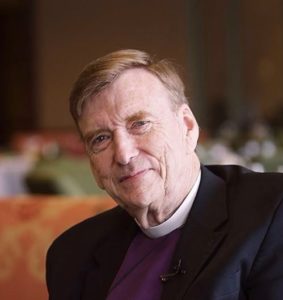

3
2
Colleagues, The Archives Team is celebrating the 40th anniversary of the HDP’s during the October Sojourn. We are short of photos of several of the projects and call on any of you to search your files for any of the following:
VOGAR INYAN WAKAGAPI DELTA PACE LORNE DE L’ACADIE IVY CITY CANO NEGRO IJEDE KREUZBERG OST TERMINIE SHANTUMBU NAM WAI HAI OU SUDTONGGAN KWANGYUNG IL
OYUBARI.
In particular, we would like any photos with signs identifying the project. Please scan the photos and email to f.knutson(a)earthlink.net
❤ Frank
10
10
Do not open a link on an email from me. I do not send links unless the
recipient knows it is coming. I also do not want to unsubscribe from these
listserves. Oy vat! What next!!!
1
0
7/13/17, Felton: A New Template for Religion: A Conversation with Michael Morwood: Part 1; Spong revisited
by Ellie Stock via OE 13 Jul '17
by Ellie Stock via OE 13 Jul '17
13 Jul '17
<div id="AOLMsgPart_2_b7f1910b-3551-4a26-9aba-87f1be2ce68e">
<style type="text/css" scoped="">#AOLMsgPart_2_b7f1910b-3551-4a26-9aba-87f1be2ce68e td{color: black;} .aolReplacedBody #aolmail_outlook a{ padding:0; } .aolReplacedBody { width:100% !important; } .aolReplacedBody { -webkit-text-size-adjust:none; } .aolReplacedBody { margin:0; padding:0; } .aolReplacedBody img{ border:none; font-size:14px; font-weight:bold; height:auto; line-height:100%; outline:none; text-decoration:none; text-transform:capitalize; } .aolReplacedBody #aolmail_backgroundTable{ height:100% !important; margin:0; padding:0; width:100% !important; } .aolReplacedBody ,.aolReplacedBody #aolmail_backgroundTable{ background-color:#FAFAFA; } .aolReplacedBody #aolmail_templateContainer{ border:1px solid #4487cf; } .aolReplacedBody h1,.aolReplacedBody .aolmail_h1{ color:#202020; display:block; font-family:Arial; font-size:34px; font-weight:bold; line-height:100%; margin-top:0; margin-right:0; margin-bottom:10px; margin-left:0; text-align:left; } .aolReplacedBody h2,.aolReplacedBody .aolmail_h2{ color:#202020; display:block; font-family:Arial; font-size:30px; font-weight:bold; line-height:100%; margin-top:0; margin-right:0; margin-bottom:10px; margin-left:0; text-align:left; } .aolReplacedBody h3,.aolReplacedBody .aolmail_h3{ color:#202020; display:block; font-family:Arial; font-size:26px; font-weight:bold; line-height:100%; margin-top:0; margin-right:0; margin-bottom:10px; margin-left:0; text-align:left; } .aolReplacedBody h4,.aolReplacedBody .aolmail_h4{ color:#202020; display:block; font-family:Arial; font-size:22px; font-weight:bold; line-height:100%; margin-top:0; margin-right:0; margin-bottom:10px; margin-left:0; text-align:left; } .aolReplacedBody h5,.aolReplacedBody .aolmail_h5{ color:#202020; display:block; font-family:Arial; font-size:12px; font-weight:bold; line-height:100%; margin-top:15px; margin-right:0; margin-bottom:10px; margin-left:0; text-align:left; text-transform:uppercase; } .aolReplacedBody #aolmail_templatePreheader{ background-color:#ffffff; } .aolReplacedBody .aolmail_preheaderContent div{ color:#505050; font-family:Arial; font-size:10px; line-height:100%; text-align:left; } .aolReplacedBody .aolmail_preheaderContent div a:link,.aolReplacedBody .aolmail_preheaderContent div a:visited{ color:#336699; font-weight:normal; text-decoration:underline; } .aolReplacedBody #aolmail_templateHeader{ background-color:#D8E2EA; border-bottom:0; } .aolReplacedBody .aolmail_headerContent{ color:#202020; font-family:Arial; font-size:34px; font-weight:bold; line-height:100%; padding:0; text-align:center; vertical-align:middle; } .aolReplacedBody .aolmail_headerContent a:link,.aolReplacedBody .aolmail_headerContent a:visited{ color:#336699; font-weight:normal; text-decoration:underline; } .aolReplacedBody #aolmail_headerImage{ height:auto; max-width:600px !important; } .aolReplacedBody #aolmail_templateContainer,.aolReplacedBody .aolmail_bodyContent{ background-color:#FDFDFD; } .aolReplacedBody .aolmail_bodyContent div{ color:#000000; font-family:Georgia; font-size:16px; line-height:150%; text-align:left; } .aolReplacedBody .aolmail_bodyContent div a:link,.aolReplacedBody .aolmail_bodyContent div a:visited{ color:#336699; font-weight:normal; text-decoration:underline; } .aolReplacedBody .aolmail_bodyContent img{ display:inline; height:auto; } .aolReplacedBody #aolmail_templateFooter{ background-color:#FDFDFD; border-top:0; } .aolReplacedBody .aolmail_footerContent div{ color:#707070; font-family:Arial; font-size:12px; line-height:125%; text-align:left; } .aolReplacedBody .aolmail_footerContent div a:link,.aolReplacedBody .aolmail_footerContent div a:visited{ color:#336699; font-weight:normal; text-decoration:underline; } .aolReplacedBody .aolmail_footerContent img{ display:inline; } .aolReplacedBody #aolmail_social{ background-color:#FAFAFA; border:0; } .aolReplacedBody #aolmail_social div{ text-align:center; } .aolReplacedBody #aolmail_utility{ background-color:#FDFDFD; border:1px dashed #d3d3d3; } .aolReplacedBody #aolmail_utility div{ text-align:center; } .aolReplacedBody #aolmail_monkeyRewards img{ max-width:190px; } .aolReplacedBody ,.aolReplacedBody #aolmail_backgroundTable{ background-color:#ffffff; } .aolReplacedBody h1,.aolReplacedBody .aolmail_h1{ color:#003d4a; font-family:Georgia; font-weight:normal; } .aolReplacedBody h2,.aolReplacedBody .aolmail_h2{ color:#4487cf; font-family:Georgia; font-weight:normal; } .aolReplacedBody h3,.aolReplacedBody .aolmail_h3{ color:#4487cf; font-family:Georgia; font-weight:normal; } .aolReplacedBody h4,.aolReplacedBody .aolmail_h4{ color:#4487cf; font-family:Georgia; font-weight:normal; } .aolReplacedBody .aolmail_preheaderContent div a:link,.aolReplacedBody .aolmail_preheaderContent div a:visited{ color:#4487cf; text-decoration:none; } .aolReplacedBody .aolmail_headerNavigation div a:link,.aolReplacedBody .aolmail_headerNavigation div a:visited{ color:#4487cf; text-decoration:none; } .aolReplacedBody .aolmail_headerContent a:link,.aolReplacedBody .aolmail_headerContent a:visited{ text-decoration:none; } .aolReplacedBody #aolmail_templateContainer,.aolReplacedBody .aolmail_bodyContent{ background-color:#ffffff; } .aolReplacedBody .aolmail_bodyContent div a:link,.aolReplacedBody .aolmail_bodyContent div a:visited{ color:#4487cf; }</style><div style="-webkit-text-size-adjust: none;margin: 0;padding: 0;background-color: #ffffff;width: 100% !important;" class="aolReplacedBody">
<center>
<table border="0" cellpadding="0" cellspacing="0" height="100%" width="100%" id="aolmail_backgroundTable" style="margin: 0;padding: 0;background-color: #ffffff;height: 100% !important;width: 100% !important;">
<tbody><tr>
<td align="center" valign="top">
<table border="0" cellpadding="0" cellspacing="0" width="600" id="aolmail_templatePreheader" style="background-color: #ffffff;">
<tbody><tr>
<td valign="top" class="aolmail_preheaderContent">
<table border="0" cellpadding="0" cellspacing="0" width="100%">
<tbody><tr>
<td valign="top"><div style="color: #505050;font-family: Arial;font-size: 10px;line-height: 100%;text-align: left;">
</div></td>
<td valign="top" width="190">
<div style="color: #505050;font-family: Arial;font-size: 10px;line-height: 100%;text-align: left;"><a target="_blank" style="color: #4487cf;font-weight: normal;text-decoration: none;" rel="noopener noreferrer" href="http://johnshelbyspong.us2.list-manage.com/track/click?u=b51b9cf441b059bb23…"><img style="border: none;font-size: 14px;font-weight: bold;height: auto;line-height: 100%;outline: none;text-decoration: none;text-transform: capitalize;" src="http://gallery.mailchimp.com/b51b9cf441b059bb232418480/images/print.png"></a></div>
</td>
</tr>
</tbody></table>
</td>
</tr>
</tbody></table>
<table border="0" cellpadding="0" cellspacing="0" width="600" id="aolmail_templateContainer" style="border: 1px solid #4487cf;background-color: #ffffff;">
<tbody><tr>
<td align="center" valign="top">
<table border="0" cellpadding="0" cellspacing="0" width="600" id="aolmail_templateHeader" style="background-color: #D8E2EA;border-bottom: 0;">
<tbody><tr>
<td class="aolmail_headerContent" style="color: #202020;font-family: Arial;font-size: 34px;font-weight: bold;line-height: 100%;padding: 0;text-align: center;vertical-align: middle;">
<img alt="" border="0" style="margin: 0;padding: 0;max-width: 600px;border: none;font-size: 14px;font-weight: bold;height: auto;line-height: 100%;outline: none;text-decoration: none;text-transform: capitalize;" src="http://gallery.mailchimp.com/b51b9cf441b059bb232418480/images/newsletter_he…">
</td>
</tr>
<tr>
<td valign="top" class="aolmail_headerNavigation">
<h5 style="color: #202020;display: block;font-family: Arial;font-size: 12px;font-weight: bold;line-height: 100%;margin-top: 15px;margin-right: 0;margin-bottom: 10px;margin-left: 0;text-align: left;text-transform: uppercase;"> <a style="color: #4487cf;text-decoration: none;" target="_blank" rel="noopener noreferrer" href="http://johnshelbyspong.us2.list-manage.com/track/click?u=b51b9cf441b059bb23…">Homepage</a> <a style="color: #4487cf;text-decoration: none;" target="_blank" rel="noopener noreferrer" href="http://johnshelbyspong.us2.list-manage.com/track/click?u=b51b9cf441b059bb23…">My Profile</a> <a style="color: #4487cf;text-decoration: none;" target="_blank" rel="noopener noreferrer" href="http://johnshelbyspong.us2.list-manage.com/track/click?u=b51b9cf441b059bb23…">Essay Archive</a> <a style="color: #4487cf;text-decoration: none;" target="_blank" rel="noopener noreferrer" href="http://johnshelbyspong.us2.list-manage.com/track/click?u=b51b9cf441b059bb23…">Message Boards</a> <a style="color: #4487cf;text-decoration: none;" target="_blank" rel="noopener noreferrer" href="http://johnshelbyspong.us2.list-manage.com/track/click?u=b51b9cf441b059bb23…">Calendar</a></h5></td>
</tr>
</tbody></table>
</td>
</tr>
<tr>
<td align="center" valign="top">
<table border="0" cellpadding="0" cellspacing="0" width="600" id="aolmail_templateBody">
<tbody><tr>
<td valign="top" class="aolmail_bodyContent" style="background-color: #ffffff;">
<table border="0" cellpadding="20" cellspacing="0" width="100%">
<tbody><tr>
<td valign="top">
<div style="color: #000000;font-family: Georgia;font-size: 16px;line-height: 150%;text-align: left;"><h2 class="aolmail_null" style="color: #4487cf;display: block;font-family: Georgia;font-size: 30px;font-weight: normal;line-height: 100%;margin-top: 0;margin-right: 0;margin-bottom: 10px;margin-left: 0;text-align: left;"><span style="color:#000000">A New Template for Religion:
A Conversation with Michael Morwood
Part 1</span></h2>
<h3 class="aolmail_null" style="color: #4487cf;display: block;font-family: Georgia;font-size: 26px;font-weight: normal;line-height: 100%;margin-top: 0;margin-right: 0;margin-bottom: 10px;margin-left: 0;text-align: left;">By Rev. David Felten</h3>
<p><img height="154" style="border: 0px;width: 125px;height: 154px;margin: 0px 10px 0px 0px;float: left;font-size: 14px;font-weight: bold;line-height: 100%;outline: none;text-decoration: none;text-transform: capitalize;display: inline;" width="125" src="https://gallery.mailchimp.com/b51b9cf441b059bb232418480/images/117a0944-fe1…">Most 21st century Christians have grown up indoctrinated by a conventional religious experience that offers the assurance of having all the answers tied up in a little bow, just for the believing. Many still find this to be comforting, but a growing number are antsy. On the verge of becoming what Bishop Spong calls “church alumni/ae,” they know too much. Archaeology, astrophysics, and any number of other scientific disciplines continue to make discoveries that compel us to re-evaluate our true place in the universe – and we are right to be feeling increasingly humble.
So, many are feeling stuck. Even as deeply religious questions of origins and purpose continue to persist, the Bible seems to be more of a hindrance than a help. Rational thinkers know that the Bible and much of what people consider to be “core doctrines” of Christianity reflect the fanciful notions of a pre-scientific mindset. Cosmologists have shown without a shadow-of-a-doubt that the ancient notion of a three-tiered earth-centric cosmos is just a quaint throw-back to the fertile imaginations of primitive thinkers.</p>
<p>The question is, can religion as a whole adapt to a new template? A new reality? A brush with mystery? Can religion reflect modern scientific discoveries, honor the mysteries of the universe, and dump the requirement of maintaining allegiance to primitive claims and beliefs?</p>
<p>As we face this latest decisive moment in our collective human experience, champions of just such a new model are emerging – and one of the most articulate is Australian author <a style="color: #4487cf;font-weight: normal;text-decoration: underline;" target="_blank" rel="noopener noreferrer" href="http://johnshelbyspong.us2.list-manage.com/track/click?u=b51b9cf441b059bb23…">Michael Morwood</a>.</p>
<p>With over 40 years’ experience as a sought-after retreat leader and educator, Morwood is well known around the world. Bishop John Shelby Spong writes: <em>“Michael Morwood…is raising the right and obvious questions that all Christians must face. He provides fresh and perceptive possibilities for a modern and relevant faith.”</em> With <a style="color: #4487cf;font-weight: normal;text-decoration: underline;" target="_blank" rel="noopener noreferrer" href="http://johnshelbyspong.us2.list-manage.com/track/click?u=b51b9cf441b059bb23…">a dozen books to his name</a> (<a style="color: #4487cf;font-weight: normal;text-decoration: underline;" target="_blank" rel="noopener noreferrer" href="http://johnshelbyspong.us2.list-manage.com/track/click?u=b51b9cf441b059bb23…">two of which were banned</a> before he resigned from the Catholic priesthood), Morwood brings an extensive background in spirituality to what he sees as the urgent need to reshape Christian thinking for a new millennium.</p>
<p>What follows in interview form is the first of several columns inspired by a presentation Morwood offered at the <a style="color: #4487cf;font-weight: normal;text-decoration: underline;" target="_blank" rel="noopener noreferrer" href="http://johnshelbyspong.us2.list-manage.com/track/click?u=b51b9cf441b059bb23…">Common Dreams Conference</a> in Brisbane, Queensland, in 2016. In it, he offers a re-visioning of who Jesus was, new perspectives on prayer and worship (from a non-theistic perspective), and thoughts on whether our conventional ideas of religion have any real value anymore.</p>
<p><strong>Felten:</strong> <em>What are some of the new discoveries that fire your imagination in formulating a new template for religion? </em></p>
<p><strong>Morwood:</strong> In February of 2016, Australian scientists, using a radio telescope at the <a style="color: #4487cf;font-weight: normal;text-decoration: underline;" target="_blank" rel="noopener noreferrer" href="http://johnshelbyspong.us2.list-manage.com/track/click?u=b51b9cf441b059bb23…">Parkes Observatory</a> in western New South Wales discovered <a style="color: #4487cf;font-weight: normal;text-decoration: underline;" target="_blank" rel="noopener noreferrer" href="http://johnshelbyspong.us2.list-manage.com/track/click?u=b51b9cf441b059bb23…">a cluster of over 800 hidden galaxies behind the Milky Way</a> – a third of which had never been seen before. The report noted that our galaxy is being drawn to this cluster at a speed of two million kilometers an hour. Two million kilometers an hour!! Hold that in mind for a moment.</p>
<p>Scientists estimate that most galaxies contain about 100 billion stars – and how
many galaxies in our universe? The current estimate is between 100 and 200
billion. That’s at least 100 billion galaxies each with 100 billion stars all hurtling through space at unimaginable speeds.</p>
<p>Let’s also hold in mind that galaxies like the Milky Way probably have about 17 billion earth size planets.</p>
<p><strong>Felten:</strong> <em>I’m feeling pretty humble.</em></p>
<p><strong>Morwood:</strong> Well, in the grand schema of galaxies, stars and planets, planet Earth rates in comparison with it all as little more than what a speck of dust is to hundreds of millions of planets. A speck of dust.</p>
<p>If this speck of dust and everything on it were to disappear, the rest of the universe would not blink.</p>
<p><strong>Felten:</strong> <em>That seems dark…</em></p>
<p><strong>Morwood:</strong> Maybe not as dark as the fact that all the known matter in the universe – all those galaxies, stars and planets – make up less than 6% of the universe’s composition. “<a style="color: #4487cf;font-weight: normal;text-decoration: underline;" target="_blank" rel="noopener noreferrer" href="http://johnshelbyspong.us2.list-manage1.com/track/click?u=b51b9cf441b059bb2…">Dark matter</a>” and “<a style="color: #4487cf;font-weight: normal;text-decoration: underline;" target="_blank" rel="noopener noreferrer" href="http://johnshelbyspong.us2.list-manage.com/track/click?u=b51b9cf441b059bb23…">dark energy</a>” make up the other 94%. These realities are called “dark” because scientists can deduce that they exist, but they can’t detect them.</p>
<p><strong>Felten:</strong> <em>So, here we are on this speck of dust surrounded by the mystery of indefinable “dark” matter and energy – where does that leave our ideas of “God”?</em></p>
<p><strong>Morwood:</strong> Well, it’s not only any understanding of “God” that becomes problematic within this scientific data. Christians now have quite a list of topics that have become problematic against such a background: revelation, Jesus, salvation, worship, prayer, sacraments. At the very heart of the “Christ” religion now looms the problematic question– how can we justify elevating a Jewish prophet to becoming the Christian notion of “the Christ”, the triumphant cosmic figure way out in front of us, God-himself, leading creation to its glorious fulfillment? In the light of what we know today it seems too grandiose, too far ahead of ourselves in religious thinking to keep maintaining that the “Christ” is the be all and end all of the universe’s existence.</p>
<p><strong>Felten:</strong> <em>What’s the likelihood that the institutional church will be able to adapt to these new realities?</em></p>
<p><strong>Morwood:</strong> Unlikely. All institutional Christian understanding of these supposedly religious essentials were shaped in a worldview that was pre-scientific, ignorant, limited, and now extremely outdated. Religion based on that worldview is like trying to use a floppy disc in your new Mac.</p>
<p><strong>Felten:</strong> <em>OK, then considering your background in adult faith formation, what hope can you offer those of us who are trying to upgrade our theological or spiritual Operating Systems? </em></p>
<p><strong>Morwood:</strong> In any process of adult faith formation, I think there are three key questions that need to be raised and answered for each concept being considered:</p>
<p>1. What are you asking me to imagine?
2. Where did that image come from?
3. How does that image or picture of reality fit with what I know of reality today?</p>
<p><strong>Felten:</strong> <em>OK, Let’s start off with something easy. How about the idea of “God”? </em></p>
<p><strong>Morwood:</strong> If you’re asking me to imagine “God,” I’d have to simply say that I don’t know what “God” is. No one does, really. I’m one of many people who don’t even like to use the word “God” anymore because it is so misleading and so tied to outdated ideas about the universe and earth’s place in the universe.</p>
<p>Our understandings from scripture, creeds, doctrine and liturgy is of a personal being essentially located “somewhere else.” The prayers we were taught and the prayers commonly used in Christian liturgy presume the notion of a heavenly deity who demands to be worshipped, who listens in, who sometimes responds, and who is in control of everything that happens. These ideas are not only cemented into our imaginations, but as a picture of reality, are really beyond questioning. But those floppy disc theologies just don’t fit with the operating system we have on hand today.</p>
<p>Our pointers to this greatest of mysteries need to be expanded beyond the biblical and doctrinal and liturgical and prayerful notions of a personal deity. Our
pointers may best be found in notions such as “ground of all being,” or “source
and sustainer of all that exists,” and in universal realities such as energy and
consciousness. In other words, we need to take seriously that this mystery is
indeed everywhere.</p>
<p>The mind-blowing, ever-expanding knowledge we have about the age and size of this universe compels us to have a mind-blowing and expansive notion of whatever we think “God” might be. At the very least we should acknowledge that we are not dealing with a reality that can disconnect from our tiny piece of the cosmos, intervene from somewhere above us, and play mind-games with the human species.</p>
<p><strong>Felten:</strong> <em>What kind of precedent do we have for this kind of “reboot” in our tradition? </em></p>
<p><strong>Morwood:</strong> There’s a long-established religious belief that mystery is everywhere. Today’s scientific discoveries are pointers that re-enforce ideas expressed as long ago as the 4th century. Gregory of Nyssa wrote:</p>
<blockquote>
<p><strong>“For when one considers the universe, can anyone be so simple-minded as not to believe that the Divine is present in everything, pervading,
embracing, and penetrating it?</strong></p>
</blockquote>
<p>As you know, a significant feature in Christian tradition has been a sharp divide between the Mystics and what we’ll call “institutional” theologians. On the one hand you have the Mystics who, in keeping with the above quote, speak the language of presence, relationship and intimacy.</p>
<p>On the other hand, we’ve had the institutional theologians focusing on disconnection and the need for “someone” with whom we can reconnect. Turning that “someone” into a God and seeking forgiveness for whatever human fault caused the separation in the first place has become an obsession – and reconnection and renewed friendship with a heavenly God is the only achievement worth pursuing.</p>
<p>The time for such theological thinking is over. It makes no sense any more. It’s
time to state this publicly, clearly and unapologetically. It is time to stop
defending nonsensical images and to move on to the challenges that face us as
we wrestle with the pointers we have today – pointers to a template that reflect the greatest of all mysteries.</p>
<p>~ Rev. David Felten with Michael Morwood
Read online <a target="_blank" style="color: #4487cf;font-weight: normal;text-decoration: underline;" rel="noopener noreferrer" href="http://johnshelbyspong.us2.list-manage1.com/track/click?u=b51b9cf441b059bb2…">here</a></p>
<p><strong>In the next installment of “A New Template for Religion,” Felten will ask Morwood to apply his three questions to the concepts of revelation, Jesus, and being human. </strong></p>
<p>Be sure to visit Michael Morwood’s website by clicking <a style="color: #4487cf;font-weight: normal;text-decoration: underline;" target="_blank" rel="noopener noreferrer" href="http://johnshelbyspong.us2.list-manage.com/track/click?u=b51b9cf441b059bb23…">HERE</a>.</p>
<p>David Felten is a full-time pastor at <a style="color: #4487cf;font-weight: normal;text-decoration: underline;" target="_blank" rel="noopener noreferrer" href="http://johnshelbyspong.us2.list-manage.com/track/click?u=b51b9cf441b059bb23…">The Fountains</a>, a United Methodist Church in Fountain Hills, Arizona. David and fellow United Methodist Pastor, Jeff Procter-Murphy, are the creators of the DVD-based discussion series for Progressive Christians, “<a style="color: #4487cf;font-weight: normal;text-decoration: underline;" target="_blank" rel="noopener noreferrer" href="http://johnshelbyspong.us2.list-manage.com/track/click?u=b51b9cf441b059bb23…">Living the Questions</a>”.</p>
<p>A co-founder of the <a style="color: #4487cf;font-weight: normal;text-decoration: underline;" target="_blank" rel="noopener noreferrer" href="http://johnshelbyspong.us2.list-manage.com/track/click?u=b51b9cf441b059bb23…">Arizona Foundation for Contemporary Theology</a> and also a founding member of <a style="color: #4487cf;font-weight: normal;text-decoration: underline;" target="_blank" rel="noopener noreferrer" href="http://johnshelbyspong.us2.list-manage.com/track/click?u=b51b9cf441b059bb23…">No Longer Silent: Clergy for Justice</a>, David is an outspoken voice for LGBTQ rights both in the church and in the community at large. David is active in the <a style="color: #4487cf;font-weight: normal;text-decoration: underline;" target="_blank" rel="noopener noreferrer" href="http://johnshelbyspong.us2.list-manage1.com/track/click?u=b51b9cf441b059bb2…">Desert Southwest Conference of the United Methodist Church</a> and tries to stay connected to his roots as a musician. You’ll find him playing saxophones in a variety of settings, including appearances with the <a style="color: #4487cf;font-weight: normal;text-decoration: underline;" target="_blank" rel="noopener noreferrer" href="http://johnshelbyspong.us2.list-manage.com/track/click?u=b51b9cf441b059bb23…">Fountain Hills Saxophone Quartet</a>.</p>
<p>David and his wife Laura, an administrator for a large Arizona public school district, live in Phoenix with their three often adorable children.</p>
</div>
</td>
</tr>
</tbody></table>
<table border="0" cellpadding="20" cellspacing="0" width="100%">
<tbody><tr>
<td valign="top">
<div style="color: #000000;font-family: Georgia;font-size: 16px;line-height: 150%;text-align: left;"><hr>
<h2 style="color: #4487cf;display: block;font-family: Georgia;font-size: 30px;font-weight: normal;line-height: 100%;margin-top: 0;margin-right: 0;margin-bottom: 10px;margin-left: 0;text-align: left;">Question & Answer</h2>
<p><span style="font-size:18px">An Italian Philosopher from Italy, writes:</span></p>
<h4 style="color: #4487cf;display: block;font-family: Georgia;font-size: 22px;font-weight: normal;line-height: 100%;margin-top: 0;margin-right: 0;margin-bottom: 10px;margin-left: 0;text-align: left;">
Question:</h4>
<p>1. You are a theologian, and more precisely a scholar of spirituality who has reintroduced to Western audiences the major insights of Medieval mystics, insisting on their practicability today. Yet in this book you do not use the word “God” even once? Why?</p>
<p>and,</p>
<p>2. I was especially struck, in this book, by your deep yet free relation with the tradition, with the wisdom of the past. What are the difficulties that people have, in your opinion, for understanding this balance? How much do you think this vision is advancing in the world today?</p>
<h4 style="color: #4487cf;display: block;font-family: Georgia;font-size: 22px;font-weight: normal;line-height: 100%;margin-top: 0;margin-right: 0;margin-bottom: 10px;margin-left: 0;text-align: left;">Answer: <span style="font-size:20px">By Matthew Fox</span></h4>
<p>Dear Reader,<span style="color:#FFFFFF">...<img height="109" style="border: 0px;width: 115px;height: 109px;margin: 0px 10px 0px 0px;float: left;font-size: 14px;font-weight: bold;line-height: 100%;outline: none;text-decoration: none;text-transform: capitalize;display: inline;" width="115" src="https://gallery.mailchimp.com/b51b9cf441b059bb232418480/images/1383a9f4-6b3…"></span></p>
<p>These questions were put to me by an Italian philosopher on the<span style="color:#FFFFFF">.</span>occasion of the publication of my book on education, <a style="color: #4487cf;font-weight: normal;text-decoration: underline;" target="_blank" rel="noopener noreferrer" href="http://johnshelbyspong.us2.list-manage.com/track/click?u=b51b9cf441b059bb23…"><em>The A.W.E. Project: Reinventing Education, Reinventing the Human, into Italian</em></a>. I felt they were deserving of sharing with an American audience as well.</p>
<p>1. Well, not all medieval theologians were obsessed with God language either after all. Meister Eckhart said, “I pray God to rid me of God” and Thomas Aquinas says every creature in the universe is another name for God—and no creature is. And Francis of Assisi’s great poem on Brother Earth and Sister Moon never mentions God or Jesus' name once! The mystical path includes <em>not knowing</em> and <em>unknowing</em> and letting God be God in whatever form he/she is rising to present the Godself.</p>
<p>Furthermore I wrote this book with public school educators in mind and in the US God talk is not encouraged in our public schools. As a spiritual theologian I am more interested in our <em>experiences</em> of God than our invoking that name as such (didn’t Jesus say not all who invoke the words “lord, lord” will enter the kingdom?).</p>
<p>I think the experiences of living out the values inherent in the 10 C’s presented in this book constitute our experience of the Divine and our putting our spirituality into practice. (The 10 C’s that lie at the heart of my agenda for reinventing education are the following: Cosmology/Ecology; Contemplation; Chaos; Creativity; Community; Compassion; Critical Thinking; Character Development; Courage; Ceremony, Celebration, Ritual.)</p>
<p>And that is the point. To <em>do compassion</em> and <em>justice</em>, not to talk about them. The term “awe” summarizes nicely our deepest experiences of the Divine, as Rabbi Heschel taught. Awe is the door for Wisdom and Wisdom is one (of many) names for the Divine, isn’t it? And education needs to move beyond mere knowledge to wisdom if humans are to survive and the planet as we know it is to survive.</p>
<p>2. I think the biggest obstacle is ignorance. If for example people do not know that there is and has been a creation spirituality tradition that is rich and foundational in our Western consciousness, a tradition of Original Blessing as distinct from Original Sin and guilt, then we are set up for pessimism and lack of creativity. We fall into Patriarchy and what feminist poet Adrienne Rich calls its “fatalistic self-hatred.” If we don’t know this tradition we lack a hermeneutic for interpreting our greatest thinkers and artists. Education becomes education for a society based on a secular version of original sin which we now call consumer capitalism. In such a scenario competition and greed triumph rather than joy and truth-seeking. Beauty loses its rightful place as an inherited, original, blessing, into which we are all born.</p>
<p>I think the desperation of our times is calling forth wisdom from the young and from many who recognize that our current, modern way of looking at the world, our lack of a sense of the sacred, is not working and is not sustainable. Education needs a thorough reinventing.</p>
<p>~ Matthew Fox</p>
<p>Read and Share Online <a target="_blank" style="color: #4487cf;font-weight: normal;text-decoration: underline;" rel="noopener noreferrer" href="http://johnshelbyspong.us2.list-manage.com/track/click?u=b51b9cf441b059bb23…">Here</a>
<strong>About the Author</strong></p>
<p>Matthew Fox holds a doctorate in spirituality from the Institut Catholique de Paris and has authored 32 books on spirituality and contemporary culture that have been translated into 60 languages. Fox has devoted 45 years to developing and teaching the tradition of <a style="color: #4487cf;font-weight: normal;text-decoration: underline;" target="_blank" rel="noopener noreferrer" href="http://johnshelbyspong.us2.list-manage.com/track/click?u=b51b9cf441b059bb23…">Creation Spirituality </a>and in doing so has reinvented forms of education and worship. His work is inclusive of today’s science and world spiritual traditions and has awakened millions to the much neglected earth-based mystical tradition of the West. He has helped to rediscover Hildegard of Bingen, Meister Eckhart, Thomas Aquinas. Among his books are <a style="color: #4487cf;font-weight: normal;text-decoration: underline;" target="_blank" rel="noopener noreferrer" href="http://johnshelbyspong.us2.list-manage.com/track/click?u=b51b9cf441b059bb23…"><em>Sins of the Spirit, Blessings of the FleshTransforming Evil in Soul and Society</em></a>, <a style="color: #4487cf;font-weight: normal;text-decoration: underline;" target="_blank" rel="noopener noreferrer" href="http://johnshelbyspong.us2.list-manage.com/track/click?u=b51b9cf441b059bb23…"><em>The Pope’s War: Why Ratzinger’s Secret Crusade Has Imperiled the Church and How It Can Be Saved</em>, </a><a style="color: #4487cf;font-weight: normal;text-decoration: underline;" target="_blank" rel="noopener noreferrer" href="http://johnshelbyspong.us2.list-manage.com/track/click?u=b51b9cf441b059bb23…"><em>Confessions: The Making of a Postdenominational Priest</em> and </a><a style="color: #4487cf;font-weight: normal;text-decoration: underline;" target="_blank" rel="noopener noreferrer" href="http://johnshelbyspong.us2.list-manage2.com/track/click?u=b51b9cf441b059bb2…"><em>The A.W.E. Project: Reinventing Education, Reinventing the Human</em></a>
A new school, adopting the pedagogy Fox created and practiced for over 35 years, is opening in Boulder, Colorado this September. Called the Fox Institute for Creation Spirituality it is being run by graduates of his doctoral program and will offer MA, D Min and Doctor of Spirituality degrees. See <a id="aolmail_m_-1629594797181833715yui_3_16_0_ym19_1_1499788556168_140971" rel="noopener noreferrer" shape="rect" target="_blank" style="color: #4487cf;font-weight: normal;text-decoration: underline;" href="http://johnshelbyspong.us2.list-manage.com/track/click?u=b51b9cf441b059bb23…">www.foxinstitute-cs.org</a></p>
<p style="text-align: center;">____________________________________________________</p>
<h2 style="text-align: center;color: #4487cf;display: block;font-family: Georgia;font-size: 30px;font-weight: normal;line-height: 100%;margin-top: 0;margin-right: 0;margin-bottom: 10px;margin-left: 0;"><strong>Bishop John Shelby Spong Revisited</strong></h2>
<p style="text-align: center;"><strong>"The Passion of the Christ"
Mel Gibson's Film and Biblical Scholarship – Part I</strong></p>
<p style="text-align: center;"> </p>
<p><img height="121" style="border: 0px;width: 115px;height: 121px;margin: 0px 10px 0px 0px;float: left;font-size: 14px;font-weight: bold;line-height: 100%;outline: none;text-decoration: none;text-transform: capitalize;display: inline;" width="115" src="https://gallery.mailchimp.com/b51b9cf441b059bb232418480/images/84fbd945-363…">Mel Gibson’s motion picture, “The Passion of the Christ,” goes public on Ash Wednesday, February 25, the day this column comes out. Then people can see for themselves a film that has been hyped by advance showings to evangelical clergy and conservative Catholics, including Pope John Paul II. It has been praised by Protestant fundamentalists, who count on it to bring Christian renewal to the people of the United States and who see it as inspired by the Holy Spirit. It is, they say, “the tool of conversion,” that follows “faithfully the texts of the gospels.” One evangelical church in Kansas has even erected tents, across from the theater, staffing them with “counselors,” to bring about the full conversion of viewers following the showing of this film.
It has been praised by Protestant fundamentalists, who count on it to bring Christian renewal to the people of the United States and who see it as inspired by the Holy Spirit. It is, they say, "the tool of conversion," that follows "faithfully the texts of the gospels." One evangelical church in Kansas has even erected tents, across from the theater, staffing them with "counselors," to bring about the full conversion of viewers following the showing of this film.</p>
<p>At the same time, "The Passion of the Christ" has been condemned by Christian scholars and Jewish leaders as anti-Semitic in nature and, therefore, a threat to reignite the flames of prejudice and persecution that marked the darkest days in Jewish-Christian relations. A writer in the Jerusalem Post, Shmuley Boteach, has gone so far as to refer to Gibson as a "kooky fundamentalist, who seems intent on reversing the reforms of Vatican II, which officially absolved the Jews of deicide, and convincing the world that, indeed, the Jews did it." Boteach identifies Gibson as a conservative Catholic, who has never disavowed his father's statement that "The Second Vatican Council was a plot, put out by the Jews" and that the Holocaust could not have happened because, "there weren't even that many Jews in all of Europe." This film will create an enormous debate, thus insuring its financial success.</p>
<p>I seek to raise two primary questions: 1. How accurately does this film follow the biblical text in telling the story of the crucifixion? 2. What historicity can we ascribe to the gospels themselves in regard to the crucifixion? This second question Gibson never faces since his brand of conservative Catholicism has never raised the issue. Scholars have, however, and it is time to address it publicly. Only then can we assess the claim made to defend this film against the charge of anti-Semitism. Simply following the biblical narrative may not be enough for exoneration.</p>
<p>I begin by noting the fact that Gibson's "The Passion of the Christ" includes a number of details that are not in the biblical narrative. They derive rather from a centuries-old Catholic piety. There is nothing wrong with using material out of an ancient worship tradition but one should not claim biblical authority for this material. For example, Jesus is portrayed in this film as stumbling three times on his way to Golgotha. There is no evidence to support this in the gospels but it is a well-known part of the traditional Catholic liturgy called "The Stations of the Cross." This film also introduces a fictitious character named St. Veronica who is said, at Station Number Six, to have wiped Jesus' bloodied face with her handkerchief. Veronica, a creation of later piety, never appears in any biblical narrative.</p>
<p>Next, the Mother of Jesus is highly visible and quite central to Gibson's portrayal of the crucifixion. That is not true to the gospels and expresses a confusion born out of later developing Catholic devotional practices. The only time Mary is present in any biblical account of the crucifixion comes in John, the last gospel to be written, where she makes only a cameo appearance at the cross. Even John does not then include her in his resurrection narrative. Yet, in this film, Mel Gibson has Mary say to the dying Jesus, "Let me die with you," and then she cradles Jesus' deceased body. That is a famous portrait in Catholic art, painted many times and called the Pieta, but there is not a shred of biblical evidence to support it.</p>
<p>As a matter of fact Mary, the mother of Jesus, hardly appears in the gospel tradition outside the birth narratives of Matthew and Luke. She is never referred to or mentioned in the writings of Paul (50-64 CE). She makes only two appearances in Mark, the first Gospel to be written (70-75 CE) and both of them are pejorative. In Mark 3:31-35, Jesus' mother and his brothers, none of whom are named, come to where Jesus is and call for him to come out to them. An earlier verse in Mark (3:21) tells us why. When his family heard about his activities, "they went out to seize him, for the people were saying, 'he is beside himself.'" "Beside himself" is an ancient way of saying "He is out of his mind." Jesus had become a family embarrassment. The scribes, according the next verse in Mark (3:22) were saying that he "is possessed by Beelzebul," who was called 'the Prince of demons." Jesus responds to his family, according to this Marcan reference, by denying his relationship with his mother and his brothers, "Who are my mother and my brothers?" Then, answering his own question, he looks around at those seated near him and says, "Here are my mother and my brothers! Whoever does the will of God, is my mother and sister and brother."</p>
<p>In the second Markan reference (6:1-6), Jesus returns to Nazareth and begins to teach in the synagogue to the astonishment of the townspeople. They respond derisively as if to say, "Who does this man think he is?" Then they go on to identify him with these words, "Is not this the carpenter, the son of Mary and brother of James, Joses, Judas and Simon, and are not his sisters here with us?" and they took offense at him.</p>
<p>It is interesting to note that Mark, in this passage, has this critical crowd identify Jesus as "the son of Mary," as well as describing him as "the carpenter." Both of these references are quite negative. To call a Jewish man the son of a particular woman was an insult since it cast public doubts upon his paternity. To call him a carpenter identified him as a lower class laborer.</p>
<p>Some ten to fifteen years later, when Matthew wrote his gospel (80-85), he copied almost 90 per cent of Mark into his story. It is interesting to note how Matthew changed Mark's negative wording (compare Mt. 12:46-50 and 13:53-58 with Mk. 3:31-35 and 6:1-6). Mark's words were so clearly embarrassing, that in Matthew's version, the slander is removed when Joseph, Jesus father, becomes the carpenter, not Jesus, and the crowd calls him not "the son of Mary," but simply recalls that his mother was named Mary. Those are the only references to the mother of Jesus in Matthew's Gospel other than those in the birth narratives. The Virgin Mother of Jesus is far more a creation of Christian history than a character in the gospels.</p>
<p>In Luke it is no different. Outside the birth narratives (Lk. 1,2), and Luke's shortened retelling of Mark's episode of Jesus' mother and brothers coming to take him away (see Lk. 8:19-22), the mother of Jesus does not appear in this third gospel at all.</p>
<p>Only in John (95-100 C.E.) does the mother of Jesus receive any attention but still it is not close to what Gibson portrays. She presides over a wedding feast in Cana of Galilee in chapter 2 (vs.1-11). In that story she is portrayed as requesting that Jesus meet the social crisis brought about by a shortage of wine. Jesus rebukes her, rather sternly, with the words, "Woman what have you to do with me? My hour is not yet come." In John 6, as part of that gospel's version of the feeding of the five thousand, Jesus is portrayed as saying, "I am the bread which came down from heaven (vs.42)." To this the crowd responds incredulously saying, "Is not this Jesus, the son of Joseph, whose father and mother we know? How can he claim to have come down from heaven?" Once again, it is not a particularly flattering reference to Mary. Finally, John portrays the mother of Jesus at the foot of the cross. That is absolutely all there is in the gospels about the mother of Jesus. The Virgin tradition has been built on very scanty material.</p>
<p>I go through this in such detail because, to a degree far greater than we imagine, Mel Gibson in "The Passion of the Christ" has read the later development of pious tradition about the Virgin Mary back into the gospel narratives. Since he has so obviously heightened the crucifixion portrait, about the role of Mary, in contradistinction to the biblical narrative itself, then his assertion that he has followed the biblical texts accurately is severely compromised.</p>
<p>This lack of biblical accuracy does not stop with his portrayal of the mother of Jesus. Gibson clearly hypes the biblical accounts of the abuse that Jesus endured. There is no doubt that crucifixion was a horrible and inhumane way to die, yet the physical suffering of Jesus is, if anything, understated in the gospels while in Gibson's movie it is the riveting center of the story itself.</p>
<p>Look at the scourging scene in Gibson's film. It is long, protracted and grotesque. The cameras linger on the lash; the stripes, the welts and the blood, but the biblical texts about the scourging are almost matter of fact. They do not focus on the pain. Mark says simply "Pilate, having scourged Jesus, delivered him to be crucified (15:15)." Matthew uses almost identical words (27:26). Luke has Pilate offer "to chastise" Jesus instead of executing him (23;17). When the crowd, not satisfied with that, demands crucifixion instead, Pilate acquiesces and delivers Jesus to be crucified without scourging. John says quite simply, "Then Pilate took Jesus and scourged him (Jn. 19:1). I do not mean to minimize this scourging but no blood is mentioned or even described in the gospels. Following this scourging, it is interesting to note that Jesus is portrayed in John's Gospel as having a rather long conversation with Pilate (19:12-16) and in the earlier gospels as conversing with the soldiers, the crowd and the thieves who shared the cross with him. Whatever was done to him did not render him incompetent to function immediately thereafter. The "Crown of Thorns" is mentioned with no reference to blood in Mark (15:17), Matthew 27:29) and John (19:2). It is omitted in Luke.</p>
<p>Once again, Gibson is reading the gospels through the lens of medieval piety. In the early church, especially in the writings of Paul, the death of Jesus was likened to the believer's act of being baptized. The believer in baptism was united with Christ in his death so that he or she could live with Christ in his resurrection (see Romans 6:1-11 and Col. 2:12). But Gibson turns this into a sadomasochistic scene of pain inflicted and suffering endured. It is so long and violent that it qualifies this film for an "R" rating, "for adults only."</p>
<p>The earliest Christians knew that crucifixion was not unique to Jesus. Thousands of people had died this way at the hands of the Romans. To the Jews crucifixion was particularly associated with shame and embarrassment, since the Torah said that one who was hung upon a tree was "accursed" (Deut. 21:22, 23). The fetish about the cleansing power of the blood of Jesus was again a pious devotional technique that ultimately attributed a sacred meaning to suffering and made cruelty an attribute of God, both of which are strange, even unhealthy theological concepts. Yet Gibson has developed these ideas to a fine art. His interpretive work may engender a guilt-laden piety but we need to recognize that it is not biblically accurate.</p>
<p>There are many more things that need to be said about Gibson's motion picture so I will return to this topic next week, by which time many of my readers will have seen the film. I will begin there to address my second and far more troubling question about whether the gospel narratives themselves are trustworthy as history, so stay tuned.</p>
<p>~ John Shelby Spong
Originally published February 25, 2004</p>
</div>
</td>
</tr>
</tbody></table>
<table border="0" cellpadding="20" cellspacing="0" width="100%">
<tbody><tr>
<td valign="top">
<div style="color: #000000;font-family: Georgia;font-size: 16px;line-height: 150%;text-align: left;"><hr>
<h2 style="color: #4487cf;display: block;font-family: Georgia;font-size: 30px;font-weight: normal;line-height: 100%;margin-top: 0;margin-right: 0;margin-bottom: 10px;margin-left: 0;text-align: left;">Announcements</h2>
<div style="text-align: center;color: #000000;font-family: Georgia;font-size: 16px;line-height: 150%;"><a target="_blank" style="color: #4487cf;font-weight: normal;text-decoration: underline;" rel="noopener noreferrer" href="http://johnshelbyspong.us2.list-manage.com/track/click?u=b51b9cf441b059bb23…"><span style="font-size:24px"><strong><img height="462" style="border: 0px;width: 550px;height: 462px;margin: 0px;font-size: 14px;font-weight: bold;line-height: 100%;outline: none;text-decoration: none;text-transform: capitalize;display: inline;" width="550" src="https://gallery.mailchimp.com/b51b9cf441b059bb232418480/images/dcc95225-b57…"></strong></span></a>
<a target="_blank" style="color: #4487cf;font-weight: normal;text-decoration: underline;" rel="noopener noreferrer" href="http://johnshelbyspong.us2.list-manage.com/track/click?u=b51b9cf441b059bb23…"><span style="font-size:20px"><strong>Click here for more information/to order</strong></span></a>
<hr>
<span style="font-size:24px"><strong>The Beloved Festival
<a target="_blank" style="color: #4487cf;font-weight: normal;text-decoration: underline;" rel="noopener noreferrer" href="http://johnshelbyspong.us2.list-manage.com/track/click?u=b51b9cf441b059bb23…"><img align="center" height="210" style="border: 0px;width: 500px;height: 210px;margin: 0px;font-size: 14px;font-weight: bold;line-height: 100%;outline: none;text-decoration: none;text-transform: capitalize;display: inline;" width="500" src="https://gallery.mailchimp.com/b51b9cf441b059bb232418480/images/97770b43-eb9…"></a>
Beloved Festival on the coast of
Oregon August 11th - 14th</strong></span>
<span style="font-size:18px">We've spent ten years perfecting a weekend-long musical story of unity that weaves world music legends, cutting edge electronic producers, roots music icons, and more. This year is unquestionably our best lineup yet!</span>
<a target="_blank" style="color: #4487cf;font-weight: normal;text-decoration: underline;" rel="noopener noreferrer" href="http://johnshelbyspong.us2.list-manage.com/track/click?u=b51b9cf441b059bb23…"><img height="376" style="border: 0px;width: 500px;height: 376px;margin: 0px;font-size: 14px;font-weight: bold;line-height: 100%;outline: none;text-decoration: none;text-transform: capitalize;display: inline;" width="500" src="https://gallery.mailchimp.com/b51b9cf441b059bb232418480/images/b2136911-e33…"></a></div></div></td></tr></tbody></table></td></tr></tbody></table></td></tr><tr><td align="center" valign="top"><table border="0" cellpadding="10" cellspacing="0" width="600" id="aolmail_templateFooter" style="background-color: #FDFDFD;border-top: 0;"><tbody><tr><td valign="top" class="aolmail_footerContent"><table border="0" cellpadding="10" cellspacing="0" width="100%"><tbody><tr><td colspan="2" valign="middle" id="aolmail_utility" style="background-color: #FDFDFD;border: 1px dashed #d3d3d3;"><div style="color: #707070;font-family: Arial;font-size: 12px;line-height: 125%;text-align: center;"><div class="aolmail_vcard"><div class="aolmail_adr"><div class="aolmail_street-address"></div></div></div></div></td></tr><tr><td colspan="2" valign="middle" id="aolmail_utility"><div style="color: #707070;font-family: Arial;font-size: 12px;line-height: 125%;text-align: left;"></div></td></tr></tbody></table></td></tr></tbody></table></td></tr></tbody></table></td></tr></tbody></table></center><center><table border="0" cellpadding="0" cellspacing="0" width="100%" id="aolmail_canspamBarWrapper" style="background-color:#FFFFFF; border-top:1px solid #E5E5E5;"><tbody><tr><td align="center" valign="top" style="padding-top:20px; padding-bottom:20px;">
</td></tr></tbody></table></center></div>
</div>
<style type="text/css">#AOLMsgPart_2_b7f1910b-3551-4a26-9aba-87f1be2ce68e td{color: black;} @media only screen and (max-width: 480px){ .aolReplacedBody table#aolmail_canspamBar td{font-size:14px !important;} .aolReplacedBody table#aolmail_canspamBar td a{display:block !important; margin-top:10px !important;} } </style>


1
0
For all those I've been privileged to walk with these past many decades!
https://youtu.be/svINYLFyqGE
Sent from my iPhone
1
0
7/06/17, Fox/Spong: Time for a New Spiritual (not Religious) Order?; Spong revisited, Pt VI
by Ellie Stock via OE 10 Jul '17
by Ellie Stock via OE 10 Jul '17
10 Jul '17
HOMEPAGE MY PROFILE ESSAY ARCHIVE MESSAGE BOARDS CALENDAR
Time for a New Spiritual (not Religious) Order?
By Matthew Fox
Speaking of a need for a Reformation makes me question whether the time has arrived for a new religious order that is in fact not tied to a particular religion but is a Spiritual Order, one that might help people of various religious faiths and none to gather around a common value and focus. I think our times call for a focus on the sacredness of the Earth and all her creatures. Therefore I propose a new order called “The Order of the Sacred Earth.” Its members may come from any and all life-styles, married, single, celibate, gay, straight and from any and all occupations so long as their work mirrored the values of honoring and supporting the Earth and her creatures. Blue collar and white collar workers would be welcomed. People of all religious traditions and none would be welcome.
What then would bind them together as a community? A common vow. One that reads like this: “I promise to be as good a mystic (that is, lover) of Mother Earth that I can be and as good a prophet or warrior defending Mother Earth that I can be.” The Order would be established on this common vow and it would provide both a focus for our life decisions and our citizenship but also a community of support to assist one another in the living out of our values and commitment. It would represent a new stage in religious history actually, a leap forward in our spiritual evolution because it would take us beyond denominationalism and hurl us into the deeper calling to be mystics (lovers) and prophets (defenders of what we cherish). It would allow people to stay in their respective traditions or to move beyond them or to be one foot in and one foot out. Thus it would set a new standard for Deep Ecumenism or Interfaith, Interspirituality existence and work.
Why am I so confident that the time has come for such a new kind of order? First, because it is clear, as Bishop Spong has pointed out, that Christianity must change or die—but I also believe other religions are equally challenged today to move beyond their literal teachings to a deeper expression of the very essence of religion—Gratitude and Compassion, Awe and Creativity, Justice and passing on the Earth as the splendid and grace-filled being that it truly is. Whether we talk of the Earth and her creatures as the “Cosmic Christ” or the “Image of God” or the “Buddha Nature” all traditions are trying to wake us up to a sense of the sacred which surrounds us and feeds and nurtures us but which we can all to readily take for granted.
How can we possibly say that we love our children (and their children and grandchildren to come) if we are leaving them a despoiled planet, a diminishing planet, a sick planet with untold species going extinct and with seas rising and great cities soon to be inundated with salt water? How can we possible say we love God if we are oblivious to our neighbor—whether that neighbor be another two-legged one or a grand species such as the elephants or tigers or polar bears and others? Once we get over our anthropocentrism (what Pope Francis rightly calls our “narcissism” as a species), we recognize not just the good Samaritan serving his ailing neighbor but we recognize all who are working to heal the plight of so many species being threatened by humans pre-occupied with their own agendas.
I am also convinced that it is time for such an Order, an Order of the Sacred Earth (OSE), because of my reading of Christian history. Ours are not the only times that the Christian religion found itself running out of steam, hijacked by forces eager to use it for their own political and economic ends, boring the young people on a regular basis, offering up stale and often dead and idolatrous forms of worship. But in other eras when the Christ path was hijacked or sold out, the response was to reinvent life styles that more clearly mirrored the message and person of Jesus. Such was the case in the fourth century when the “desert fathers and mothers” withdrew from the cities after the marriage of the church and the empire to seek a more authentic life style. Such was the case in the sixth century when St Benedict gave birth to the monastic system which was to preserve much of culture and healthy religion for many centuries during the cold and “dark” ages in Europe. Such was the case when, at the end of the twelfth century the marriage of feudalism and monasticism was choking healthy religion and new leaders such as Francis and Dominic sensed the need to break from the privileges of monasticism and get more real and more involved in the poverty movement that backed the serfs and the young and, with Dominic, the newly “secularized” university system which separated education from the monastic establishment for the first time in many centuries.
A similar cultural upheaval in the sixteenth century that grew out of cultural breakthroughs such as the invention of the printing press and that gave birth to the Protestant Reformation and to the opening up of new markets and new continents and encounters with new peoples in the newly “discovered” Americas and in Asia. I think a good argument can also be made than in many respects the various Protestant denominations that began in the sixteenth century were a kind of “lay orders” insofar as they arose in response to corruption in the dominant church structure (what we know today as Roman Catholic Church) but that each denomination, like many of the Orders through the centuries, had their unique form of polities and of worship and training of clergy, etc. The Jesuit Order founded by St. Ignatius in the sixteenth century was another response to the corruption of the dominant religious paradigm.
One important lesson to learn from the history of religious orders is that they can be very readily co-opted by powers that be, both ecclesial and secular powers and combinations of the two. No better example of this need be offered than the fact that within one generation of the founding of the Franciscans they were enrolled by the Vatican to partake in the Inquisition. The same is true of the Dominicans. I maintain that Francis saw the handwriting on the wall when the ecclesial powers took his order from him (including his desire that his brothers not become priests but stay out of that clerical status and mindset) and that his being stripped of the very brotherhood he had launched brought about his broken heart, his stigmata, and the end of his life.
This lesson from history is one reason I insist that an Order today ought to be spiritual and not religious, that it should owe no allegiance to any particular religious hierarchy or headquarters but should pick up the sign of our times which is the reality that human consciousness is outpacing religious institutions and that the very essence of religion, spirituality, is what needs to be preserved at its best and carried on. And this is what the Order of the Sacred Earth would be about surely. And this would happen on a post-denominational plane, in a time of deep ecumenism and interfaith and interspirituality. This sense of interfaith would also lie at the heart of the new Order. What unites the members is not their particular religious affiliation or identity (or lack thereof), but their common vow to protect Mother Earth and her creatures, humans included. One’s allegiance will be to that reality and that shared value and that criterion that will become the litmus test for being a participating member of said community or Order. Agnostics and atheists I could see as part of the movement.
The late Rabbi Abraham Joshua Heshel declared that there are three ways to respond to creation: To exploit it; to enjoy it; or to accept it with awe. This latter way is the starting point for recovering the sacred. And recovering the sacred lies at the heart of the Order of the Sacred Earth. To recover the sacred means not to take nature or creation for granted and to explore that part of ourselves that rejoices to be in the presence of the Holy even on a daily basis. But it also means to fight and carry on the pursuit of preserving the Sacred, preserving Mother Earth in all her beauty and diversity. It means taking on those enemies of the Earth from Climate Change and pumping of CO2 into the atmosphere to destroying forests and soil and rainforests and countless species headed for extinction. One’s way of battling on behalf of Mother Earth may vary broadly—from supporting political movements to running for office oneself to employing sustainable ways of living in one’s life style and work places to educating others, to raising money for eco causes, etc. etc. What it does not mean is doing nothing. Or remaining silent. Or contributing to the ongoing pollution of our greatest inheritance and our greatest gift we bequeath to our descendants—the health and well being of Mother Earth.
The Order of the Sacred Earth (OSE) is scheduled to launch this Fall. Indeed, we intend to have the first day of public vow taking to be winter solstice, 2017, and we hope to live stream it from many sites where people might gather to make a commitment. (2017 is the 500th anniversary of the launching of the Protestant Reformation marking Luther’s pounding of theses at the church door in Wittenburg, Germany). While I am a founding elder and intergenerational wisdom is at the core of the vision, still its leadership needs to come from 30-somethings whose generation is called to stand up at this critical moment in Earth history in a special way. Currently a couple of 33 years old, Jan Listing and Skylar Wilson, are leading the project with me. A book entitled Order of the Sacred Earth: An Intergenerational Vision of Love and Action in which Skylar and I offer essays laying out its philosophy and Jan and a number of other responders offer short essays of vision and hope for OSE will be available in the Fall in a private edition and publicly in the Spring from Monkfish Publishing Company.
~ Matthew Fox
Read the essay online here.
About the Author
Matthew Fox holds a doctorate in spirituality from the Institut Catholique de Paris and has authored 32 books on spirituality and contemporary culture that have been translated into 60 languages. Fox has devoted 45 years to developing and teaching the tradition of Creation Spirituality and in doing so has reinvented forms of education and worship. His work is inclusive of today’s science and world spiritual traditions and has awakened millions to the much neglected earth-based mystical tradition of the West. He has helped to rediscover Hildegard of Bingen, Meister Eckhart, Thomas Aquinas. Among his books are Sins of the Spirit, Blessings of the FleshTransforming Evil in Soul and Society, The Pope’s War: Why Ratzinger’s Secret Crusade Has Imperiled the Church and How It Can Be Saved and Confessions: The Making of a Postdenominational Priest
Question & Answer
MaryAnn from the Internet, writes:
Question:
I am choosing one of Rev. Spong's books for our newly formed group. Do you have a suggestion for a particular book?
Thank you for your help.
Answer: By Fred Plumer
Boy you are asking a tough question that begs for a good response. I suppose that is why this ended up on my desk. Frankly the choice would depend on the level of sophistication of your group. I believe two books would work if you are moving your group into a new way of thinking, I would start with Why Christianity Must Change or Die or a later book, A New Christianity for a New World written several year later.
If you think your group would like to tackle some specifics, Rescuing the Bible from Fundamentalism or The Fourth Gospel: Tales of a Jewish Mystic would be terrific reads.
And finally for an overview of how the Bible is been misused, misinterpreted, misleading, Re-Claiming the Bible for a Non-Religious World. This book was first published in 2010 and reprinted in paper back in 2013. It is considered by some theologians as one of Spong’s best books.
I hope this is helpful. I did narrow it down a bit but it really depends on your audience.
~ Fred Plumer, President
ProgressiveChirsitanity.org
Read and share online here
__________________________________________________
Bishop John Shelby Spong Revisited
The Terrible Texts:
The Attitude of the Bible Toward Women – Part VI
"In Christ Jesus...there is neither male nor female (Gal. 3:26,28)."
The apostle Paul was a man of great ability, passion, and energy and yet his writings reveal enormous turmoil. He comes out of a rigid, patriarchal background which he reflects again and again when giving instructions to his churches: Women are to keep quiet in church; men ought not to marry unless they cannot control their passion; women are to have their heads covered as a sign of respect; women are forbidden to hold authority over a man, etc. etc. As women have come increasingly into leadership roles in Christianity, they have vented their anger at this misogynist Paul. I know women clergy today who dismiss him as an enemy who had to be defeated before they could be accepted in the Church. Paul, however, was not single minded. In almost every area of his life, he lived in conflict. The prejudices that Paul possessed, the training he had undergone, the rigidity of his pious practices, all were countered by a conversion experience that kept him in internal tension. There was a war, he said, going on between his mind and his body, his past and his present, his tradition and his future. Luke described his conversion in Acts as "scales falling from his eyes." In many places Paul does not appear to be anti-female, expressing his appreciation to women like Priscilla, Lydia and Chloe, who were his colleagues and sending greetings to various women in his epistles.
The place where Paul's perceived negativity toward women is most overtly countered is found in Galatians, probably Paul's most passionate and revelatory epistle. Scholars date this work in the early fifties. In a rather strange way, it reveals an authentic unfiltered Paul, whose anger at those who wished to separate Jewish Christians from Gentile Christians prohibits the luxury of thinking about what he is saying. His Christ experience, he asserts, has removed all the boundaries inside which he once found security. He listed those boundaries as tribe, gender and economic bondage. "There is neither Jew nor Greek, slave nor free, male nor female, for you are all one in Christ Jesus." Please note that latter phrase. As a result of his Christ experience, he states, the power equation between men and women has been broken. That equation, presumably built on the will of God, as found in the story of creation, was the justification for the woman's second class citizenship, which historically had included periods in which women were considered to be property. Laws informed by this attitude enabled polygamy, wife beating, the right to put one's wife to death, and the refusal to allow divorce as an option for women. The assumptions were that women were neither educable nor intelligent enough to be full citizens. Paul was suggesting, however, that a new reality had broken into the world in Christ that had rendered these definitions no longer operative.
When we move to the Gospels evidence suggests that this new insight was present before the Church used the authority of the 'Terrible Texts' to suppress it. In Mark, the earliest Gospel, we read the story of a woman who, in the last week of Jesus' life, intruded herself on a dinner in Bethany at the home of one called Simon the Leper. First, she poured over his head an expensive perfume. This act was a violation of every Jewish patriarchal custom and if allowed, all norms would be forever broken. The men at the banquet thus moved quickly to condemn her behavior. Jesus, however, is portrayed as rebuking her tormentors. "She has done a beautiful thing to me," Jesus is quoted as saying, "She has anointed my body beforehand for burying (Mk. 14:3-9)."
That same story echoes three more times in other gospels, but with interesting variations. In Matthew, it is recounted almost identically (Mt. 26:6-12). In Luke, however, there is a dramatic shift (Lk. 7:36-50). This episode does not occur in the last week of Jesus' life and it is not a prelude to his burial. Luke locates it, rather, in the early Galilean phase of Jesus' ministry, and not at the home of Simon the Leper but at the home of Simon the Pharisee, that is, one who is known for upholding the moral norms and taboos of the tradition. The woman's character has also been heightened, but in a very negative direction. She is "a woman of the city," a prostitute. As such, she is unclean and unwelcome. Her actions, according to Luke, are much more bizarre than those recorded by any other gospel writer. They are overtly sensual and clearly violate the social norms for women. Only in Luke does this woman wash Jesus' feet with her tears and dry them with her hair. One cannot perform such acts without fondling the feet of the recipient. In a society where a woman would never touch a man in public, this was an act of dramatic challenge. Once again, the value systems of the past emerged in the emotional responses of the male dinner guests, who condemn her roundly. They also condemned Jesus for allowing this outrage to happen to him. "If this man were a prophet, he would have known who and what sort of woman this is who is touching him." Because Jesus did not condemn her, his credentials as a holy man were obviously compromised. Since he had allowed this 'intimacy' at the hands of an unclean woman, he was now ceremonially unclean. But again Jesus sets aside the patriarchal rules with its doctrines of cleanliness and affirms the woman, accepts her action and tears down the barrier that would cause her to be rejected. He was acting out the Pauline insight that in Christ there was neither male nor female. A new humanity, transcending ancient definitions, ancient rules and ancient religious barriers, was being born. The 'terrible texts' of the past that had relegated women to a position of inferiority were being set aside.
The same story was also told in John (Jno. 12:1-8). This time the anointing of Jesus, while still in Bethany, occurs at the home of Mary and Martha. All of Jesus' disciples are present as well as the family of Mary and Martha, including a brother named Lazarus, who had been, this Gospel alone asserts, recently raised from the dead. In this very public setting Mary is the woman who anoints Jesus' feet. There is no sense here of scandal and certainly there is no rebuke. How very strange, one thinks. Where did the patriarchal rules go? Why was this action suddenly acceptable? The only thing that in that day would have allowed this act to occur in a public setting without rebuke, would be that everybody present at this gathering knew that Mary was Jesus' wife! Is this a new insight? Maybe. But I suggest it is merely the lifting into the open of a long repressed gospel tradition, which contradicted later Church teaching that Jesus' anti-female bias led to his commitment to celibacy.
In another revealing story, told by Luke, the ability of Jesus to break open the negative definitions that had always surrounded women is once again related, but in an enigmatic way. Jesus is again a dinner guest at the home of Mary and Martha. Martha is busily engaged in the work of preparing the meal. Mary is sitting at Jesus' feet listening to him teach. This means that Luke has cast this woman in the role of a learner, a pupil, perhaps even a rabbinic student. These, obviously, were roles that in first century Jewish society, women were not allowed to play. Martha enters the room and rebukes Mary, demanding that Jesus order her to help in the kitchen. Jesus refuses, going so far as to suggest that Mary has chosen the "higher way." He was asserting that a woman could be a student. Nothing can rule this possibility out since in Christ "there is neither male nor female." The suppression of truth regarding Jesus' relationship to Mary is again present in this narrative. Please note that Martha asked Jesus to order Mary to the kitchen. Why did Martha not speak directly to her sister? Her demands of Jesus would be appropriate only if, as Mary's husband, he had the authority to command and Mary had the duty to obey.
Now, suppose this Mary was the same woman who came to be called Magdalene. Mary Magdalene was portrayed in the gospels as the leader of the female disciples who had followed Jesus all the way from Galilee (see Mk. 15:41, Mt. 27:55, and Lk. 23:49). What kind of women would accompany an itinerant band of men in the first century Jewish world? They would have to be either wives or prostitutes. There were no other options. Mary Magdalene was both the flesh and blood woman at Jesus' side during his life, and the chief mourner at his tomb in his death. Magdalene was portrayed in the Fourth Gospel's resurrection narrative as calling him both "my Lord." and "Rabboni," intimate titles, appropriate in Jewish society to be used by a woman for a respected teacher only if he was also her revered husband. She was the same Mary who demanded access to his deceased body from the one she thought was the gardener, an act appropriate only if she were the nearest of kin.
Finally, suppose the word "Magdalene" has no reference whatsoever to a village of Magdala, a village that no one has yet been able to locate in any ancient source, but was, rather, a play on the Hebrew word "Migdal" - which means "large" or "great." Migdal was once a word that referred to a tower from which shepherds could view the fields in which their flocks were grazing. This would suggest that by calling this Mary "Magdalene," the earliest Christian community was asserting that this was "the great Mary," the female partner and wife of Jesus, to whom he gave a dignity and an honor that broke the barriers of the sexist definitions of the past. For those who live 'in Christ,' Paul was suggesting, no barrier can be erected against women, and no definition of the past can be used to suggest that women are somehow less than fully human. Jesus called and empowered people to step beyond every debilitating definition of our survival-oriented humanity to claim the new humanity that lies beyond the gender boundaries of the past. The Church, once the enemy of this new day, quoting and acting upon the basis of these 'terrible texts' might yet, through this vision, become the ally of the oppressed and the community in which a new humanity is lived out. That is my dream!
~ John Shelby Spong
Originally published February 4, 2004
Announcements
It's what you have been waiting for: ProgressiveChristianity.org offers our most popular children's books deeply discounted for the month of July.
Perfect timing for summer reading or to purchase now and put aside as future gifts - at 70% off it's time to stock up on your favorites.
Click here and use Coupon Code JULYBOOK to receive 70% off select children's books - discount expires 7-31-17.
8
13
Re: [Oe List ...] 7/06/17, Fox/Spong: Time for a New Spiritual (not Religious) Order?; Spong revisited, Pt VI
by jlepps39 via OE 10 Jul '17
by jlepps39 via OE 10 Jul '17
10 Jul '17
Thanks Marilyn. I was the stand in for Kang Byong Hoon. That document still seems well done in it's exposition of polity.John
Sent from my T-Mobile 4G LTE Device
-------- Original message --------From: Marilyn Crocker via OE <oe(a)lists.wedgeblade.net> Date: 7/10/17 14:12 (GMT-07:00) To: 'Beret Griffith' <beretgriffith(a)gmail.com>, 'Order Ecumenical Community' <oe(a)lists.wedgeblade.net> Subject: Re: [Oe List ...] 7/06/17, Fox/Spong: Time for a New Spiritual (not Religious) Order?; Spong revisited, Pt VI
Hi Colleagues, The OE Polity Document was written by the Panchayat during the spring and summer of 1977. Those I recall being part of that were John Epps, Lyn Mathews, David Morton, Isobel Bishop, Faith Vance and me. (Who have I forgotten?) Some of us were “stand-ins” for the then Global Panchayat members – like I was the stand in for Kamela Perek who was unable to be in Chicago to participate. Someone else stood in for Kang Byong Hoon. This was one of the most meaningful assignments (other than the launch of the Global Band of HDPs and the first HDTS) that I ever experienced. Most of us loved to collaborate, workshop, remember and write – which was what was called for. We were committed to remembering our wisdom and conceptual frameworks, and holding the global perspective (especially if we were filling in for colleagues in India or Korea.) When we completed the document (late July 1977) we went to the cubby to present the first “hot-off-the-press” copy to JWM, who asked: “Can I take this to Rome?” This was his plan, hence the urgency of our getting our polity documented. Of course we answered, “Yes.” Shortly after we formally presented the document to Order Council for feedback, JWM became ill (August 1977) and was unable to travel. He died at high noon on the Guardians Meeting weekend in early October. I have long thought “Our Order Polity” represents a rich topic for reflective/analytical review/writing – perhaps by a team of those who “lived it” and others who didn’t, and so could ask the difficult questions. Grace and peace, Marilyn From: OE [mailto:oe-bounces@lists.wedgeblade.net] On Behalf Of Beret Griffith via OE
Sent: Monday, July 10, 2017 3:31 PM
To: Lynda C
Cc: OE List
Subject: Re: [Oe List ...] 7/06/17, Fox/Spong: Time for a New Spiritual (not Religious) Order?; Spong revisited, Pt VI Here is the link to polity essays on Wedgeblade. Very few documents have dates or any mention of author(s). https://wedgeblade.net/gold_path/data/meth/101221.htm Wendell, please check to see what polity documents are listed on FMP. In the 70's Dolores Morrill wrote a document on the first 25 years of the Order:Ecumenical, where you may find clues. https://wedgeblade.net/files/archives_assets/20194.pdf The Chronological History does not go into depth on most things. There are links in the digital version and the 2nd edition will have more links. On Mon, Jul 10, 2017 at 1:20 PM, Lynda C <lynda860(a)outlook.com> wrote:In response to Jim’s question about date of Polity document, I haven’t done any research on this yet, but perhaps Beret’s Chronological Document can tell us. In reading through it ( see Jim’s link below also), it appears that it must have been about the time of the Local Church Experiment. Majuro was stated as having started. (Your estimate of 1974 or so is in the right ballpark.) I’ll copy Beret on this, for future reference. Can’t work on it for a couple of days, but the document seems worthy of putting into the hands of Matthew Fox and the group working on the New Spiritual (not Religious) Order that Fox is working on in the Spong article below. Jann McGuire has studied with Fox. Lynda From: Jim and Judy Weigle <jfwiegel(a)yahoo.com>
Date: Monday, July 10, 2017 at 6:15 AM
To: Lynda Cock <lynda860(a)outlook.com>
Cc: OE List <OE(a)lists.wedgeblade.net>
Subject: Re: [Oe List ...] 7/06/17, Fox/Spong: Time for a New Spiritual (not Religious) Order?; Spong revisited, Pt VI Thanks to Ellie for her constancy in passing these on. When was the Polity document written?Jim Wiegel401 North Beverly Way, Tolleson, Arizona 85353Tel. 011-623-936-8671 or 011-623-363-3277jfwiegel(a)yahoo.comwww.partnersinparticipation.com We are all apprentices in a craft where no one ever becomes a master. Ernest Hemingway
On Jul 9, 2017, at 20:33, Lynda C <lynda860(a)outlook.com> wrote:Thank you for finding this for us, Jim. I had it on my list of things to look for after our conversation. Powerful reminders to hear again and to be of help to others looking for building similar community, Lynda From: OE List <OE(a)lists.wedgeblade.net>
Reply-To: Jim and Judy Weigle <jfwiegel(a)yahoo.com>, OE List <OE(a)lists.wedgeblade.net>
Date: Sunday, July 9, 2017 at 8:05 AM
To: Judi White <sophiacircle(a)gmail.com>, OE List <OE(a)lists.wedgeblade.net>
Subject: Re: [Oe List ...] 7/06/17, Fox/Spong: Time for a New Spiritual (not Religious) Order?; Spong revisited, Pt VI Thanks for the response, Judi. Here is how we tried to describe the Order Ecumenical in 1974 or so . . . https://wedgeblade.net/gold_path/data/sprm/101610.htm Jim Wiegel401 North Beverly Way, Tolleson, Arizona 85353Tel. 011-623-936-8671 or 011-623-363-3277jfwiegel(a)yahoo.comwww.partnersinparticipation.com We are all apprentices in a craft where no one ever becomes a master. Ernest Hemingway
On Jul 9, 2017, at 08:35, Judi White via OE <oe(a)lists.wedgeblade.net> wrote:Communicating how we were living out our lives was understandable to others when I said Spirit Movement. Secular religious family order drew images of historical monastic images. Spirit Order communicates inclusive and today, especially if an Earth image included in the name. Judi On Jul 6, 2017 9:50 AM, "Ellie Stock via OE" <oe(a)lists.wedgeblade.net> wrote: Homepage My Profile Essay Archive Message Boards CalendarTime for a New Spiritual (not Religious) Order?By Matthew Fox Speaking of a need for a Reformation makes me question whether the time has arrived for a new religious order that is in fact not tied to a particular religion but is a Spiritual Order, one that might help people of various religious faiths and none to gather around a common value and focus. I think our times call for a focus on the sacredness of the Earth and all her creatures. Therefore I propose a new order called “The Order of the Sacred Earth.” Its members may come from any and all life-styles, married, single, celibate, gay, straight and from any and all occupations so long as their work mirrored the values of honoring and supporting the Earth and her creatures. Blue collar and white collar workers would be welcomed. People of all religious traditions and none would be welcome.What then would bind them together as a community? A common vow. One that reads like this: “I promise to be as good a mystic (that is, lover) of Mother Earth that I can be and as good a prophet or warrior defending Mother Earth that I can be.” The Order would be established on this common vow and it would provide both a focus for our life decisions and our citizenship but also a community of support to assist one another in the living out of our values and commitment. It would represent a new stage in religious history actually, a leap forward in our spiritual evolution because it would take us beyond denominationalism and hurl us into the deeper calling to be mystics (lovers) and prophets (defenders of what we cherish). It would allow people to stay in their respective traditions or to move beyond them or to be one foot in and one foot out. Thus it would set a new standard for Deep Ecumenism or Interfaith, Interspirituality existence and work.Why am I so confident that the time has come for such a new kind of order? First, because it is clear, as Bishop Spong has pointed out, that Christianity must change or die—but I also believe other religions are equally challenged today to move beyond their literal teachings to a deeper expression of the very essence of religion—Gratitude and Compassion, Awe and Creativity, Justice and passing on the Earth as the splendid and grace-filled being that it truly is. Whether we talk of the Earth and her creatures as the “Cosmic Christ” or the “Image of God” or the “Buddha Nature” all traditions are trying to wake us up to a sense of the sacred which surrounds us and feeds and nurtures us but which we can all to readily take for granted.How can we possibly say that we love our children (and their children and grandchildren to come) if we are leaving them a despoiled planet, a diminishing planet, a sick planet with untold species going extinct and with seas rising and great cities soon to be inundated with salt water? How can we possible say we love God if we are oblivious to our neighbor—whether that neighbor be another two-legged one or a grand species such as the elephants or tigers or polar bears and others? Once we get over our anthropocentrism (what Pope Francis rightly calls our “narcissism” as a species), we recognize not just the good Samaritan serving his ailing neighbor but we recognize all who are working to heal the plight of so many species being threatened by humans pre-occupied with their own agendas.I am also convinced that it is time for such an Order, an Order of the Sacred Earth (OSE), because of my reading of Christian history. Ours are not the only times that the Christian religion found itself running out of steam, hijacked by forces eager to use it for their own political and economic ends, boring the young people on a regular basis, offering up stale and often dead and idolatrous forms of worship. But in other eras when the Christ path was hijacked or sold out, the response was to reinvent life styles that more clearly mirrored the message and person of Jesus. Such was the case in the fourth century when the “desert fathers and mothers” withdrew from the cities after the marriage of the church and the empire to seek a more authentic life style. Such was the case in the sixth century when St Benedict gave birth to the monastic system which was to preserve much of culture and healthy religion for many centuries during the cold and “dark” ages in Europe. Such was the case when, at the end of the twelfth century the marriage of feudalism and monasticism was choking healthy religion and new leaders such as Francis and Dominic sensed the need to break from the privileges of monasticism and get more real and more involved in the poverty movement that backed the serfs and the young and, with Dominic, the newly “secularized” university system which separated education from the monastic establishment for the first time in many centuries.A similar cultural upheaval in the sixteenth century that grew out of cultural breakthroughs such as the invention of the printing press and that gave birth to the Protestant Reformation and to the opening up of new markets and new continents and encounters with new peoples in the newly “discovered” Americas and in Asia. I think a good argument can also be made than in many respects the various Protestant denominations that began in the sixteenth century were a kind of “lay orders” insofar as they arose in response to corruption in the dominant church structure (what we know today as Roman Catholic Church) but that each denomination, like many of the Orders through the centuries, had their unique form of polities and of worship and training of clergy, etc. The Jesuit Order founded by St. Ignatius in the sixteenth century was another response to the corruption of the dominant religious paradigm.
One important lesson to learn from the history of religious orders is that they can be very readily co-opted by powers that be, both ecclesial and secular powers and combinations of the two. No better example of this need be offered than the fact that within one generation of the founding of the Franciscans they were enrolled by the Vatican to partake in the Inquisition. The same is true of the Dominicans. I maintain that Francis saw the handwriting on the wall when the ecclesial powers took his order from him (including his desire that his brothers not become priests but stay out of that clerical status and mindset) and that his being stripped of the very brotherhood he had launched brought about his broken heart, his stigmata, and the end of his life.This lesson from history is one reason I insist that an Order today ought to be spiritual and not religious, that it should owe no allegiance to any particular religious hierarchy or headquarters but should pick up the sign of our times which is the reality that human consciousness is outpacing religious institutions and that the very essence of religion, spirituality, is what needs to be preserved at its best and carried on. And this is what the Order of the Sacred Earth would be about surely. And this would happen on a post-denominational plane, in a time of deep ecumenism and interfaith and interspirituality. This sense of interfaith would also lie at the heart of the new Order. What unites the members is not their particular religious affiliation or identity (or lack thereof), but their common vow to protect Mother Earth and her creatures, humans included. One’s allegiance will be to that reality and that shared value and that criterion that will become the litmus test for being a participating member of said community or Order. Agnostics and atheists I could see as part of the movement.The late Rabbi Abraham Joshua Heshel declared that there are three ways to respond to creation: To exploit it; to enjoy it; or to accept it with awe. This latter way is the starting point for recovering the sacred. And recovering the sacred lies at the heart of the Order of the Sacred Earth. To recover the sacred means not to take nature or creation for granted and to explore that part of ourselves that rejoices to be in the presence of the Holy even on a daily basis. But it also means to fight and carry on the pursuit of preserving the Sacred, preserving Mother Earth in all her beauty and diversity. It means taking on those enemies of the Earth from Climate Change and pumping of CO2 into the atmosphere to destroying forests and soil and rainforests and countless species headed for extinction. One’s way of battling on behalf of Mother Earth may vary broadly—from supporting political movements to running for office oneself to employing sustainable ways of living in one’s life style and work places to educating others, to raising money for eco causes, etc. etc. What it does not mean is doing nothing. Or remaining silent. Or contributing to the ongoing pollution of our greatest inheritance and our greatest gift we bequeath to our descendants—the health and well being of Mother Earth.The Order of the Sacred Earth (OSE) is scheduled to launch this Fall. Indeed, we intend to have the first day of public vow taking to be winter solstice, 2017, and we hope to live stream it from many sites where people might gather to make a commitment. (2017 is the 500th anniversary of the launching of the Protestant Reformation marking Luther’s pounding of theses at the church door in Wittenburg, Germany). While I am a founding elder and intergenerational wisdom is at the core of the vision, still its leadership needs to come from 30-somethings whose generation is called to stand up at this critical moment in Earth history in a special way. Currently a couple of 33 years old, Jan Listing and Skylar Wilson, are leading the project with me. A book entitled Order of the Sacred Earth: An Intergenerational Vision of Love and Action in which Skylar and I offer essays laying out its philosophy and Jan and a number of other responders offer short essays of vision and hope for OSE will be available in the Fall in a private edition and publicly in the Spring from Monkfish Publishing Company.~ Matthew Fox
Read the essay online here.About the AuthorMatthew Fox holds a doctorate in spirituality from the Institut Catholique de Paris and has authored 32 books on spirituality and contemporary culture that have been translated into 60 languages. Fox has devoted 45 years to developing and teaching the tradition of Creation Spirituality and in doing so has reinvented forms of education and worship. His work is inclusive of today’s science and world spiritual traditions and has awakened millions to the much neglected earth-based mystical tradition of the West. He has helped to rediscover Hildegard of Bingen, Meister Eckhart, Thomas Aquinas. Among his books are Sins of the Spirit, Blessings of the FleshTransforming Evil in Soul and Society, The Pope’s War: Why Ratzinger’s Secret Crusade Has Imperiled the Church and How It Can Be Saved and Confessions: The Making of a Postdenominational Priest Question & AnswerMaryAnn from the Internet, writes:Question:I am choosing one of Rev. Spong's books for our newly formed group. Do you have a suggestion for a particular book?Thank you for your help.
Answer: By Fred PlumerBoy you are asking a tough question that begs for a good response. I suppose that is why this ended up on my desk. Frankly the choice would depend on the level of sophistication of your group. I believe two books would work if you are moving your group into a new way of thinking, I would start with Why Christianity Must Change or Die or a later book, A New Christianity for a New World written several year later.If you think your group would like to tackle some specifics, Rescuing the Bible from Fundamentalism or The Fourth Gospel: Tales of a Jewish Mystic would be terrific reads.And finally for an overview of how the Bible is been misused, misinterpreted, misleading, Re-Claiming the Bible for a Non-Religious World. This book was first published in 2010 and reprinted in paper back in 2013. It is considered by some theologians as one of Spong’s best books.I hope this is helpful. I did narrow it down a bit but it really depends on your audience.~ Fred Plumer, President
ProgressiveChirsitanity.org
Read and share online here__________________________________________________Bishop John Shelby Spong RevisitedThe Terrible Texts:
The Attitude of the Bible Toward Women – Part VI "In Christ Jesus...there is neither male nor female (Gal. 3:26,28)."The apostle Paul was a man of great ability, passion, and energy and yet his writings reveal enormous turmoil. He comes out of a rigid, patriarchal background which he reflects again and again when giving instructions to his churches: Women are to keep quiet in church; men ought not to marry unless they cannot control their passion; women are to have their heads covered as a sign of respect; women are forbidden to hold authority over a man, etc. etc. As women have come increasingly into leadership roles in Christianity, they have vented their anger at this misogynist Paul. I know women clergy today who dismiss him as an enemy who had to be defeated before they could be accepted in the Church. Paul, however, was not single minded. In almost every area of his life, he lived in conflict. The prejudices that Paul possessed, the training he had undergone, the rigidity of his pious practices, all were countered by a conversion experience that kept him in internal tension. There was a war, he said, going on between his mind and his body, his past and his present, his tradition and his future. Luke described his conversion in Acts as "scales falling from his eyes." In many places Paul does not appear to be anti-female, expressing his appreciation to women like Priscilla, Lydia and Chloe, who were his colleagues and sending greetings to various women in his epistles.The place where Paul's perceived negativity toward women is most overtly countered is found in Galatians, probably Paul's most passionate and revelatory epistle. Scholars date this work in the early fifties. In a rather strange way, it reveals an authentic unfiltered Paul, whose anger at those who wished to separate Jewish Christians from Gentile Christians prohibits the luxury of thinking about what he is saying. His Christ experience, he asserts, has removed all the boundaries inside which he once found security. He listed those boundaries as tribe, gender and economic bondage. "There is neither Jew nor Greek, slave nor free, male nor female, for you are all one in Christ Jesus." Please note that latter phrase. As a result of his Christ experience, he states, the power equation between men and women has been broken. That equation, presumably built on the will of God, as found in the story of creation, was the justification for the woman's second class citizenship, which historically had included periods in which women were considered to be property. Laws informed by this attitude enabled polygamy, wife beating, the right to put one's wife to death, and the refusal to allow divorce as an option for women. The assumptions were that women were neither educable nor intelligent enough to be full citizens. Paul was suggesting, however, that a new reality had broken into the world in Christ that had rendered these definitions no longer operative.When we move to the Gospels evidence suggests that this new insight was present before the Church used the authority of the 'Terrible Texts' to suppress it. In Mark, the earliest Gospel, we read the story of a woman who, in the last week of Jesus' life, intruded herself on a dinner in Bethany at the home of one called Simon the Leper. First, she poured over his head an expensive perfume. This act was a violation of every Jewish patriarchal custom and if allowed, all norms would be forever broken. The men at the banquet thus moved quickly to condemn her behavior. Jesus, however, is portrayed as rebuking her tormentors. "She has done a beautiful thing to me," Jesus is quoted as saying, "She has anointed my body beforehand for burying (Mk. 14:3-9)."That same story echoes three more times in other gospels, but with interesting variations. In Matthew, it is recounted almost identically (Mt. 26:6-12). In Luke, however, there is a dramatic shift (Lk. 7:36-50). This episode does not occur in the last week of Jesus' life and it is not a prelude to his burial. Luke locates it, rather, in the early Galilean phase of Jesus' ministry, and not at the home of Simon the Leper but at the home of Simon the Pharisee, that is, one who is known for upholding the moral norms and taboos of the tradition. The woman's character has also been heightened, but in a very negative direction. She is "a woman of the city," a prostitute. As such, she is unclean and unwelcome. Her actions, according to Luke, are much more bizarre than those recorded by any other gospel writer. They are overtly sensual and clearly violate the social norms for women. Only in Luke does this woman wash Jesus' feet with her tears and dry them with her hair. One cannot perform such acts without fondling the feet of the recipient. In a society where a woman would never touch a man in public, this was an act of dramatic challenge. Once again, the value systems of the past emerged in the emotional responses of the male dinner guests, who condemn her roundly. They also condemned Jesus for allowing this outrage to happen to him. "If this man were a prophet, he would have known who and what sort of woman this is who is touching him." Because Jesus did not condemn her, his credentials as a holy man were obviously compromised. Since he had allowed this 'intimacy' at the hands of an unclean woman, he was now ceremonially unclean. But again Jesus sets aside the patriarchal rules with its doctrines of cleanliness and affirms the woman, accepts her action and tears down the barrier that would cause her to be rejected. He was acting out the Pauline insight that in Christ there was neither male nor female. A new humanity, transcending ancient definitions, ancient rules and ancient religious barriers, was being born. The 'terrible texts' of the past that had relegated women to a position of inferiority were being set aside.The same story was also told in John (Jno. 12:1-8). This time the anointing of Jesus, while still in Bethany, occurs at the home of Mary and Martha. All of Jesus' disciples are present as well as the family of Mary and Martha, including a brother named Lazarus, who had been, this Gospel alone asserts, recently raised from the dead. In this very public setting Mary is the woman who anoints Jesus' feet. There is no sense here of scandal and certainly there is no rebuke. How very strange, one thinks. Where did the patriarchal rules go? Why was this action suddenly acceptable? The only thing that in that day would have allowed this act to occur in a public setting without rebuke, would be that everybody present at this gathering knew that Mary was Jesus' wife! Is this a new insight? Maybe. But I suggest it is merely the lifting into the open of a long repressed gospel tradition, which contradicted later Church teaching that Jesus' anti-female bias led to his commitment to celibacy.In another revealing story, told by Luke, the ability of Jesus to break open the negative definitions that had always surrounded women is once again related, but in an enigmatic way. Jesus is again a dinner guest at the home of Mary and Martha. Martha is busily engaged in the work of preparing the meal. Mary is sitting at Jesus' feet listening to him teach. This means that Luke has cast this woman in the role of a learner, a pupil, perhaps even a rabbinic student. These, obviously, were roles that in first century Jewish society, women were not allowed to play. Martha enters the room and rebukes Mary, demanding that Jesus order her to help in the kitchen. Jesus refuses, going so far as to suggest that Mary has chosen the "higher way." He was asserting that a woman could be a student. Nothing can rule this possibility out since in Christ "there is neither male nor female." The suppression of truth regarding Jesus' relationship to Mary is again present in this narrative. Please note that Martha asked Jesus to order Mary to the kitchen. Why did Martha not speak directly to her sister? Her demands of Jesus would be appropriate only if, as Mary's husband, he had the authority to command and Mary had the duty to obey.Now, suppose this Mary was the same woman who came to be called Magdalene. Mary Magdalene was portrayed in the gospels as the leader of the female disciples who had followed Jesus all the way from Galilee (see Mk. 15:41, Mt. 27:55, and Lk. 23:49). What kind of women would accompany an itinerant band of men in the first century Jewish world? They would have to be either wives or prostitutes. There were no other options. Mary Magdalene was both the flesh and blood woman at Jesus' side during his life, and the chief mourner at his tomb in his death. Magdalene was portrayed in the Fourth Gospel's resurrection narrative as calling him both "my Lord." and "Rabboni," intimate titles, appropriate in Jewish society to be used by a woman for a respected teacher only if he was also her revered husband. She was the same Mary who demanded access to his deceased body from the one she thought was the gardener, an act appropriate only if she were the nearest of kin.Finally, suppose the word "Magdalene" has no reference whatsoever to a village of Magdala, a village that no one has yet been able to locate in any ancient source, but was, rather, a play on the Hebrew word "Migdal" - which means "large" or "great." Migdal was once a word that referred to a tower from which shepherds could view the fields in which their flocks were grazing. This would suggest that by calling this Mary "Magdalene," the earliest Christian community was asserting that this was "the great Mary," the female partner and wife of Jesus, to whom he gave a dignity and an honor that broke the barriers of the sexist definitions of the past. For those who live 'in Christ,' Paul was suggesting, no barrier can be erected against women, and no definition of the past can be used to suggest that women are somehow less than fully human. Jesus called and empowered people to step beyond every debilitating definition of our survival-oriented humanity to claim the new humanity that lies beyond the gender boundaries of the past. The Church, once the enemy of this new day, quoting and acting upon the basis of these 'terrible texts' might yet, through this vision, become the ally of the oppressed and the community in which a new humanity is lived out. That is my dream!~ John Shelby Spong
Originally published February 4, 2004 Announcements
It's what you have been waiting for: ProgressiveChristianity.org offers our most popular children's books deeply discounted for the month of July.
Perfect timing for summer reading or to purchase now and put aside as future gifts - at 70% off it's time to stock up on your favorites.
Click here and use Coupon Code JULYBOOK to receive 70% off select children's books - discount expires 7-31-17.
_______________________________________________
OE mailing list
OE(a)lists.wedgeblade.net
http://lists.wedgeblade.net/listinfo.cgi/oe-wedgeblade.net_________________…
OE mailing list
OE(a)lists.wedgeblade.net
http://lists.wedgeblade.net/listinfo.cgi/oe-wedgeblade.net
1
0
Kamela and community
For those of you who register and send in your first night's rooming fee,
it should be made out to:
Ecumenical Institute --not ICA-USA.
For those of you who have already sent them in, let me know to tear up or
send them back for you to void.
The article about the Archives Fall Sojourn - celebrating the 40th
Anniversary of the Band of 24 - has it *wrong!*
Too many plates spinning!
jean long
ICA Global Archives
2
1
Judy and I had lunch today with Joe and Marilyn Crocker at their place in Wells, ME. Met the Crocker's dog, and sort of spontaneously burst into song . . . Goodby my Coney Island Baby, Praise God from Whom All Blessings Flow, I Don't Know Why, More, . . . Grand finale was the Poverty Song (Come Walk with Francis . . Had to dig out the words for that one. .). Any other strange outbursts happening lately??
Jim Wiegel
401 North Beverly Way, Tolleson, Arizona 85353
Tel. 011-623-936-8671 or 011-623-363-3277
jfwiegel(a)yahoo.com
www.partnersinparticipation.com
This Is Just To Say
BY WILLIAM CARLOS WILLIAMS
I have eaten
the plums
that were in
the icebox
and which
you were probably
saving
for breakfast
Forgive me
they were delicious
so sweet
and so cold
7
7
Bill and OE Colleagues--
Perhaps you will remember this. During one of the Summer programs, a special team was created to be the Disturber-of-the-Sleepy. Sometime during the hours of a break-out session, a person with a Chinese Gong would enter your room, smash the gong and leave; or a quartet would march through your space singing one of our great tunes, bow and leave. The purpose was to break the ordinary into the extra-ordinary. In consulting with school systems and/or individual schools and others, I've suggested doing something similar.
I asked a school colleague about the topic of a paper l wanted to write. He said, "Tell them about being thirsty." I asked him to explain, and he went on, "You can lead a horse to water but you can make him or her drink it unless the horse is thirsty for what you are offering it."
He sent me out into my high school to observe the classes where students had moved from complacency into engagement. It was easy to find: art, metals, woods, band, choir, drama, home ec. The students wanted to be there and when they were engaged in some project, they did not want to be bothered and were disappointed when the class ended.
Much of the problem in our high schools is in the teacher's teaching.
I have information to share on why this is the case and some suggestions on what are the alternatives--should anybody be interested.
Inner Peace,
Bill Salmon
----- Original Message -----
From: Bill Schlesinger via OE
To: 'John Epps' ; 'Order Ecumenical Community'
Sent: Tuesday, June 27, 2017 6:33 PM
Subject: Re: [Oe List ...] Earthrise Reflection
Ah, those cerebral Presbyterians!
From: OE [mailto:oe-bounces@lists.wedgeblade.net] On Behalf Of John Epps via OE
Sent: Tuesday, June 27, 2017 4:49 PM
To: Tracy Longacre via OE
Subject: [Oe List ...] Earthrise Reflection
To continue our Earthrise contributions around one's birthday, I offer the following:
I’ve never heard anything like it.
The ordinary mode of beginning the Sunday worship service at Montview Presbyterian Church is the sound of chimes after which the congregation is invited to quietly make the transition from getting there to being there. This Sunday, being Easter, the sanctuary was overflowing with people enthusiastically greeting each other with churchy cordiality and requests from the front to move closer together in the pews to accommodate more people.
I was sitting quietly waiting for the chimes, hoping to be able to hear them over the din, and looking forward to a few moments of silence to absorb the beauty of the surroundings.
Suddenly from the choir loft came a deafening crash of cymbals followed by a brass and organ fanfare that filled the gothic architecture with ear-splitting wonder that lasted a full 5 minutes. After the final grand chord, the congregation was speechless. The impact was powerful and profound, setting the tone for something grand about to happen. For me, if nothing else occurred during the service, the Easter wonder had happened.
The piece was Grand Choeur Dialogue by Eugene Gigout; you can find it at: https://www.youtube.com/watch?v=rufxt80iVA0
But that was only the first musical treat. The brass and organ and choir continued their gift of awe-producing sounds during the hymns, anthem, and offertory anthem. https://www.youtube.com/watch?v=AZtIRp3Vglw was the anthem.
By the time we left, I was done in, having experienced something of a resurrection myself..
Since then, I’ve been wrestling with the thought that such grandeur was not at all like the lifestyle portrayed in the New Testament. Though it clearly portrays the significance of the Easter event for Christians, the music and setting seemed more appropriate to royalty than to us. Recent Public TV shows featuring Henry VIII depict a setting in which this type of music would have been right at home.
Maybe the point is that awe happens when you least expect it, when surprises break through that are not of our doing. If, as I have contended elsewhere, surprises are where we are confronted by Mystery, that certainly happened at the Denver Montview Presbyterian Church on Easter Sunday, 2017.
Virus-free. www.avg.com
------------------------------------------------------------------------------
_______________________________________________
OE mailing list
OE(a)lists.wedgeblade.net
http://lists.wedgeblade.net/listinfo.cgi/oe-wedgeblade.net
5
6