Dialogue
Threads by month
- ----- 2026 -----
- July
- June
- May
- April
- March
- February
- January
- ----- 2025 -----
- December
- November
- October
- September
- August
- July
- June
- May
- April
- March
- February
- January
- ----- 2024 -----
- December
- November
- October
- September
- August
- July
- June
- May
- April
- March
- February
- January
- ----- 2023 -----
- December
- November
- October
- September
- August
- July
- June
- May
- April
- March
- February
- January
- ----- 2022 -----
- December
- November
- October
- September
- August
- July
- June
- May
- April
- March
- February
- January
- ----- 2021 -----
- December
- November
- October
- September
- August
- July
- June
- May
- April
- March
- February
- January
- ----- 2020 -----
- December
- November
- October
- September
- August
- July
- June
- May
- April
- March
- February
- January
- ----- 2019 -----
- December
- November
- October
- September
- August
- July
- June
- May
- April
- March
- February
- January
- ----- 2018 -----
- December
- November
- October
- September
- August
- July
- June
- May
- April
- March
- February
- January
- ----- 2017 -----
- December
- November
- October
- September
- August
- July
- June
- May
- April
- March
- February
- January
- ----- 2016 -----
- December
- November
- October
- September
- August
- July
- June
- May
- April
- March
- February
- January
- ----- 2015 -----
- December
- November
- October
- September
- August
- July
- June
- May
- April
- March
- February
- January
- ----- 2014 -----
- December
- November
- October
- September
- August
- July
- June
- May
- April
- March
- February
- January
- ----- 2013 -----
- December
- November
- October
- September
- August
- July
- June
- May
- April
- March
- February
- January
- ----- 2012 -----
- December
- November
- October
- September
- August
- July
- June
- May
- April
- 6 participants
- 3135 discussions
FYI, the last assignments Roster, Global Council and GRA information in the
archives is 1986.
If you think you have any information please take a look.
Beret
2
1

8/24/17, Matthew Fox/Spong: Some Thoughts on Priesthood in Our Post-modern Times; Spong revisited
by Ellie Stock via Dialogue 24 Aug '17
by Ellie Stock via Dialogue 24 Aug '17
24 Aug '17
HOMEPAGE MY PROFILE ESSAY ARCHIVE MESSAGE BOARDS CALENDAR
Some Thoughts on Priesthood in Our Post-modern Times
By Rev. Matthew Fox
This week my brother and sister-in-law are celebrating their 50th wedding anniversary. I was reminded that I was ordained a priest the year they were married and that indeed I performed their wedding (my very first). So maybe it is time to offer a few reflections on the meaning of priesthood in our time.
First, an autobiographical word. I have been a priest for fifty years—twenty six as a Roman Catholic priest and twenty four as an Episcopal priest. Actually, even according to Roman Catholic theology, it is one priesthood. My ministry has been more theological and educational than parish work though I have been engaged deeply in developing new forms of worship and rituals as well. I have authored about 34 books on spirituality and culture and have founded and directed a number of spirituality programs over the years teaching undergrads and graduate students in various colleges, the most recent being the Fox Institute for Creation Spirituality which opens in Boulder, Colorado this Fall. I birthed the University of Creation Spirituality in 1996 after pressure from the Inquisitor General under Pope JPII, Cardinal Ratzinger (later to be Pope Benedict XVI) succeeded after twelve years of trying to shut down my Institute of Creation Spirituality at Holy Names College in Oakland, CA.
My definition of the priest archetype is simply this: A midwife of grace. For me this works, it honors many versions of ministry and priesthood at the same time that it also opens up many interesting possibilities for the new generation who are listening deeply (at least many are) for their calling, their vocation, “How can I best serve this wounded and rapidly endangered world?” This in a time of climate change, out of control reptilian brain, war-mongering budgets and threats, patriarchy in backlash, obscene gaps between haves and have nots and all the rest.
The late Catholic monk Thomas Merton, who was so ahead of the religious/theological game in the last ten years of his life and who died a martyr for peace in 1968 for his opposition to the Vietnam War, had this to say about the priesthood today: “I think the whole thing needs to be changed, the whole idea of the priesthood needs to be changed.”(1)
For me, the notion of priesthood is far too useful to be restricted to ecclesial offices and clerical strivings. It deserves to go public, to assist the needed move from the secularization of our work worlds and professions to a re-sacralizing of them. I raised the question in my book The Reinvention of Work about whether it is time to talk about the priesthood of all workers.(2) If a priest is a “midwife of grace,” is it not true that whether one works as therapist or artist, business person or activist, educator or nurse, doctor or mechanic, one can be a midwife of grace? And if so, our work is a priestly work, a work that goes deeper than just bringing a paycheck home or paying our household bills? Is our work not a Sacrament connecting us to the “Great Work” of the universe?(3)
It is my contention, based on life observation, that most people affect history through their work (including parenting which is work also). Think of how much effort and time we put into preparing for work (we call that education), recovering from work (we call that vacation) and above all working at our work. Why succumb to seeing that work as mere putting in time to make money to buy things and make more money? This secular version of work has its deep drawbacks including a loss of meaning and dignity in our work worlds. When that happens competition, dissatisfaction, greed and avarice can easily take over our work worlds. People want to know that their work is making a positive contribution to future generations, to the healing so needed in our time of peril for peoples and the planet, to the passing on of health and beauty to future generations. In short, people want to hear that they are midwives of grace.
The everyday–including our everyday work– carries the depths of mysteries. After all, we all carry a 13.8 billion year history within us and we all participate in the amazing event called Creation or Cosmos or Universe that, we are astounded to have learned a year ago, is two trillion galaxies large. All our work reveals that depth of presence and meaning and “isness” or being that is our understanding of the Divine. Yes, we are all midwives of grace on a daily basis. But have we woken up to it yet?
Following his mystical experience at noon rush hour in downtown Louisville, Thomas Merton posed this question: “How is it possible to tell everyone they are all walking around shining like the sun?” I would add: “How is it possible to tell people at work that they are all shining like the sun?” The product of our work also shines like the sun. What we give birth to is another Christ (or Buddha nature or Image of God). As Meister Eckhart put it, we are all “mothers of God” and birthers of the Christ…If we are aware.
Martin Luther wrote about the “priesthood of all believers.” I am pushing the priesthood of all workers—provided of course that our work is truly beneficial, and therefore a grace, for others. By emphasizing the priesthood of all workers we are also challenging our professions and workplaces to become more value-centered and more value-purposeful. To reform our work places whatever and wherever they may be. That is a big task but a necessary one when an ecological consciousness must prevail if our species and so many others on earth are to survive. Whether as educators or politicians, whether as economists or business people, whether as journalists or policemen and women, whether as artisans or artists or engineers we are all called to reform/renew our work and work places. To return to the Source and bring Spirit back to work. There is lots of work to do. Lots of Spirit to stir up. Lots of standing up and being counted to happen.
Now some people might ask: But what about church workers? Is your definition of priesthood so broad that you are leaving out the role of the priest or minister who serves in a church setting? A fair question but I urge us all to begin not with the particular example of priesthood (or “ministry) we are accustomed to think about but to begin as I have in this essay with the larger meaning of priesthood and work back from there. Physicist David Bohm said, “I am a post-modern physicist who begins with the whole.” So let us begin our post-modern discussion of a post-modern priesthood with the whole, that is with the most generic understanding of priesthood (midwife of grace) and move back from there, for that is how we will renew and refresh all the priesthoods among us—including but not limited to the religious priesthood.
A primary issue in any discussion of the religious priesthood today is education and the training future priests undergo. There is a reason why so many seminaries are dying today or find themselves in fitful throes of bare survival amidst an extinction spasm.(4) It is because a modern version of education has poisoned religious training which as a result is as dated as the dial phone or the horse and buggy. If seminaries are not consciously training future priests and ministers to become the mystics they are and the prophets they are and equip them to lead others about the same vocation they deserve to die. Many seminaries are neglecting the training of our right brains because they worship at an altar of rationality as so much of academia and its accreditors do; thus they deserve to go out of business. Educational models that elevate the left brain of rationality and neglect the mystical or intuitive brain are dead and deadly. We need fewer seminaries that train for religious leadership and more schools that train for wisdom and for spiritual leadership at this critical juncture in human and planetary history.
For forty years I have been testing and implementing such a pedagogy and I can share numerous stories of the success of our methods—not only clergy but engineers, scientists, activists, artists, therapists, social workers, business people and many others have availed themselves of this left brain/right brain learning method. I am happy that a new kind of seminary, one incorporating the pedagogy I speak of, is opening this fall in Boulder, Colorado where master’s degrees, doctor of ministry degrees and doctor of spirituality degrees will be offered. It is called the Fox Institute for Creation Spirituality (the title is not my choice but that of the founders who are alums of my University of Creation Spirituality). You are welcome to check it out whatever your calling to priesthood means, whatever call you are receiving to be a midwife of grace.
The work of liturgical renewal that priests and ministers and congregations can and must commit themselves to I will have to save for another discussion. But I have addressed this issue, which for me has been a hands-on one, in some depth in my writings including my autobiography and the Reinvention of Work.(5)
~ Rev. Matthew Fox
Read the essay online here.
About the Author
Matthew Fox holds a doctorate in spirituality from the Institut Catholique de Paris and has authored 32 books on spirituality and contemporary culture that have been translated into 60 languages. Fox has devoted 45 years to developing and teaching the tradition of Creation Spirituality and in doing so has reinvented forms of education and worship. His work is inclusive of today’s science and world spiritual traditions and has awakened millions to the much neglected earth-based mystical tradition of the West. He has helped to rediscover Hildegard of Bingen, Meister Eckhart, Thomas Aquinas. Among his books are Sins of the Spirit, Blessings of the FleshTransforming Evil in Soul and Society, The Pope’s War: Why Ratzinger’s Secret Crusade Has Imperiled the Church and How It Can Be Saved and Confessions: The Making of a Postdenominational Priest
A new school, adopting the pedagogy Fox created and practiced for over 35 years, is opening in Boulder, Colorado this September. Called the Fox Institute for Creation Spirituality it is being run by graduates of his doctoral program and will offer MA, D Min and Doctor of Spirituality degrees. See www.foxinstitute-cs.org
(1) Thomas Merton, The Springs of Contemplation (New York: Farrar, Straus and Giroux, 1992), 175-176.
(2) Matthew Fox, The Reinvention of Work: A New Vision of Livelihood for Our Time (San Francisco: HarperSanFrancisco, 1994), 299f.
(3) Ibid., 302-309.
(4) Seminaries Reflect the Struggles of Mainline Churches
(5) Matthew Fox, Confessions: The Making of a Postdenominational Priest (Berkeley, Ca: North Atlantic Press, 2016), 363-383; and Fox, The Reinvention of Work, 249-295.
Question & Answer
Suzanne from Canberra, Australia writes:
Question:
Buddhists tend to think of God as a manifestation of creation; Christians think of God as separate from creation. Do you understand that distinction?
Answer: By Cassandra Farrin
Dear Suzanne,
I’d like to answer this question in a roundabout way by sharing and comparing two passages from the literary masters Yukio Mishima and Victor Hugo, each of which confronts the question of God and Ultimate Reality in his own way by asking the question of how free a person is to choose how he lives. Mishima represents one possible Buddhist perspective; Hugo, one possible Christian perspective. Each of the passages below occurs near the beginning of what are widely considered to be each writer’s master works.
Hence, they can be understood as setting the terms of the lengthy stories that follow.
In his Sea of Fertility series, Yukio Mishima introduces the law student Shigekuni Honda, who is deeply interested in questions of ultimate reality. Honda pursues his close friend through multiple reincarnations across his own single lifetime. Here Honda is trying to be harshly realistic with himself and his friend about the concept of free will—the ability to make choices for oneself:
Picture a scene like this: it’s a square at midday. The will is standing there all alone. He pretends that he is remaining upright by virtue of his own strength, and hence he goes on deceiving himself. The sun beats down. No trees, no grass. Nothing whatever in the huge square to keep him company but his own shadow. At that moment, a thundering voice comes down from the cloudless sky above: “Chance is dead. There is no such thing as chance. Hear me, Will: you have lost your advocate forever.” And with that, the Will feels his substance begin to crumble and dissolve. His flesh rots and falls away. In an instant his skeleton is laid bare, a thin liquid spurts from it, and the bones themselves lose their solidity and begin to disintegrate. The Will stands with his feet planted firmly on the ground, but this final effort is futile. For at that very moment, the bright, glaring sky is rent apart with a terrible roar, and the God of Inevitability stares down through the chasm.
But I cannot help trying to conjure up an odious face for this dreadful God, and this weakness is doubtless due to my own bent toward voluntarism. For if Chance ceases to exist, then Will becomes meaningless—no more significant than a speck of rust on the huge chain of cause and effect that we only glimpse from time to time. Then there’s only one way to participate in history, and that’s to have no will at all—to function solely as a shining, beautiful atom, eternal and unchanging. No one should look for any other meaning in human existence.
In this passage Honda envisions “God” is the inevitable forces of all reality, churning one impermanent feature into another, obliterating free will wherever it tries to assert itself as separate. It’s really important to understand that this is not a bad conclusion in Honda’s eyes even though he fights it emotionally. Actually, it perfectly foreshadows how his friend’s beautiful life will unfold again and again in each reincarnation across the series.
By comparison all the great drama and angst of Victor Hugo’s much beloved character Jean Valjean in Les Misérables depends very much on a vision of reality and God that accommodates free will. The passage below occurs after, first, the Bishop of Digne rescues him from a return to prison by giving him back the items he stole in exchange for a promise “to make an honest man of himself,” and second, after Jean Valjean steals money from a child for no good reason.
His heart broke at that point and he burst into tears. It was the first time he had cried in nineteen years.
When Jean Valjean left the bishop’s, as we saw, he was in a state far beyond anything he had ever experienced till that moment. He did not recognize himself. He could not make sense of what was happening to him. He steeled himself against the old man’s angelic act and against his gentle words. “You promised me to make an honest man of yourself. It is your soul that I am buying for you; I am taking it away from the spirit of perversity, and I am giving it to the good Lord.” Those words kept coming back to him. He defended himself against such heavenly forgiveness by means of pride, which is like a stronghold of evil inside us. He felt indistinctly that the old priest’s forgiveness was the greatest assault and the most deadly attack he had ever been rocked by; that if he could resist such clemency his heart would be hardened once and for all; that if he gave in to it, he would have to give up the hate that the actions of other men had filled his heart with for so many years and which he relished; that this time, he had to conquer or be conquered, a colossal and decisive struggle, was now on between his own rottenness and the goodness of that man.
In the glimmering light of all these thoughts, he staggered like a drunk. While he was flailing about, did he have any real idea what his adventure in Digne might mean for him? Did he hear all those mysterious warning bells that alert us or jog our spirit at certain turning points in life? Was there a voice that whispered in his ear that he had just passed the most solemn moment of his destiny, that there was no longer a middle course for him; that from now on, he would either be the best of men or he would be the worst of men; that he now had to rise higher, so to speak, than the bishop or fall even lower than the galley slave; that if he wanted to be good, he had to be an angel; that if he wanted to stay bad, he had to be monster from hell?
Unlike Honda, Valjean’s whole existence rests precisely in what choice he makes for himself—to be the best or worst of men. It creates an expectation of judgment by a neutral force, outside the ordinary forces of reality: implicitly, God as represented by the good bishop.
I find it meaningful that even though Honda and Valjean both approach their separate life struggles from opposite points of view about the nature of reality, they both experience it as a form of obliteration and rebirth, for Valjean’s violent emotional grappling with himself concludes, “Then all of a sudden, he [Valjean] evaporated completely. The bishop alone remained. He flooded the entire soul of this miserable being with a glorious radiance. … While he was crying, day dawned brighter and brighter in his spirit, and it was an extraordinary light, a light at once ravishing and terrible.”
In reading these passages side by side, I cannot help but observe that both require us to accept limits, to acknowledge that our vision of ultimate reality does cradle what our individual existence can mean. In both cases, submission feels like a form of death and rebirth, yet it also provides a sudden bright clarity: How am I to live?
~ Cassandra Farrin
Read and share online here
About the Author
Cassandra Farrin is a poet, writer and editor of nonfiction books on the history of religion. She recently launched the blog Ginger & Sage on religion, culture, and the land. Her writing can be found on the Westar Institute and Ploughshares websites, along with a poetic retelling of "On the Origin of the World" forthcoming in Gender Violence, Rape Culture, and Religion (Palgrave Macmillan). A US-UK Fulbright scholar, she has more than ten years' experience with cross-cultural and interfaith engagement. Cassandra can be reached at welovetea(a)gmail.com.
______________________________________
Bishop John Shelby Spong Revisited
The Bible and Homosexuality
The Church's Dance in the 21st Century - Part 2
"The men of the city -- of Sodom, compassed the town round, both old and young, all the people from every quarter; And they called unto Lot and said to him, "Where are the men which came in to thee this night? Bring them out to us that we may know them (Gen.19: 4,5, KJV)."
"And (Lot) said, 'I pray you, brethren do not (act) so wickedly, Behold now, I have two daughters which have not known man; let me, I pray you, bring them out unto you, and do ye to them as is good in your eyes (Gen. 19:7,8, KJV)."
A Sodomite! That once meant only a citizen of the city of Sodom. Today, however, this word usually means one who performs a sexual act with a person of the same gender, though it is also used to refer to both oral and anal sex and even to bestiality. That is quite a journey for a word to take and it cries out for an explanation, which I shall seek to provide in this column. This biblical story of Sodom is regularly quoted in the gay debate, but it is quite obviously seldom, if ever, read. I begin, therefore, by relating the entire biblical story of the destruction of Sodom.
A long time ago, the narrative begins, three men appeared before Abraham in the Plains of Mamre. One of these was the Lord. The other two were later identified as angels. Abraham, as was the custom in the nomadic Middle East, went out to meet his visitors to offer them the hospitality of his home. He washed their feet and prepared food for them. Sarah, Abraham's wife, assisted in that preparation, but she did not eat with them because she was a woman.
At dinner, these divine visitors revealed to Abraham that Sarah was to have a baby. This would enable God to fulfill the divine promise made to Abraham that "through his 'seed' all the nations of the earth would be blessed." There was, however, a problem. Sarah was well advanced in years, or as the King James' text, which I have deliberately quoted, puts it ever so delicately, "it had ceased to be with Sarah after the manner of women." Sarah, hearing this conversation, laughed out loud, uttering words that later Victorians would never have used or even understood: "After I have waxed old shall I have pleasure, my lord being old also?" To which these divine visitors responded, "Is anything too hard for the Lord?"
Next, the Lord decided that since Abraham was to be the father of a great and mighty nation, it behooved the Lord to share with him the divine plan for destroying the entire city of Sodom.
The Lord appeared to have received reports that the city of Sodom was very sinful. Not certain as to the accuracy of these reports, the Lord decided to check out the sources to make sure that the divine intelligence was competent. So the two angelic companions were to journey to Sodom, while the Holy One remained with Abraham to reveal to him the fate of Sodom, in which Abraham's nephew Lot lived, if the angels confirmed the divine suspicions. God apparently was not all knowing, so needed eyewitness verification.
Abraham then engaged the Lord in a bargaining session, patterned after the activities of the market places of that region, in which the seller seeks to gain for his goods a price twice their value and the buyer seeks to pay half of what they are worth. Before the final price is agreed to, a vigorous debate takes place. Abraham, in effect opened the bidding with this question of the Lord. "Will you go to Sodom and destroy the righteous with the wicked?" That seemed to Abraham to be a rather ungodlike thing to do. "Suppose," he continued, "that there be fifty righteous within the city, wilt thou also destroy and not spare the place for the fifty that are therein?" That would not be fair argued Abraham, reminding God that "the Judge of all the earth" must do right. When God agreed to this number, then Abraham pressed his advantage. "Suppose you miss by five, would the shortfall of just five righteous people trigger the destruct button?" God accepts forty-five as the cutoff number. Abraham continued the debate, reminding God that he knows how impertinent this is for one who is "but dust and ashes" to confront the Holy One, but he pushes the bargaining process down to forty righteous people, then thirty, then twenty and finally ten, at which point Abraham secures the divine promise not to destroy Sodom for the sake of ten righteous people. The deal now struck, the Lord departs, and Abraham returns to his tent, while the two angelic spies enter the city of Sodom.
There were no hotels. Under the hospitality code of the time, visitors to a city had no rights unless a citizen of the city accorded them a welcome. Failing that, strangers were fair game for abuse, which usually took the form of forcing them to take the role of women in sexually abusive acts. These episodes served to break the monotony of village life. When the citizens of Sodom saw these strangers, hopes rose in anticipation of a night of debauchery.
However, Lot, Abraham's nephew, took these visitors into his home, thwarting the nocturnal fantasies of his fellows. Enraged, they surrounded Lot's house demanding that Lot surrender these two angelic guests to them for a night of fun and games. The hospitality code of that society, however, proclaimed that once the protection of a home was offered, the honor of the whole household would be destroyed if that protection were compromised. So Lot refused the demands of his neighbors, which only roused the crowd. Lot then made a counter offer. "I will give you instead," he said, "my two virgin daughters and you may do to them what you will." The implication was that the two daughters could be gang-raped for the evening's entertainment. That is exactly what was said to have happened in a very similar tale told in the 19th chapter of the Book of Judges. There is no indication in this narrative that Lot's daughters were consulted about this offer. They were, after all, only 'women' and thus had no rights. Women were viewed as the property of their father, who could do with them, as he desired.
The story then says that the angels rescued Lot from the angry crowd with supernatural power, turning the members of the mob blind. Next, the angels ordered Lot and his family to flee the city. Ten righteous people had not been found in Sodom, so its doom was certain. Lot, his wife, and their two daughters were to be the only people in Sodom who were allowed to escape the promised destruction. Even the two prospective husbands of Lot's daughters who, the text says were part of the angry mob, declined an invitation to join the escape party.
Lot's first plan was to enter the city of Zoar, but recalling the fate of unprotected strangers in a foreign city, he opted not to run that risk, heading instead for the mountains. His wife disobeyed the divine instruction, we are told, and looked back to see the fire and brimstone falling and was turned magically into a pillar of salt. So only Lot and his two daughters were finally judged to be righteous and thus worthy of deliverance.
This strange story is not over yet. The 'righteous' Lot, compromised already by the offering of his two daughters to the men of the city, was destined to be compromised again. Those daughters slowly began to recognize that they now had no clan or tribe from which to find husbands. That was a calamity in a world that taught women that their sole purpose in life was to bear children. Noting that their father was now the only male available to them, they conspired to get him drunk and then they turned him into their sexual partner, both becoming pregnant and giving birth to sons, named Moab and Ammon, through incest. On this note the story of Sodom finally comes to an end. Check it out in Genesis 18 and 19.
Here we have an ancient biblical narrative that features a God who needs divine emissaries to gather first hand intelligence. It is a story that portrays the men of Sodom as eager to violate sexually two angelic strangers. It is a story in which a father, in order to honor the hospitality code, offers his virgin daughters to be gang raped. It is a story about scheming daughters who seduce a drunken father into dual acts of incest. How, in the name of all that is holy, could a story like this ever have come to be used as the biblical basis for condemning faithful, loving, committed gay and lesbian relationships? How could anyone ever suggest that this story be used to fan human prejudices and thereby to encourage the violent behavior that has marked both our homophobic world and our homophobic church? That would be possible only if a sick and uninformed prejudice overwhelmed all rationality and destroyed all moral judgment.
Of course, gang rape is wrong, whether homosexual or heterosexual people carry it out. Of course, the plot to commit incest is wrong. But what does that have to do with the hopes and aspirations of two women or two men in the 21st century, who love each other and who want to live for and with each other in a blessed partnership of intimacy and faithfulness? To use this text to condemn the legitimate desires of homosexual people is to attempt to perfume a sick homophobia with the sweet smell of Holy Scripture. On the basis of this text, prejudiced people have fashioned bitter, hostile, destructive attitudes that have victimized gay and lesbian people through the ages. This means that the Bible has been used to justify the murder, oppression and persecution of those whose only crime, or 'sin' if you prefer, is that they were born with a sexual orientation different from the majority. Such a tactic is so blatantly evil, so overtly ignorant and so violently prejudiced that it should be worthy of nothing but condemnation. If that constitutes biblical morality, I want none of it. The Sodom story from Genesis should never be used in the service of homophobic oppression.
Still unfazed by facts, the Bible quoters continue to seek to shelter their prejudices inside the authority of Scripture. "What about Paul?" they say. "Did not Paul condemn homosexual behavior? Is Paul not proclaiming the 'Word of God' to which Christians must listen?' To the texts from Paul I will turn next week.
~ John Shelby Spong
Originally published April 7, 2004
Announcements
Matthew Fox & Robert Thurman:
Cultivating Peace in Difficult Times
Join us in Berkeley, CA on September 9th at 7:00pm for an evening with renowned scholars Matthew Fox and Robert Thurman in this discussion on what we can do to help further the causes of peace in troubled times.
Click here for more information/registration
Any questions or concerns, please contact us at support(a)progressivechristianity.org or 253-507-8678.
Copyright © 2017 ProgressiveChristianity.org, All rights reserved.
You are receiving this email because you have a membership at johnshelbyspong.com.
Our mailing address is:
ProgressiveChristianity.org
4810 Pt. Fosdick Dr. NW
#80
Gig Harbor, WA 98335
Add us to your address book
If you are a paying subscriber, you may login and cancel your account.
This email was sent to elliestock(a)aol.com
why did I get this? unsubscribe from this list update subscription preferences
ProgressiveChristianity.org · 4810 Pt. Fosdick Dr. NW · #80 · Gig Harbor, WA 98335 · USA
1
0
I was extraordinarily privileged to witness the Great Eclipse yesterday from close to the center line of totality.'Awesome' doesn't begin to describe my experience.
Further thoughts on the Great Eclipse:
1. It's so difficult for those acculturated to Western ways to 'stop doing' and 'just be aware.' This was a rare chance to just give in to being transfixed for a few minutes and possibly open up to contemplating the deep Mystery of the created Universe. And why there is Something rather than Nothing. And our Somethingness and our Nothingness. And who I am in relation to all creation and the Great Unknown.
2. So we immediately think, 'There's going to be another one in 14 years.' Another way to use anticipation or rationalization to escape from the moment of just being in the great Now.3. There's so much beauty in the Universe. But it can take the astonishing beauty of an unusual experience of a celestial event to bring us back to being aware of the Great Beauty of Everydayness. So why are we so eager to escape?4. There are always many things on everybody's 'To Do' List. And thus a kazillion excuses NOT to stop and pay attention to a Great Eclipse. Especially if our unconscious Comfort Zone is about staying with the Daily Grind of ordinary life. What Radical Newness are we afraid to face? Awareness of our mortality, maybe?5. To see a Total Eclipse, you gotta be in the 'Zone of Totality.' You gotta be in the Path of the oncoming great shadow of the moon. And for most of us, you gotta decide to get on that Path. So what Path of life are you on today? Very few just happen to show up at the right spot out of sheer luck. Most of us gotta stop doing everything else and just go! Or not. And if you're in the 'not' group, what are you saying about you? 'Next time', maybe?
6. You gotta be prepared for the event. So get ready to get on your chosen Path. Order your eclipse glasses in advance, plus whatever other gear (telescopes, filters, hats, etc.) you'll need to be able to actually see the celestial event.
7. Even if you get very close to Totality, deciding to stay back in the '99.998% Zone' is NOT the same being 'all in' or in the '100% Zone.' There IS a HUGE difference in your experience if you can't go all the way to 100%.
8. It's absolutely totally OK to decide either way. Those who Go aren't any better or more human than those who stay behind.
9. And no matter how well-chosen your spot is on the Path of Totality, there is always the possibility that clouds will obscure your view, or you could get rained on and sopping wet. You know, that just happens to some unlucky people! Some things are beyond our control. So plan ahead and carry an umbrella.
10. If you do decide to go, stay alert in the Now! Don't let exhaustion, sleepiness, or petty distractions rob you of your experience. The eternal Now is all you get to play with.
Marshall Jones
4
3
A reminder that anything after 1988 can be added directly, *by you*, to the
Chronological History Addendum.
https://docs.google.com/document/d/1Y0IgEUDJLGzZJp_
DVoZ0ZwE4hiLfZ7inTTTmD9nLEdo/edit
Beret & David
2
1
19 Aug '17
A new line of research related to the history and legacy of ICA and O:E -
Businesses started by O:E and ICA Staff and colleagues following time with
the ICA or O:E.
For example
*Participation Works: Milan & Linda Hamilton*
Home-based business: Facilitated strategic planning for small to
medium-sized nonprofit organizations, small cities, county governments, and
small businesses. Served a few statewide organizations, but mostly those in
the Inland Empire of Southern California. Had several hundred clients over
the fifteen years before business was retired at the end of 2013.
*Strategics International Inc. Miam*i: *Cynthia Vance*
And on and on......please contribute.
Thanks, Beret
P.S. 2nd edition of Chronological History is in progress. David Dunn and I
will wrap it up at the end of August. If you have additions or corrections,
please send soon.
2
1
8/17/17, Farrin/Spong: : A New Poem, an Invitation, & Thoughts on Religion and the Arts: Spong Revisited
by Ellie Stock via Dialogue 17 Aug '17
by Ellie Stock via Dialogue 17 Aug '17
17 Aug '17
<div id="AOLMsgPart_2_f4ef9b40-71cf-4203-8b25-ce049659cd29">
<style type="text/css" scoped="">#AOLMsgPart_2_f4ef9b40-71cf-4203-8b25-ce049659cd29 td{color: black;} .aolReplacedBody #aolmail_outlook a{ padding:0; } .aolReplacedBody { width:100% !important; } .aolReplacedBody { -webkit-text-size-adjust:none; } .aolReplacedBody { margin:0; padding:0; } .aolReplacedBody img{ border:none; font-size:14px; font-weight:bold; height:auto; line-height:100%; outline:none; text-decoration:none; text-transform:capitalize; } .aolReplacedBody #aolmail_backgroundTable{ height:100% !important; margin:0; padding:0; width:100% !important; } .aolReplacedBody ,.aolReplacedBody #aolmail_backgroundTable{ background-color:#FAFAFA; } .aolReplacedBody #aolmail_templateContainer{ border:1px solid #4487cf; } .aolReplacedBody h1,.aolReplacedBody .aolmail_h1{ color:#202020; display:block; font-family:Arial; font-size:34px; font-weight:bold; line-height:100%; margin-top:0; margin-right:0; margin-bottom:10px; margin-left:0; text-align:left; } .aolReplacedBody h2,.aolReplacedBody .aolmail_h2{ color:#202020; display:block; font-family:Arial; font-size:30px; font-weight:bold; line-height:100%; margin-top:0; margin-right:0; margin-bottom:10px; margin-left:0; text-align:left; } .aolReplacedBody h3,.aolReplacedBody .aolmail_h3{ color:#202020; display:block; font-family:Arial; font-size:26px; font-weight:bold; line-height:100%; margin-top:0; margin-right:0; margin-bottom:10px; margin-left:0; text-align:left; } .aolReplacedBody h4,.aolReplacedBody .aolmail_h4{ color:#202020; display:block; font-family:Arial; font-size:22px; font-weight:bold; line-height:100%; margin-top:0; margin-right:0; margin-bottom:10px; margin-left:0; text-align:left; } .aolReplacedBody h5,.aolReplacedBody .aolmail_h5{ color:#202020; display:block; font-family:Arial; font-size:12px; font-weight:bold; line-height:100%; margin-top:15px; margin-right:0; margin-bottom:10px; margin-left:0; text-align:left; text-transform:uppercase; } .aolReplacedBody #aolmail_templatePreheader{ background-color:#ffffff; } .aolReplacedBody .aolmail_preheaderContent div{ color:#505050; font-family:Arial; font-size:10px; line-height:100%; text-align:left; } .aolReplacedBody .aolmail_preheaderContent div a:link,.aolReplacedBody .aolmail_preheaderContent div a:visited{ color:#336699; font-weight:normal; text-decoration:underline; } .aolReplacedBody #aolmail_templateHeader{ background-color:#D8E2EA; border-bottom:0; } .aolReplacedBody .aolmail_headerContent{ color:#202020; font-family:Arial; font-size:34px; font-weight:bold; line-height:100%; padding:0; text-align:center; vertical-align:middle; } .aolReplacedBody .aolmail_headerContent a:link,.aolReplacedBody .aolmail_headerContent a:visited{ color:#336699; font-weight:normal; text-decoration:underline; } .aolReplacedBody #aolmail_headerImage{ height:auto; max-width:600px !important; } .aolReplacedBody #aolmail_templateContainer,.aolReplacedBody .aolmail_bodyContent{ background-color:#FDFDFD; } .aolReplacedBody .aolmail_bodyContent div{ color:#000000; font-family:Georgia; font-size:16px; line-height:150%; text-align:left; } .aolReplacedBody .aolmail_bodyContent div a:link,.aolReplacedBody .aolmail_bodyContent div a:visited{ color:#336699; font-weight:normal; text-decoration:underline; } .aolReplacedBody .aolmail_bodyContent img{ display:inline; height:auto; } .aolReplacedBody #aolmail_templateFooter{ background-color:#FDFDFD; border-top:0; } .aolReplacedBody .aolmail_footerContent div{ color:#707070; font-family:Arial; font-size:12px; line-height:125%; text-align:left; } .aolReplacedBody .aolmail_footerContent div a:link,.aolReplacedBody .aolmail_footerContent div a:visited{ color:#336699; font-weight:normal; text-decoration:underline; } .aolReplacedBody .aolmail_footerContent img{ display:inline; } .aolReplacedBody #aolmail_social{ background-color:#FAFAFA; border:0; } .aolReplacedBody #aolmail_social div{ text-align:center; } .aolReplacedBody #aolmail_utility{ background-color:#FDFDFD; border:1px dashed #d3d3d3; } .aolReplacedBody #aolmail_utility div{ text-align:center; } .aolReplacedBody #aolmail_monkeyRewards img{ max-width:190px; } .aolReplacedBody ,.aolReplacedBody #aolmail_backgroundTable{ background-color:#ffffff; } .aolReplacedBody h1,.aolReplacedBody .aolmail_h1{ color:#003d4a; font-family:Georgia; font-weight:normal; } .aolReplacedBody h2,.aolReplacedBody .aolmail_h2{ color:#4487cf; font-family:Georgia; font-weight:normal; } .aolReplacedBody h3,.aolReplacedBody .aolmail_h3{ color:#4487cf; font-family:Georgia; font-weight:normal; } .aolReplacedBody h4,.aolReplacedBody .aolmail_h4{ color:#4487cf; font-family:Georgia; font-weight:normal; } .aolReplacedBody .aolmail_preheaderContent div a:link,.aolReplacedBody .aolmail_preheaderContent div a:visited{ color:#4487cf; text-decoration:none; } .aolReplacedBody .aolmail_headerNavigation div a:link,.aolReplacedBody .aolmail_headerNavigation div a:visited{ color:#4487cf; text-decoration:none; } .aolReplacedBody .aolmail_headerContent a:link,.aolReplacedBody .aolmail_headerContent a:visited{ text-decoration:none; } .aolReplacedBody #aolmail_templateContainer,.aolReplacedBody .aolmail_bodyContent{ background-color:#ffffff; } .aolReplacedBody .aolmail_bodyContent div a:link,.aolReplacedBody .aolmail_bodyContent div a:visited{ color:#4487cf; }</style><div style="-webkit-text-size-adjust: none;margin: 0;padding: 0;background-color: #ffffff;width: 100% !important;" class="aolReplacedBody">
<center>
<table border="0" cellpadding="0" cellspacing="0" height="100%" width="100%" id="aolmail_backgroundTable" style="margin: 0;padding: 0;background-color: #ffffff;height: 100% !important;width: 100% !important;">
<tbody><tr>
<td align="center" valign="top">
<table border="0" cellpadding="0" cellspacing="0" width="600" id="aolmail_templatePreheader" style="background-color: #ffffff;">
<tbody><tr>
<td valign="top" class="aolmail_preheaderContent">
<table border="0" cellpadding="0" cellspacing="0" width="100%">
<tbody><tr>
<td valign="top"><div style="color: #505050;font-family: Arial;font-size: 10px;line-height: 100%;text-align: left;">
</div></td>
<td valign="top" width="190">
<div style="color: #505050;font-family: Arial;font-size: 10px;line-height: 100%;text-align: left;"><a target="_blank" style="color: #4487cf;font-weight: normal;text-decoration: none;" rel="noopener noreferrer" href="http://johnshelbyspong.us2.list-manage.com/track/click?u=b51b9cf441b059bb23…"><img style="border: none;font-size: 14px;font-weight: bold;height: auto;line-height: 100%;outline: none;text-decoration: none;text-transform: capitalize;" src="http://gallery.mailchimp.com/b51b9cf441b059bb232418480/images/print.png"></a></div>
</td>
</tr>
</tbody></table>
</td>
</tr>
</tbody></table>
<table border="0" cellpadding="0" cellspacing="0" width="600" id="aolmail_templateContainer" style="border: 1px solid #4487cf;background-color: #ffffff;">
<tbody><tr>
<td align="center" valign="top">
<table border="0" cellpadding="0" cellspacing="0" width="600" id="aolmail_templateHeader" style="background-color: #D8E2EA;border-bottom: 0;">
<tbody><tr>
<td class="aolmail_headerContent" style="color: #202020;font-family: Arial;font-size: 34px;font-weight: bold;line-height: 100%;padding: 0;text-align: center;vertical-align: middle;">
<img alt="" border="0" style="margin: 0;padding: 0;max-width: 600px;border: none;font-size: 14px;font-weight: bold;height: auto;line-height: 100%;outline: none;text-decoration: none;text-transform: capitalize;" src="http://gallery.mailchimp.com/b51b9cf441b059bb232418480/images/newsletter_he…">
</td>
</tr>
<tr>
<td valign="top" class="aolmail_headerNavigation">
<h5 style="color: #202020;display: block;font-family: Arial;font-size: 12px;font-weight: bold;line-height: 100%;margin-top: 15px;margin-right: 0;margin-bottom: 10px;margin-left: 0;text-align: left;text-transform: uppercase;"> <a style="color: #4487cf;text-decoration: none;" target="_blank" rel="noopener noreferrer" href="http://johnshelbyspong.us2.list-manage.com/track/click?u=b51b9cf441b059bb23…">Homepage</a> <a style="color: #4487cf;text-decoration: none;" target="_blank" rel="noopener noreferrer" href="http://johnshelbyspong.us2.list-manage.com/track/click?u=b51b9cf441b059bb23…">My Profile</a> <a style="color: #4487cf;text-decoration: none;" target="_blank" rel="noopener noreferrer" href="http://johnshelbyspong.us2.list-manage.com/track/click?u=b51b9cf441b059bb23…">Essay Archive</a> <a style="color: #4487cf;text-decoration: none;" target="_blank" rel="noopener noreferrer" href="http://johnshelbyspong.us2.list-manage2.com/track/click?u=b51b9cf441b059bb2…">Message Boards</a> <a style="color: #4487cf;text-decoration: none;" target="_blank" rel="noopener noreferrer" href="http://johnshelbyspong.us2.list-manage.com/track/click?u=b51b9cf441b059bb23…">Calendar</a></h5></td>
</tr>
</tbody></table>
</td>
</tr>
<tr>
<td align="center" valign="top">
<table border="0" cellpadding="0" cellspacing="0" width="600" id="aolmail_templateBody">
<tbody><tr>
<td valign="top" class="aolmail_bodyContent" style="background-color: #ffffff;">
<table border="0" cellpadding="20" cellspacing="0" width="100%">
<tbody><tr>
<td valign="top">
<div style="color: #000000;font-family: Georgia;font-size: 16px;line-height: 150%;text-align: left;"><h1 style="color: #003d4a;display: block;font-family: Georgia;font-size: 34px;font-weight: normal;line-height: 100%;margin-top: 0;margin-right: 0;margin-bottom: 10px;margin-left: 0;text-align: left;">A New Poem, an Invitation, & Thoughts on Religion and the Arts</h1>
<h3 class="aolmail_null" style="color: #4487cf;display: block;font-family: Georgia;font-size: 26px;font-weight: normal;line-height: 100%;margin-top: 0;margin-right: 0;margin-bottom: 10px;margin-left: 0;text-align: left;">By Cassandra Farrin</h3>
<p style="text-align: left;"> <img height="125" style="width: 125px;height: 125px;margin: 0px 10px 0px 0px;float: left;border: none;font-size: 14px;font-weight: bold;line-height: 100%;outline: none;text-decoration: none;text-transform: capitalize;display: inline;" width="125" src="https://gallery.mailchimp.com/b51b9cf441b059bb232418480/images/a31e15af-62b…"><strong>The Poem: Autopsy of a Stillbirth</strong></p>
<blockquote>
<p><em>In their hearts the living book of the living was revealed. … This book was impossible to take because it was placed there for the one to take it to be killed.
—Gospel of Truth 6:1, 3</em></p>
</blockquote>
<p>Her body, lost for thirty-seven hours
in the hospital bureaucracy,
Her body, which wavered like a paper flower
before the hospital incinerator,
has returned to you as a heart the size of a raspberry.</p>
<p>Its musculature murmurs
not in the likeness of a drum
but a poem.</p>
<p>Particles tattooed into the cardiac
tissues, like braille,
allow the unseen to be touched.</p>
<p>You loved her.
The book of her life cannot be read with the naked eye.
Her holy Word, a folded wing, rustles between the atria.</p>
<p>This broken filament you place inside
your lover’s cavernous ventricle.
Together, you are defibrillating the dark matter.</p>
<p>Is she the voice of God?
You already know. Still, you trace her
through microscopes and hadron colliders,
listening for a wingbeat,
the First and the Last.</p>
<p>May all buried books grow into trees in the Garden of Paradise.
May all trees bear globes of light.
May all beings eat and ascend.
May all wings carry the light to the roots of their mothers, singing,</p>
<p><em>You are the Good
You are the Good
You are the unfathomable Good</em></p>
<p><strong>The Invitation: Apocryphal Monologues</strong></p>
<p>The poem above was inspired by a challenging set of verses from the Gospel of Truth, one of the texts found at Nag Hammadi in 1945 but originally written sometime between 80 and 160 CE. The Christian bishop Irenaeus referred to it in his writings, and some scholars believe it was written by Valentinus, who was later labeled a heretic. The tone of this gospel is often ecstatic, yet with dark undertones.</p>
<p>Here is a full quote from the Gospel of Truth 6:1–3 in Hal Taussig’s <em>A New New Testament</em> translation:</p>
<p style="text-align: center;">In their hearts the living book of the living was revealed. It was written in the thought and mind of the Father and, since the beginning of all things, was in his incomprehensibility. This book was impossible to take because it was placed there for the one to take it to be killed.</p>
<p>In this eclectic and fascinating and at times infuriating gospel, Jesus is described as “nailed to a tree and published as the Father’s edict on the cross” (6:9). We’re also told he was “nailed to a tree and became the fruit of the Father’s knowledge” (4:5). It shows literary relationships with the letters of Paul, letters in imitation of Paul (e.g. Ephesians), and the Gospel of John, as well as numerous non-traditional texts like On the Origin of the World, the Secret Revelation of John, and the Prayer of the Apostle Paul. The Gospel of Truth obsessively explores parallels among the book of the living, the cross, and the tree of the knowledge of good and evil.</p>
<p>As some of you are already aware, I am in the middle of a project <strong>retelling early Christian texts as poems</strong>, tentatively titled <strong><em>Apocryphal Monologues</em></strong>. Each poem pairs modern-day ethical questions with words from an ancient text, putting them into dialogue with one another. In some cases I am retelling whole texts, such as On the Origin of the World. In others, as in the poem above, I engage with a single episode or saying. Along with miscarriage, the poems so far address nuclear meltdowns, the arms race, rape, abortion, and the feminine as a legitimate expression of the divine. I don’t want the poems to be preachy; I try not to moralize. I’m more interested in asking difficult questions of the texts and demanding emotionally honest answers.</p>
<p>Why poetry? One reason I like poetry is that it is a disarming medium. It works in image and sound. It does not mean literally what it says but is always implying something more. In particular, I am intentionally writing these poems as <em>lyric</em> poems. Unlike the classic form of religious poetry, the epic—such as <em>Gilgamesh, Beowulf</em>, the <em>Iliad & the Odyssey</em>, and the <em>Aeneid</em>—the lyric speaks in the form of an individual voice. It is intentionally personal. That creative decision reflects my desire not to continue to treat religion as a form of top-down, universal authority.</p>
<p>In advance of completing the full collection, I would love to continue to share early editions of these poems with you, along with notes about my writing process, such as why I chose to work with a particular text. I welcome your thoughts, questions, inspiration, and collaboration! You can email me at <a href="mailto:welovetea@gmail.com">welovetea(a)gmail.com</a>, or send me notes on <a style="color: #4487cf;font-weight: normal;text-decoration: underline;" target="_blank" rel="noopener noreferrer" href="http://johnshelbyspong.us2.list-manage.com/track/click?u=b51b9cf441b059bb23…">my blog</a> any time.</p>
<p>Returning to the poem “Autopsy of a Stillbirth,” I found the juxtaposition of images in the Gospel of Truth absolutely provocative from both a moral and emotional perspective. As I considered what moral dilemmas might come into dialogue with these verses, I could not help but think of my many friends who had shared their heartbreaking stories of miscarriage: how they and the body of their unborn child were handled in the hospital, how they felt about themselves, what questions they asked. I was struck, repeatedly, by the painful echoes in the Gospel of Truth: a book of living that is hidden but untouchable in the heart, a tree that gives knowledge of good and evil but also doubles as a crucifix, and a child born already fated to pass away from this life.</p>
<p><strong>Thoughts on Religion & the Arts</strong></p>
<p>In my <a style="color: #4487cf;font-weight: normal;text-decoration: underline;" target="_blank" rel="noopener noreferrer" href="http://johnshelbyspong.us2.list-manage1.com/track/click?u=b51b9cf441b059bb2…">June Q & A</a>, I was asked whether or not we should continue to sing hymns that we no longer believe in. I advocated for honoring what we have inherited the same way we cherish great literature. Yet I also said we should commit ourselves to the difficult creative work of developing and falling in love with <em>new</em> art that <em>does</em> reflect our values. Nostalgia is a good and even delightful emotion, but we should not let it become a dictator over our religious and spiritual lives. Nostalgia represents the honor we feel toward our parents, grandparents, and ancestors. Creativity allows us to address our own experience of an ever-changing world. Among other things, we need new music, new stories & poetry, new visual art, new rituals & liturgy, new commentaries, and new translations of our sacred texts.</p>
<p>The good news is that people <em>are</em> collaborating and creating on various fronts. Thanks to readers and colleagues, I am aware of several individuals and organizations who working diligently on this task, including the <a style="color: #4487cf;font-weight: normal;text-decoration: underline;" target="_blank" rel="noopener noreferrer" href="http://johnshelbyspong.us2.list-manage.com/track/click?u=b51b9cf441b059bb23…">Hymn Society</a> (hymnody), the <a style="color: #4487cf;font-weight: normal;text-decoration: underline;" target="_blank" rel="noopener noreferrer" href="http://johnshelbyspong.us2.list-manage1.com/track/click?u=b51b9cf441b059bb2…">Tanho Center</a> (music, art, film, liturgy), and the <a style="color: #4487cf;font-weight: normal;text-decoration: underline;" target="_blank" rel="noopener noreferrer" href="http://johnshelbyspong.us2.list-manage.com/track/click?u=b51b9cf441b059bb23…">Westar Institute</a> (historical research, translation). By belonging to this list, of course you already regularly see and benefit from the vast contributions of <a style="color: #4487cf;font-weight: normal;text-decoration: underline;" target="_blank" rel="noopener noreferrer" href="http://johnshelbyspong.us2.list-manage2.com/track/click?u=b51b9cf441b059bb2…">ProgressiveChristianity.org</a> (networking, resource-sharing, children’s curriculum, liturgy, and more).</p>
<p>Art is a fickle thing. It doesn’t move according to directive. No one can “take charge” of art to make it popular or compelling by force. Yet it has an enormous influence on how we understand ourselves and the world around us. Once upon a time, people learned the history of Christianity through stained glass windows, mosaic, statuary, music, lectures, and church architecture—not, notably, through the written word. Once the written word became more aggressively available via the printing press, we remained enamored with it for hundreds of years. Now smartphones and other new technologies are creating an outlet for the visual and auditory arts to have their turn. Even poetry, a blend of auditory and literary arts, is carving out new spaces. Some of the best-known poets today are masters of performance on Twitter and YouTube, for example, and in the current political climate, poets around the world are rediscovering their most radical and dangerous voice: the voice of protest.</p>
<p>What do you honor from the past, and what new art, song, ritual, commentary, poem, or other expression do you feel the need to bring into being?</p>
<p>~ Cassandra Farrin
Read the essay online <a target="_blank" style="color: #4487cf;font-weight: normal;text-decoration: underline;" rel="noopener noreferrer" href="http://johnshelbyspong.us2.list-manage1.com/track/click?u=b51b9cf441b059bb2…">here</a>.</p>
<p><strong>About the Author</strong></p>
<p>Cassandra Farrin is a poet, writer and editor of nonfiction books on the history of religion. She recently launched the blog <a style="color: #4487cf;font-weight: normal;text-decoration: underline;" target="_blank" rel="noopener noreferrer" href="http://johnshelbyspong.us2.list-manage.com/track/click?u=b51b9cf441b059bb23…">Ginger & Sage</a> on religion, culture, and the land. Her writing can be found on the Westar Institute and <em>Ploughshares</em> websites, along with a poetic retelling of “On the Origin of the World” forthcoming in <em>Gender Violence, Rape Culture, and Religion</em> (Palgrave Macmillan). A US-UK Fulbright scholar, she has more than ten years’ experience with cross-cultural and interfaith engagement. Cassandra can be reached at <a href="mailto:welovetea@gmail.com">welovetea(a)gmail.com</a>.</p>
</div>
</td>
</tr>
</tbody></table>
<table border="0" cellpadding="20" cellspacing="0" width="100%">
<tbody><tr>
<td valign="top">
<div style="color: #000000;font-family: Georgia;font-size: 16px;line-height: 150%;text-align: left;"><hr>
<h2 style="color: #4487cf;display: block;font-family: Georgia;font-size: 30px;font-weight: normal;line-height: 100%;margin-top: 0;margin-right: 0;margin-bottom: 10px;margin-left: 0;text-align: left;">Question & Answer</h2>
<p>
<span style="font-size:18px">Bruce from Pasadena, writes:</span></p>
<h4 style="color: #4487cf;display: block;font-family: Georgia;font-size: 22px;font-weight: normal;line-height: 100%;margin-top: 0;margin-right: 0;margin-bottom: 10px;margin-left: 0;text-align: left;">Question:</h4>
<p>A friend recently suggested that Christianity arguably emphasizes forgiveness more than other major religions, the reason being that Jesus, viewed as illegitimate by his community, was mocked and taunted as a young man. Perhaps Mary was as well.</p>
<p>Being on the wrong end of discrimination, he was led to cultivate an attitude of forgiveness towards those who attacked him. Any thoughts on this idea?</p>
<p> </p>
<h4 style="color: #4487cf;display: block;font-family: Georgia;font-size: 22px;font-weight: normal;line-height: 100%;margin-top: 0;margin-right: 0;margin-bottom: 10px;margin-left: 0;text-align: left;"><span style="font-size:20px">Answer: By Eric Alexander</span></h4>
<p><a style="color: #4487cf;font-weight: normal;text-decoration: underline;" target="_blank" rel="noopener noreferrer" href="http://johnshelbyspong.us2.list-manage.com/track/click?u=b51b9cf441b059bb23…"><img class="aolmail_alignleft aolmail_size-full aolmail_wp-image-49700" height="113" style="border: 0px;float: left;width: 111px;height: 113px;margin: 0px 10px 0px 0px;font-size: 14px;font-weight: bold;line-height: 100%;outline: none;text-decoration: none;text-transform: capitalize;display: inline;" width="111" src="https://johnshelbyspong.com/wp-content/uploads/2017/01/Screen-Shot-2017-01-…"></a></p>
<p>That’s an interesting angle. Certainly radical forgiveness was around in the Judeo tradition prior to Jesus. Many stories throughout the Hebrew Scriptures cite God as incredibly forgiving (except when he’s not, that is). And the idea of Jubilee found in Leviticus is one of the most radical examples of them all.</p>
<p>But you do hit on a point that Jesus made it much more personal. To Jesus, the idea of forgiveness didn’t need to be mandated via law code, but rather entrenched within the hearts of individuals. He taught forgiveness as a spiritual practice for one’s own joy and contentment.</p>
<p>That said, I also think that the arts of ‘letting go’ and ‘non attachment’ are very similar to the brand of forgiveness that was taught by Jesus - and it was around for some time in eastern religions prior to the life of Jesus, such as with Confucius and Buddha. Those enlightened teachers recognized clearly that holding in their pain, anger, and resentment would hurt and hinder the feeler / thinker of those thoughts far more than they would help.</p>
<p>So it would seem to me that any enlightened being would quickly come to the conclusion of forgiveness being a core component to spiritual advancement.</p>
<p>Was Jesus shaped by the tumultuous life he led? He probably was very much. But I think any great spiritual leader would recognize forgiveness to be a foundational practice, including the Buddha (Siddhartha) who grew up in the lap of luxury and privilege which was very different from Jesus. And I think within the Levitical law community Jesus was certainly revolutionary in his take on forgiveness, but as compared to other religions I think it’s low ante table stakes in its level of uniqueness.</p>
<p>~Eric Alexander</p>
<p>Read and share online <a target="_blank" style="color: #4487cf;font-weight: normal;text-decoration: underline;" rel="noopener noreferrer" href="http://johnshelbyspong.us2.list-manage.com/track/click?u=b51b9cf441b059bb23…">here</a></p>
<p><strong>About the Author</strong></p>
<p>Eric Alexander is an author, speaker, and entrepreneur. He is a board member at <a style="color: #4487cf;font-weight: normal;text-decoration: underline;" target="_blank" rel="noopener noreferrer" href="http://johnshelbyspong.us2.list-manage.com/track/click?u=b51b9cf441b059bb23…">ProgressiveChristianity.org</a>, and is the founder of <a style="color: #4487cf;font-weight: normal;text-decoration: underline;" target="_blank" rel="noopener noreferrer" href="http://johnshelbyspong.us2.list-manage.com/track/click?u=b51b9cf441b059bb23…">Jesism</a>, <a style="color: #4487cf;font-weight: normal;text-decoration: underline;" target="_blank" rel="noopener noreferrer" href="http://johnshelbyspong.us2.list-manage1.com/track/click?u=b51b9cf441b059bb2…">Christian Evolution</a>, and the <a style="color: #4487cf;font-weight: normal;text-decoration: underline;" target="_blank" rel="noopener noreferrer" href="http://johnshelbyspong.us2.list-manage.com/track/click?u=b51b9cf441b059bb23…">Progressive Christianity and Politics</a> group on Facebook. Eric holds a Master of Theology from Saint Leo University and studied negotiations at Harvard Law School, and authored the popular children's emotional health book <a style="color: #4487cf;font-weight: normal;text-decoration: underline;" target="_blank" rel="noopener noreferrer" href="http://johnshelbyspong.us2.list-manage.com/track/click?u=b51b9cf441b059bb23…"><em>Teaching Kids Life IS Good</em></a>.</p>
<p style="text-align: center;">______________________________________</p>
<h3 class="aolmail_null" style="text-align: center;color: #4487cf;display: block;font-family: Georgia;font-size: 26px;font-weight: normal;line-height: 100%;margin-top: 0;margin-right: 0;margin-bottom: 10px;margin-left: 0;"><strong>Bishop John Shelby Spong Revisited</strong></h3>
<p style="text-align: center;"><strong>The Bible and Homosexuality
The Church's Dance in the 21st Century - Part 1</strong>
</p>
<p><img alt="Spong" class="aolmail_wp-image-49832 aolmail_alignleft" height="132" style="border: 0px;width: 125px;height: 132px;float: left;margin: 0px 10px 0px 0px;font-size: 14px;font-weight: bold;line-height: 100%;outline: none;text-decoration: none;text-transform: capitalize;display: inline;" width="125" src="https://johnshelbyspong.com/wp-content/uploads/2017/03/Spong-283x300.jpg"></p>
<p><em>"Thou shalt not lie with mankind as with womankind: It is an abomination (Lev.18: 22 KJV)."</em></p>
<p><em>"If a man also lie with mankind as he lieth with a woman, both of them have committed an abomination: They shall surely be put to death, their blood be upon them (Lev. 20:13.)"</em></p>
<p>This is the Word of the Lord?</p>
<p>The primary issue rending the Christian Church during the last fifty has been the seemingly unending battle over homosexuality. It has not been a flattering battle among Christians, since they have used all of the weapons that godless people use - blackmail, character assassination, deliberate disinformation, threats of civil war, secession, schism and even hints of murder. It has been, in reality, a battle of consciousness with one side refusing to enter a new vision, the integrity of which they do not believe, and the other standing inside a totally different perspective that no longer affirms the generally assumed moral values of the past.</p>
<p>As one might expect, the Bible, quoted as if it is the ultimate authority, has become the primary weapon used in this debate. Typical of this attitude is the Reverend Peter Moore, an Anglican evangelical and a self styled champion of what he calls 'biblical morality,' who has stated: "There is nothing more certain than that the Bible condemns homosexuality. If the homosexuals win this battle, then the Bible will have no moral authority left in any area of life." It is an interesting claim and reveals just how traumatic this debate has become for the traditional Bible-quoters. Those texts of the Bible, which have historically been used to define homosexual persons as evil, are destined to be challenged as a new consciousness emerges, just as similar texts on a host of other issues have each in turn been challenged and finally overthrown.</p>
<p>If the Bible is believed to be the dictated word of God or even the inspired truth of God, a phrase that gives fundamentalists a little more wiggle room, then the battle in the Church over the full acceptance of gay and lesbian people becomes a life and death struggle for both this understanding of the Bible, and the kind of Christianity which rests upon it. People think that this means primarily evangelical Protestant Christianity but I believe it to be a powerful threat to every part of Christianity. A study of the formation of the dogmas, doctrines, liturgies and creeds, that under gird all of Christianity, finally rests on an assumption that the Bible is in some sense, the word of God. I believe that this claim can no longer be maintained in any literal sense, which means that the entire Christian enterprise is, to use the biblical image, a house built on sand and its foundation can no longer bear the weight of the superstructure that has been erected upon it. Collapse of that structure is therefore imminent and that reality is already unconsciously perceived. That is why the battle over homosexuality is marked with such bitterness and intensity. It is a life and death struggle for Christianity as it is traditionally understood.</p>
<p>The Achilles heel for those claiming biblical authority to justify their prejudices turns out to be nothing less than the Bible itself. This 'holy book' is filled with attitudes that thinking people now reject. Peter Moore adopts incredibly convoluted rhetoric when trying to separate his version of 'biblical morality' from the other texts he does not wish to defend. That always happens when authority systems die. In this series I will let the Bible speak for itself and ask 21st century Christians to judge the credibility of the ancient claim that the Bible is in any literal sense 'the word of God.' Evil, I believe must be confronted even when it appears in a source regarded as sacred, for the harm that evil does is no less harmful when based on a sacred text.</p>
<p>In this effort to expose these texts for what they are, I begin first with the oft-quoted passages in Leviticus, which have been used for centuries to justify the rejection, abuse and oppression of gay and lesbian people. I want to concentrate on the real people who are on the receiving end of the violence that these texts have been used to justify. I have met young adults across America and around the world, who tried to face their homosexual orientation in their families of origin and were told that they must deny this reality and seek medical and psychiatric help to become 'normal.' That was frequently the condition for remaining part of the family. When this violent and destructive pseudo treatment was either not accepted or proved to be ineffective, these young men were then thrown out of their homes, disowned and told never to return. Lest my readers think this is a rare occurrence, I assure you that these victims are legion. With my mind's eye I see their very real faces.</p>
<p>One of them was so poignant that it still haunts me. A young gay man in his mid-thirties was estranged from his parents even though they did not know that he was gay. His family was one in which homosexuals were verbally ridiculed and condemned constantly. Perhaps his parents suspected their own son might have "tendencies" in that direction and believed that this overtly hostile attitude toward homosexuality just might be the necessary corrective he needed to come out on the right side of this issue. It did not work and when this young man went to the university, he began to cut his family ties. He seldom wrote and rarely visited his home, finding those visits stifling. He could not be who he was and he could never be who his parents wanted him to be. It was an irreconcilable reality.</p>
<p>Upon graduation, this young man took a job across the country and his relationship with his parents grew even weaker. Eventually, he was diagnosed with HIV AIDS and told he might live only a year. His dying desire was to be reconciled with his parents. He sought the help of a Methodist Chaplain for advice as to how to approach his parents. Together they decided on a letter rather than a face-to-face meeting or telephone call. This would allow his parents time to react and think about their response. So the letter was written and mailed -- a young man telling his parents that he was gay, that he had AIDS, that he was dying, and that he yearned above all other things to be reunited with them before he died. He asked for the privilege of seeing them soon. A week later a response was received and this young man again sought out his chaplain friend, so that he did not have to open this letter alone. Inside the envelope was a blank piece of stationery containing this young man's birth certificate ripped into shreds.</p>
<p>I recall a sign carried by a counter demonstrator in the New York City Gay Pride Parade in the 90s that announced. "God said fags should die! Leviticus 20." More than one gay man or suspected gay man has learned that people have treated that particular text quite literally. The slang word "faggot," by which gay people are sometimes known, was originally the name of the little sticks used to ignite the fires that burned the "queers" at the stake. So many were burned over the years of Christian history that the name of the stick became the name of the victim.</p>
<p>These are just some of the people who are the victims of these texts. Their counterparts are present in every century. Recently the American public's attention was vividly captured by the murder in Wyoming of a young college student named Matthew Shepard. Set upon by a gang of males in their mid-twenties, Shepard was brutally beaten until unconscious, then fastened to a fence post in a crucifixion-like pose and left in sub-freezing weather until he died. His tormentors were serving God and obeying God's word that they found in Leviticus 20, where persons assumed to be guilty of the "crime" of homosexuality were ordered by God "to be put to death." It was the punishment prescribed for what Leviticus 18 had called an "abomination."</p>
<p>These texts, written in the 6th century B.C.E. are in the same book, in which the death penalty was required for cursing (24:14), blasphemy (24:16) and dishonoring your parents (20:9). Leviticus also enjoined dietary laws upon the Jewish people (20:9) and prescribed many other prohibitions now long abandoned. Yet the texts regarding homosexuality, reinforced by the ignorance and discrimination of the ages, are still literalized and used to justify dreadful, even murderous, behavior, carried out against those whose only fault, or as religious people might prefer, "only sin," was that they were born with a sexual orientation different from the majority.</p>
<p>The overwhelming consensus of the medical and scientific world today suggests that sexual orientation is a given like gender, skin pigmentation and left-handedness. One's sexual orientation is not normally a moral choice. It is a description of one's being, not one's doing. It is therefore not morally culpable. The texts in Leviticus 18 and 20 are simply wrong. Based on ignorance, they should be viewed with other abandoned attitudes as stages in our development that we have outgrown. To quote these texts today to justify continued prejudice destroys what Christians say they believe about God, and the Christ who invited all to come to him to find rest from their labors. The very depth of Christianity is violated if the texts of Leviticus 18-20 are given legitimacy. The time has come for all Christians to decide which of these two paths is the way to follow Christ. There can be no compromise. The contending positions are mutually exclusive. There must be no wavering. Leviticus 18 and 20 cannot be allowed to remain in the lexicon of Christian behavior.</p>
<p>"Those texts do not stand alone in the Bible," my Bible quoting critics will say. "They are but a small part of a larger biblical condemnation of homosexuality!" Fair enough, so I will turn to the others. Next I will focus on Genesis 19, the chapter that has given us the words 'sodomy' and 'sodomite,' as our examination of the Bible's role in our cultural homophobia continues.</p>
<p>~ Bishop John Shelby Spong
Originally Published March 31, 2004</p>
</div>
</td>
</tr>
</tbody></table>
<table border="0" cellpadding="20" cellspacing="0" width="100%">
<tbody><tr>
<td valign="top">
<div style="color: #000000;font-family: Georgia;font-size: 16px;line-height: 150%;text-align: left;"><hr>
<h2 style="color: #4487cf;display: block;font-family: Georgia;font-size: 30px;font-weight: normal;line-height: 100%;margin-top: 0;margin-right: 0;margin-bottom: 10px;margin-left: 0;text-align: left;">Announcements</h2>
<h3 class="aolmail_null" style="text-align: left;color: #4487cf;display: block;font-family: Georgia;font-size: 26px;font-weight: normal;line-height: 100%;margin-top: 0;margin-right: 0;margin-bottom: 10px;margin-left: 0;"><span style="color:#696969"><strong><a target="_blank" style="color: #4487cf;font-weight: normal;text-decoration: underline;" rel="noopener noreferrer" href="http://johnshelbyspong.us2.list-manage1.com/track/click?u=b51b9cf441b059bb2…"><img height="200" style="width: 250px;height: 200px;margin: 0px 10px 0px 0px;float: left;border: none;font-size: 14px;font-weight: bold;line-height: 100%;outline: none;text-decoration: none;text-transform: capitalize;display: inline;" width="250" src="https://gallery.mailchimp.com/b51b9cf441b059bb232418480/images/d5d81a80-dcb…"></a></strong></span>
<span style="color:#000000"><strong>Ever Wonder, an expansive spirituality conference</strong></span></h3>
<strong><a style="color: #4487cf;font-weight: normal;text-decoration: underline;" target="_blank" rel="noopener noreferrer" href="http://johnshelbyspong.us2.list-manage1.com/track/click?u=b51b9cf441b059bb2…"><img align="left" height="86" style="border: 0px initial;width: 250px;height: 86px;margin: 0px 10px 0px 0px;font-size: 14px;font-weight: bold;line-height: 100%;outline: none;text-decoration: none;text-transform: capitalize;display: inline;" width="250" src="https://gallery.mailchimp.com/b51b9cf441b059bb232418480/images/3496e23a-d33…"></a></strong>
<div style="text-align: center;color: #000000;font-family: Georgia;font-size: 16px;line-height: 150%;">
<strong>September 1st - 3rd in Edmonton, Canada</strong></div>
<strong>Ever Wonder</strong> is a conference for spiritual seekers who are open to wisdom from many sources, eager to learn from one another and willing to explore beyond the boundaries of belief systems.
<a target="_blank" style="color: #4487cf;font-weight: normal;text-decoration: underline;" rel="noopener noreferrer" href="http://johnshelbyspong.us2.list-manage.com/track/click?u=b51b9cf441b059bb23…">Click here</a> for more information/registration</div>
</td>
</tr>
</tbody></table>
</td>
</tr>
</tbody></table>
</td>
</tr>
<tr>
<td align="center" valign="top">
<table border="0" cellpadding="10" cellspacing="0" width="600" id="aolmail_templateFooter" style="background-color: #FDFDFD;border-top: 0;">
<tbody><tr>
<td valign="top" class="aolmail_footerContent">
<table border="0" cellpadding="10" cellspacing="0" width="100%">
<tbody><tr>
<td colspan="2" valign="middle" id="aolmail_social" style="background-color: #FAFAFA;border: 0;">
<div style="color: #707070;font-family: Arial;font-size: 12px;line-height: 125%;text-align: center;"></div></td></tr><tr><td colspan="2" valign="middle" id="aolmail_utility" style="background-color: #FDFDFD;border: 1px dashed #d3d3d3;"><div style="color: #707070;font-family: Arial;font-size: 12px;line-height: 125%;text-align: center;"><div class="aolmail_vcard"><div class="aolmail_adr"><div class="aolmail_street-address"></div></div></div></div></td></tr><tr><td colspan="2" valign="middle" id="aolmail_utility"><div style="color: #707070;font-family: Arial;font-size: 12px;line-height: 125%;text-align: left;"></div></td></tr></tbody></table></td></tr></tbody></table></td></tr></tbody></table></td></tr></tbody></table></center><center>
</center></div>
</div>
<style type="text/css">#AOLMsgPart_2_f4ef9b40-71cf-4203-8b25-ce049659cd29 td{color: black;} @media only screen and (max-width: 480px){ .aolReplacedBody table#aolmail_canspamBar td{font-size:14px !important;} .aolReplacedBody table#aolmail_canspamBar td a{display:block !important; margin-top:10px !important;} } </style>



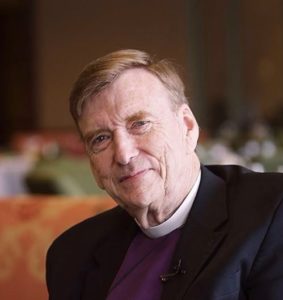


1
0
Register now for Thursday's event:
Growing a new Sense of Leadership
We sent some of you details (repeated below for the rest of you! :)) - and
oops, did not include the "register here" information:
<https://www.eventbrite.com/e/growing-a-new-sense-of-leadership-tickets-3698
5856693>
https://www.eventbrite.com/e/growing-a-new-sense-of-leadership-tickets-36985
856693
We hope to see you there!
ORIGINAL DETAILS: including link to JOIN Meeting - check in 15 minutes early
to insure audio is working, then you can step away until the event begins.
Interactive Dialogue on Growing A New Sense of Leadership
August 17: Noon EST, 9:00 am PST, 2:00 am Sydney, 9:45 pm Kathmandu
Leadership is on our heart, minds and lips these days. Our times are
leaving us reeling with what does it mean to be a leader today. Step out of
the fear and frustration of current leadership into an exploration of
Growing a New Sense of Leadership. Take the time for individual
reflection and group dialogue. Explore avenues not being traveled. Look
inside for meaningful ways to bring forth the creative human spirit in each
of us to give shape for the world we are yearning to live in today.
You will be introduced to concepts of New Leadership created by 50
cross-cultural leaders at ICA International Conference on human development.
There will be time for interactive dialogue, individual reflection, silence
in community and practices. Leadership may be considered the single most
important aspect of creating a way forward.
How to Connect:
* Use a headset, preferably with a USB connection. Alternatively, a
smartphone headset.
* Link: See instructions at the bottom of this page.
Meet the Presenter:
Janet Sanders, founder and owner of PEOPLEnergy has worked in leadership
development and social change in over 26 countries on 5 continents in local
and national governments, corporations, communities and networks of
concerned individuals. She has done in-depth research and has residential
experience in isolated villages in developing countries and in the urban
pockets of major cities. She is convinced that the empowerment of the
individual is fundamental to societal change--an empowerment that challenges
individuals to attain higher levels of creativity and commitment.
She began a 20-year career with the Institute of Cultural Affairs where she
helped pioneer methods of 'wholistic community development' where she worked
as an agent of change demonstrating that an organization or community's
effectiveness increases when the people it affects are part of the
leadership and implementation process.
Later she established PEOPLEnergy, which promotes seminars and planning
events that enable leaders to explore their human capacities and motivation,
develop comprehensive perspectives for understanding society and develop the
social skills to lead participative process for planning and action. She
received her Master's of Education from the University of Toronto in global
transformation education. Currently, she is a senior trainer with the Jean
Houston Foundation designing and delivering social artistry leadership
programmes.
LINK INSTRUCTIONS:
Invited By: Virtual Facilitation Collaborative
(info(a)virtualfacilitationcollaborative.com)
To join the meeting:
<http://top.adobeconnect.com/leadership-dialogue/>
http://top.adobeconnect.com/leadership-dialogue/
----------------
If you have never attended an Adobe Connect meeting before:
Test your connection:
<http://top.adobeconnect.com/common/help/en/support/meeting_test.htm>
http://top.adobeconnect.com/common/help/en/support/meeting_test.htm
Get a quick overview:
<http://%20http/www.adobe.com/products/adobeconnect.html>
http://www.adobe.com/products/adobeconnect.html
Adobe, the Adobe logo, Acrobat and Adobe Connect are either registered
trademarks or trademarks of Adobe Systems Incorporated in the United States
and/or other countries.
Sunny
Sunny Walker, CPF, CTF
SunWalker Enterprises
sunwalker(a)comcast.net <mailto:sunwalker@comcast.net>
Cell: 303-587-3017 (preferred for business calls)
Landline (preferred for personal calls) 303-671-0704
Between stimulus and response there is a space. In that space is our power
to choose our response.
In our response lies our growth and our freedom.
~ Viktor E. Frankl
1
1
Enjoy catching up with what is happening in ICAs across the globe.....If you wish to SEND a report...send to your ICA contact person OR...go to the members section on the ICA International website
Please click the link below for the
latest issue of the Global Buzz
Global Buzz Report: August 2017
or copy and paste this URL into your browser's address bar
http://globalbuzz.icai-archives.org/7dayreport-17/2017-08-01.php
ICAI Communications
1
0
Hi, all,
The good news is that the book Getting to the Bottom of ToP is on track, working toward publication by October this year.
Ronnie Seagren, who is editing the book, suggests that each chapter should start with a quote that evokes the experience, essence or quality of the method in the chapter.
This group had really good suggestions earlier, so I thought you would be a good source for quotes.
I have quotes for the sections, but not for the chapters. What literary or poetic quotes would you suggest? They could be a line or two, or more if necessary. I need the source of the quote as well, as this book is partly intended for an academic audience I’ve thought of a couple of possibilities for the Participatory Strategic Planning chapter, for example, from posters we had for the Town Meetings.
Here is the table of contents with numbered chapters:
Getting to the Bottom of ToP – Foundations of the Methodologies of the Technology of Participation
Foreward
Introduction
Section 1: Theory and Background of ToP (Technology of Participation) Practice
1. Phenomenology as a Discipline Describes the foundations, intents and practices of phenomenological inquiry, and describes the methodological roots of ToP
2. ToP Methods Development Describes the key conceptual steps in the formation of ToP methodology
3. ToP Methodology Reveals the evolution and roots of various ToP approaches and describes ToP methodology as a phenomenology of practice.
Section 2: Core ToP Applications Explains the core design patterns for each core application and how they apply the phenomenological method
4. Intro to the Core Applications
5. The Focused Conversation Method
6. The Consensus Workshop Method
7. ToP Strategic Thinking
8. The Action Planning Method
9. The ToP Historical Scan
Section 3: ToP Facilitation Design Describes the process of designing a complex ToP facilitation, and provides a practical process for applying ToP in responding to client needs
10. The ToP Design Eye
Section 4: Study Methodologies Describes the two core study methodologies and provides methods for study and deep learning
11. Charting Method
12. Seminar Method
Conclusion
Thank you for anything you are able to contribute, and take care,
Jo
--
Jo Nelson, CPF, CTF <jnelson(a)ica-associates.ca>
Certified Professional Facilitator and ICA Certified ToP™ Facilitator
ICA Associates, Inc.
401 Richmond Street West, Suite #405, Toronto, Canada. M5V 3A8
Ph. 1 416-691-2316, x2230 Toll-free 1 877-691-1422 Fax 1 416-691-2491
Website http://ica-associates.ca
Cellphone 647 233 6910
Skype “jofacilitator”
Vendor of Record: Government of Ontario Learning and Training Services #OSS00536903
Vendor of Record: ProServices Canada E60ZT-120001/826/ZT Business Consulting/Change Management
Pre-qualified Vendor, Alberta Education Resource List
“You never change things by fighting the existing reality. To change something, build a new model that makes the existing model obsolete.
Richard Buckminster Fuller”
2
1
Plumer/Spong: The End of Progressive Christianity?; Spong revisited
by Ellie Stock via Dialogue 03 Aug '17
by Ellie Stock via Dialogue 03 Aug '17
03 Aug '17
HOMEPAGE MY PROFILE ESSAY ARCHIVE MESSAGE BOARDS CALENDAR
The End of Progressive Christianity?
By Fred C. Plumer
As the President of Progressivechristianity.org, and as an occasional writer for this publication, I receive a lot of email from readers. Most of it is helpful. Some of it I admit is not fun to read. Two weeks ago I received a rather rude note from someone who was clearly not a fan of mine or of progressive Christianity. His email had an attachment. The attachment was an article written for Patheos by a Catholic Priest, Fr. Dwight Longenecker, Twelve Reasons Why Progressive Christians Will Die Out. If you look this up you will discover that this article was written and published back in January 2016. I presume that this man’s intention was not to necessarily share an “informative” article with me but was rather to make the point that our organization is fighting an “impossible mission.”
Fr. Longenecker is regular blogger for this particular Patheos site and apparently quite popular with his audience. I read the article three times and while I found it interesting and even agreed with a few of his presumptions. I did not agree with his conclusions. For example, Fr. Longenecker writes:
The historic Christians believe their religion is revealed by God in the person of his Son Jesus Christ, and that the Scriptures are the primary witness of that revelation. They believe the church is the embodiment of the risen Lord Jesus in the world and that his mission to seek and to save that which is lost is still valid and vital. Historic Christians believe in the supernatural life of the Church and expect God to be at work in the world and in their lives.
Progressive Christians believe their religion is a historical accident of circumstances and people that Jesus Christ is, at best, a divinely inspired teacher, that the Scriptures are flawed human documents influenced by paganism and that the church is a body of spiritually minded people who wish to bring peace and justice to all and make the world a better place.
Now this is a good start. I think he has a point and frankly I have no real problem with his description of who we are, with the possible exception of some of the pagan influence. But his title and most of his article is devoted to explaining why he thinks we are on the wrong track. Even his main conclusion does not bother me that much. He suggests that Progressives will fade away by the end of the century. When I look at how the world and religion has changed over the last fifty years, it is not hard to believe this could happen. However, I believe Christianity is going to fade away much faster unless we progressives continue to speak out. What Fr Longenecker does not realize is organizations like ours, scholars like Bishop Spong, Marcus Borg, Robert Funk and a hosts of others, and brave clergy people, have been trying to save Christianity for almost three decades now.
It may be because of his earlier life as an Evangelical Christian, but Longenecker seems to be locked into a literal reading or as he calls it a Supernatural reading of the Bible. He therefore cannot get away from referring to the Bible as something with unusual authority. Maybe he has forgotten what the Bible is and how it came about. The Torah came out of a long oral tradition that dates back some 3000 years. Parts of what we call the Old Testament probably took on some written form in the 1400 BCE but these were written on animal skins in ancient Hebrew and though they were considered sacred by the people of the day, they were open to lot of challenging translations over the years. And the Christian Bible, or New Testament, also started off primarily as oral traditions and these were eventually written down in the first century. None of these books were canonized until the 3rd century, CE and several books were left out of the mix. We are not certain which ones or why.
But even then we have to accept there was no printing press. So the Bibles were hand printed by a select group of Monks who made some of their own comments and translations. This continued until the late 15th Century when the press was created. Which Bibles did they use to be printed? Which comments were added? What words were changed?
When Fr. Longenecker makes a criticism of someone’s behavior, as a Progressives or anybody for that matter, he is referring to the “law” of the Bible or the “Word of God.” And so when he states that “historic religion is about salvation of souls, redemption of sin, heaven, hell damnation, the afterlife, angels and demons and all that stuff,” he is taking this right out of the Bible. So for him, Progressive Christians believe that “religion is a matter of fighting for equal rights, making the world a better place, being kind to everyone and “spirituality.” In other words, Fr. Longencker is clinging to the literal words of the Bible to make his point. Frankly I am proud to be working for a better place, equal rights and seeking some spirituality.
I do not see the Bible is not a “flawed document” but it was never intended to be read literally. It is a reflection of different times, different places, with people with different ideas over a period of what must have been a couple of thousand years. The Old Testament (the Jewish Torah) has a perspective of a group of people who were struggling for survival for roughly 3000 years. These include ideas and expectations of behavior that frankly would shock people today if we took them literally. I wonder how anyone can read Leviticus and imagine that this is the way that Jesus would have found it necessary to behave.
I do not believe that anyone can honestly read the four gospels for example, and not come to the conclusion that each author is telling his particular version of the story that has been influenced by time and place. While we know that there are many things recorded in Scripture that Jesus did not say, we do know he believed in a loving, just God, and forgiving Abba. He believed in an Abba that wants the best for his children. He believed in forgiving and forgiving and forgiving. He believed loving your enemy was a requirement to experiencing the Kingdom of heaven. And he certainly believed that we worry way too much about things that are not important.
And when we stop to consider the difficult situation that Jesus was living in, it is something of a miracle that he could have been so compassionate and kind. Yes, some of the same words have been spoken over the centuries by a few others but that does not take away from their power. In fact for me, they add to their strength to their meaning.
Let me take a moment to look at some of his other points.
“Progressive religion is essentially individualist and not communal.” This is clearly an area that shows he has no idea of what it means to be a progressive Christian. For many of us, community is central to the reason we gather. We are not looking to join communities with likeminded people. We enjoy the diversity, the confusion, the messiness, the tension of community that forms around compassion, love, forgiveness. We are not there because of a creed or a belief but rather to learn how to behave more like we believe Jesus would have behaved in the 21st century. We seek a faith journey that will challenge us and embrace us, and to help us see the world in a different way and hopefully cause us, together, to respond.
“Progressive Christianity is also subjective and sentimentalist.” I am trying to figure out how our desire to “eschews doctrine and favors individual spirituality and sentimental responses to doctrines and moral issues“, makes us different than any other community of faith. I would suggest that one of the criticisms I receive regularly is that progressives are too heady, too intellectual. I am not certain where this comes from but I hope it is true. We can be pretty subjective what we are talking about our faith journey and occasionally we can even become sentimental. We have feelings and I have dealt with tears many times in church as a pastor and as a member. But I would argue that our personal sentiments are a healthy response to doctrines and moral issues. Yes, we do ask how these might hurt someone and hopefully respond with compassion.
“Progressive Christianity is historically revisionist.” I assume he suggests this because progressives are trying to change the way we think about our faith. John Shelby Spong wrote a book called A New Christianity for a New World. This was on the heels of another book he wrote earlier called Why Christianity Much Change or Die. Both of these books were best sellers and one of them has been translated into several languages. Progressive Christians take these books seriously and are attempting to provide something that will work. The old story just does not work anymore. One of the things we also understand about historical Christianity was the desire to control of the masses by those in power. There are a lot of things that need to change. Are we traditional? Some of the time, but the truth is when a tradition hurts some people, tradition needs to be changed or ignored.
“Progressive Christianity is based on out of date Biblical scholarship.” One of the things I am most proud about as a progressive Christian is the scholarship we find both in the sermons and in the pews in our progressive churches. I find it interesting that one of the complaints about our tradition is that it is too scholarly. I really do not understand where Longenecker is coming from here but he is determined to put something on us that is just not true. Possibly, it is his confusion about modern biblical scholarship verses historical scholarship. There are those “scholars” who believe that Jesus was indeed the Christ, and the word of God. They have PhDs but throw out, or ignore, anything that suggests that Jesus was not who they thought he was. Yes, they teach in conservative seminaries and produce a lot of young “men” and a few women who repeat their ideas in conservative churches. I do not consider this good scholarship.
“Progressives allow for moral degeneracy and that saps the strength out of real religion.” Now this one seems to make a lot of sense. What Longenecker goes on to say is “religions demand moral purity. Real religion requires self discipline.” What can I say but now I understand this man’s tirade against Progressive Christianity. I do not believe anyone associated with Progressive Christianity is thinking about achieving moral purity. Whose morals? Morals in the Bible? How does one go about that?
And then it get worse. He says, “The modernist sees religion not as self denial but self fulfillment.” This man has an agenda and it does not seem very Christian to me. We are aware of the imbalance in the world we live in. We seek to make choices that put us in sometimes difficult situations. We want to make a difference. Yes, sometimes we are successful and we celebrate those small victories. But I would not call this self-fulfillment. I do not believe this man understands anything about Progressive Christianity let alone our world. I suspect that this has more to do with having choices about how many babies our women have. His closing last two lines on this point was: “Another aspect of this point is that progressive Christians use artificial contraception and endorse abortion. It’s not rocket science to conclude that a population who stop having babies will soon die.”
“The Church of the South is on the rise. Christianity is most vital in Africa, Asia and South America.” Let me finish this critique with one more quote. This is Longenecker’s reason or proof that his assumptions are correct. The church in the South is on the rise and churches in Africa, Asia and South America are growing at a rapid pace. I cannot imagine an area in the world that is more ripe for “salvation of souls, redemption of sin, heaven, hell damnation, the afterlife, angels and demons and all that stuff.” Of course this does not take into consideration the tremendous amounts of money denominations and wealthy conservative non-profits are spending to buff up this phenomenon. I am sorry to say that this is as much for political gain as it is about bringing these “poor, indigence people” to the Lord. Generally speaking these are not particularly educated people who are desperate for some kind of salvation. In many ways they are a lot closer to the abused and sorry conditions the Jewish community was living under during Jesus’ time and actually centuries before and after his death. As to the growth in the South, I am not certain how that is measured, but whatever it is, it has more to do with politics than faith in their “Lord Jesus.”
There are six more challenges for Progressive Christians, but you get the idea. You can look it up and read the whole thing. I hope you do.
It seems a little strange to me but while doing some research on this article I came across four more article on Patheos that predict the demise of progressive Christianity. I thought it was interesting that two of these articles were similar to the one by Fr. Longenecker and the other two were by younger people who said it just doesn’t do it for them. There were of course other articles that defended the intent and actions of progressive Christians. What was strange to me is none of the authors of the articles mentioned or even seemed to know anything about our organization. I guess that means we have come a long way since we created the term now nearly 27 years ago. I think I am OK with that.
~ Fred C. Plumer
President, ProgressiveChristianity.org
Read the essay online here.
Question & Answer
Kay from Florida, writes:
Question:
I have friends who seem to think believing that Jesus died for them is all they need to do. Some of them even treat other people badly and when I say something to them about being more Christian they just quote John 3:16 to me. What are your thoughts?
Answer: By Rev. Mark Sandlin
Dear Kay,
Most of us could probably quote at least one verse of the Bible and most likely that verse would be John 3:16. It has been called the greatest love story ever told. Martin Luther, (the early church reformer) called that verse “the Gospel in a nutshell.” Someone else once said that “if the Bible was destroyed and only John 3:16 remained, that would be enough information of God’s love to change the human heart”.
It is also, by far, the most popular verse for cardboard signs at sporting events as well as for wooden roadside reminders.
Personally though, I sort of disagree with Martin Luther and others who hold this verse in such high regard. If anything, taken by itself, I find it to be symbolic of contemporary theological perspectives that find their way into books like the Prayer of Jabez and The Left Behind Series. They are overly simplified and promote a bumper sticker kind of theology that says, “Jesus did it, so come and get it.”
When we let John 3:16 stop at an understanding of “Jesus did it, come and get it,” we are only telling half the story. The remainder of the story is up to us. You see for me John 3:16, is incomplete without 1 John 3:16 – or at least the meaning behind 1st John 3:16. Let me read them to you together. “For God so loved the world that he gave his only Son, so that everyone who believes in him may not perish but may have eternal life.” “We know love by this, that he laid down his life for us—and we ought to lay down our lives for one another.”
I'm much less concerned about what the theological question of atonement would encourage us to do and more concerned about what the life and teachings that lead to the cross would encourage us to do.
In my way of reading these verses, in John 3:16 we learn how far Jesus was willing to go to show us how much we are loved, then in 1st John 3:16 we learn how far we should be willing to go in response to that love to show others how much they are loved.
Far too often, those of us who consider ourselves or call ourselves, “Christian,” forget to practice our faith as if these two verses go together. Somehow, we don't realize that on its own John 3:16 is only half the story. When we think it is the whole story, it is just a little bit too easy to feel slightly privileged, it is just a little bit too easy to measure the rest of the world by your own standards, judging whether people measure up rather than just loving them.
The truth is we all need to be a little bit better about turning our faith outward. You see as John 3:16 says, the ultimate sacrifice was made for us, but it's not some sort of soul saving buffet - “Jesus did it, come and get it.” It comes with requirements, some assembly required, the work is not yet done. When we act like the work has already been done FOR US, so there's nothing left to do, we lose sight of the call to respond to that love and share it. We become judgmental, less accepting of those who are different from us, and we start to slowly slip into a life motivated not by love, but by hate.
Dr. Martin Luther King puts it this way, “Hatred paralyzes life; love releases it. Hatred confuses life; love harmonizes it. Hatred darkens life; love illuminates it.”
~ Rev. Mark Sandlin
Read and share online here
About the Author
Mark Sandlin is an ordained minister in the Presbyterian Church (USA) from the South. He currently serves at Presbyterian Church of the Covenant. He is a co-founder of The Christian Left. His blog, RevMarkSandlin, has been named as one of the “Top Ten Christian Blogs.” Mark received The Associated Church Press' Award of Excellence in 2012. His work has been published on "The Huffington Post," "Sojourners," "Time," "Church World Services," and even the "Richard Dawkins Foundation." He's been featured on PBS's "Religion & Ethics NewsWeekly" and NPR's "The Story with Dick Gordon.” Follow Mark on Facebook and Twitter @marksandlin
_________________________________________________
Bishop John Shelby Spong Revisited
"The Passion of the Christ"
Mel Gibson's Film and Biblical Scholarship – Part IV
Last week I examined the connection between Psalm 22 and the earlier gospel accounts of Jesus' crucifixion. This week I turn to Isaiah 40-55, which was the other primary source from the Hebrew Scriptures that was so obviously woven into the story of the final events in Jesus' life. The author of these chapters is called II Isaiah because his 6th century writings were attached to the scroll of Isaiah. Yet because George F. Handel used his words in the Oratorio entitled "The Messiah," he is probably better known by most people than the original Isaiah. Who is not familiar with the words: "Comfort ye, comfort ye my people, saith your God," or "The voice of him that crieth in the wilderness, Prepare ye the way of the Lord," or "Every valley shall be exalted and every mountain and hill shall be made low; and the crooked shall be made straight and the rough places plain; and the glory of the Lord shall be revealed and all flesh shall see it together (Is. 40:1-5)?"
It was with these words, that this unknown prophet introduced into his narrative a mythological figure, called 'the servant,' who first appears when God is heard to say: "Behold my servant, whom I uphold; mine elect, in whom my soul delighteth; I have put my spirit upon him (42:1)." II Isaiah then sketches out the role of 'the servant,' who is surely a synonym for the Jewish nation, and in the process charts a new vocation for the Jewish people. They are no longer called to status and power. Their role is rather to be sacrificial and self-giving, to absorb the abuse of the world, to bear the sufferings of the nations and through this means, to restore wholeness to life. In II Isaiah's words, 'the servant' is to be "despised, rejected, a man of sorrows and acquainted with grief (Is. 53: 3)." First century Christians clearly found in this portrait an image by which they could explain the suffering of Jesus and so 'the servant' in Isaiah began to shape the Church's memory of Jesus. This connection became so intense that Christians even began to say that II Isaiah 'predicted' the things that Jesus would actually do.
The facts, however, are exactly the opposite. The historical details of Jesus' death were simply unknown when the gospels were written. Jesus died alone, with no witnesses to record the events of his trial, torture and crucifixion, because at his arrest "all the disciples forsook him and fled (Mk. 14:50.)" The first Christians knew only that he had been crucified. Years later when the Christians needed to write an account of Jesus death to guide them in their worship, they drew their images from what they called 'prophecies' in II Isaiah and Psalm 22.
II Isaiah said, "the servant stood silent before his accusers (53:7)," so Mark portrayed Jesus as silent before Pilate and the chief priests (14:60, 15:5). II Isaiah said 'the servant' was "numbered with the transgressors (53:12)," creating the narratives of thieves crucified with Jesus. The thieves are barely mentioned in Mark but the connection with Isaiah is clear. Mark writes: "And with him they crucified two robbers, one on his right and one on his left. And the scripture was fulfilled, which says, 'he was numbered with the transgressors' (15:27,28)." Matthew develops this story by noting that both thieves added to the verbal abuse Jesus received (27: 44). Luke expanded it further, suggesting that one of the thieves became penitent, asking to be remembered when Jesus came to his kingdom (23:39-43).
Isaiah II said of 'the servant' that he would make his tomb with the rich, (53:9). This reference led to the introduction of Joseph of Arimathea into the passion narrative. Mark emphasizes his wealth by having him wrap Jesus 'in fine linen' and place him in a newly hewn rock sepulcher (15:43-46). Matthew follows II Isaiah even more specifically by calling him a 'rich man.' By the time of John, Joseph has evolved into being 'a secret disciple,' who provides a tomb in a beautiful garden and burial with 'a hundred pound of myrrh and aloes (19:38-42).
The idea that a convicted felon, like Jesus, would be given a burial attended by such splendor is obviously not history. Paul, who died before the first gospel was written, certainly knew nothing about the burial tradition or the women coming on the first day of the week. All Paul says is, "He was buried (I Cor. 15:4)." The probable fate of the crucified Jesus was to be thrown with other victims into a common, unmarked grave. The general consensus of New Testament scholars is that whatever the Easter experience was, it dawned first in the minds of the disciples who had fled to Galilee for safety, driving us to the conclusion that the burial story in the gospels is both legendary and was developed directly from the words of II Isaiah.
'The servant' of Isaiah II "made intercession for the transgressors (53:12)." This detail was generally ignored until Luke added it to his expanding portrait, having Jesus intercede for the soldiers by praying "Father, forgive them, for they know not what they do (23:34)" and giving assurance to the penitent thief, "today you will be with me in paradise (vs. 43)."
The final step needed to complete the passion story came when II Isaiah's 'servant' was merged with other symbols drawn from the worship life of the synagogue. Paul called Jesus the new paschal lamb (I Cor. 5:7), whose shed blood, like that of the original Passover lamb, had broken the power of death. It was an image that blended easily into the role of 'the servant.'
Next imagery drawn from the Day of Atonement was applied to Jesus. He became both the sacrificial lamb of Yom Kippur whose blood washed away the sins of the people, and the scapegoat who made the people clean by bearing all their sins away. These images also fitted II Isaiah's portrait, since, like 'the servant,' they too absorbed the pain of human evil and made the people at one with God. That is how the passion narrative, written to recreate liturgically the death of Jesus and to interpret how it brought salvation, came into being.
For anyone to suggest that these accounts are history is to demonstrate biblical ignorance. For the Pope to view this film and announce, "It is as it was," is an action that confuses piety with a lack of scholarship. For Christian leaders not to face what the last 150 years of biblical scholarship has made obvious about the passion narrative is to misread the Bible totally.
The tragedy of Gibson's film is that it presumes that the gospel accounts of the crucifixion tell us what actually happened. They do not. What they do tell us is what second generation Christians understood the death of Jesus to mean in the plan of salvation and to issue an invitation to believers not only to "watch with him," but also to enter the Christ experience. The interpretive process had by now wrapped around Jesus the role of "the servant" of II Isaiah, the Passover lamb and the sacrificial animals of Yom Kippur. These were the images that gave content to Paul's earlier claim that Jesus had died "in accordance with the scriptures."
Next these Jewish themes were combined with the wrenching events that occurred just before the gospels were written (70-100 C.E.). A war had been fought between the Jews and the Romans, resulting in the destruction of Jerusalem in the year 70. As is common in warfare, this war had loosed the hostility of the conquering Romans into that area's bloodstream. That hostility victimized all Jews, but its primary targets were the Temple priesthood, the Sadducees and the Orthodox party of Judaism, all of which were assumed to have been guilty of plunging the nation into that war. It took, therefore, the inevitable form of a violent anti-Semitism.
Even though the early Christians were themselves primarily Jews, they also shared a great hostility toward the Orthodox party that viewed them as revisionists, who did not hold the "true faith." These Christians defended themselves by joining with the Romans in the abuse of the Temple priesthood and the Orthodox party. "We were not the Jews who brought this destruction on our nation," they asserted. "Indeed, those Jews who brought this disaster on us are the same ones who conspired with the Romans to put to death the Jesus we follow." These thoughts were then written into the story about the crucifixion with Pilate portrayed with compassion and the Jews portrayed as culprits and villains. I will go into this period of history more fully in next week's column. It is the substance of my book: Liberating the Gospels: Reading the Bible with Jewish Eyes.
The original writers of the Passion story were well aware that the details of the crucifixion had been created for liturgical purposes. They knew, for example, that the idea that the Jews would execute a teacher because he interpreted the law, the Torah, from a new perspective, was unheard of in Jewish history. They knew that the Sanhedrin would never meet to judge Jesus in the middle of the night since that was in direct violation of the Torah, which forbids judgment save in the light of day. But these details mattered little when Judaism was prostrate before Roman authority.
That is, however, something that Mel Gibson should have understood. So should both his religious devotees and his religious critics. None of them seems to embrace the fact that to be accurate in telling the crucifixion story is to produce an anti-Semitic film, for anti-Semitism was already overtly present in the biblical account itself. All this film will do ultimately is to justify the continuation of that prejudice. That is its shame and its embarrassment.
Next week I will examine how the story of Jesus' passion became for the Jews the primary source of prejudice, pain and death throughout western history. It is not a pretty story and it still remains the dark underside of the Christian Faith.
~ John Shelby Spong
Originally published March 17, 2004
Announcements
Letting Go
Online eCourse with
Frederic & Mary Ann Brussat
Spirituality & Practice
8-06 thru 8-26, 2017
Freedom, the wisdom traditions all say, comes from letting go. By giving, releasing, and clearing out things, we open up new pathways for the Divine energies to enter and transform us.
Click here for more information/registration
.
1
0