The Order and Oaxtapec

It has long been claimed that at the Oaxtapec gathering, the Order was called out of being. That assertion has long troubled me, and it seems time to clear the air. IMHO, the statement is both sociologically and theologically inaccurate. A more accurate formulation of what happened in Mexico was that we went from a structured to a dispersed form. Something was definitely dissolved at Oaxtapec, but it was not the Order, only a particular form of the Order. On the sociological side, there is still a lively “we” that once went under the name “Order Ecumenical.” This list-serve and the archives workshops represent some manifestations, but more significant are the personal collegial relationships that persist despite great demographic, cultural, and geographic differences. “We” continue to communicate and to celebrate the life milestones of each other. “We” continue to engage in the mission of catalyzing and caring for those who care – in multiple sectors and with far greater impact than a single organization could have managed. Some examples include the ToP Network, the IAF, ICA community development work in India, Nepal, Australia, and South America, and environmental preservation efforts in the USA. “We” have published a good number of books making insights available to a wide audience. Colleagues could fill out the list. Theologically, the Order is a historical dynamic that we’ve been privileged to participate in. It is not something we can disband, even if we wanted to. Just as Niebuhr described the Church as the “sensitive and responsive ones…” that takes many forms, so also is the Order composed of those awakened and catalytic ones who care for those who care. The notion that some of us could dissolve that dynamic confuses the form from the content (the baby from the bathwater to use a less abstract metaphor). I’ve come (reluctantly) to see that we were led to dissolve a particular structure so that the historical dynamic might continue in an enhanced fashion. Why does this matter? Is it simply a verbal difference having little to do with anything except the neurosis of an old theologian? It matters because thinking that there is no longer an Order prevents us from wrestling with pertinent questions: How can we remain in touch with the Profound Mystery? How can we continue to access our common insights? What rites and celebrations are appropriate to a dispersed body? How can we account to each other and support each other? How can we stay on the religious and secular edge? What (if any) forms are appropriate for the global and diverse participants in this historical dynamic? In a time when hatred and fear of differences is so rampant, what new experiments might make a difference? What might we learn from *Journey to the East*? Collegial comments, clarifications, corrections, and additions are most welcome. Thanks for reading this. John Epps
Really well said, John. This puts the issue in a theologically and sociologically profound context. Thanks for taking the time and effort to get this said. Peace, Doris Hahn On Wed, Jun 14, 2017 at 5:57 PM, John Epps via OE <oe@lists.wedgeblade.net> wrote:
It has long been claimed that at the Oaxtapec gathering, the Order was called out of being. That assertion has long troubled me, and it seems time to clear the air.
IMHO, the statement is both sociologically and theologically inaccurate. A more accurate formulation of what happened in Mexico was that we went from a structured to a dispersed form. Something was definitely dissolved at Oaxtapec, but it was not the Order, only a particular form of the Order.
On the sociological side, there is still a lively “we” that once went under the name “Order Ecumenical.” This list-serve and the archives workshops represent some manifestations, but more significant are the personal collegial relationships that persist despite great demographic, cultural, and geographic differences. “We” continue to communicate and to celebrate the life milestones of each other.
“We” continue to engage in the mission of catalyzing and caring for those who care – in multiple sectors and with far greater impact than a single organization could have managed. Some examples include the ToP Network, the IAF, ICA community development work in India, Nepal, Australia, and South America, and environmental preservation efforts in the USA. “We” have published a good number of books making insights available to a wide audience. Colleagues could fill out the list.
Theologically, the Order is a historical dynamic that we’ve been privileged to participate in. It is not something we can disband, even if we wanted to. Just as Niebuhr described the Church as the “sensitive and responsive ones…” that takes many forms, so also is the Order composed of those awakened and catalytic ones who care for those who care. The notion that some of us could dissolve that dynamic confuses the form from the content (the baby from the bathwater to use a less abstract metaphor). I’ve come (reluctantly) to see that we were led to dissolve a particular structure so that the historical dynamic might continue in an enhanced fashion.
Why does this matter? Is it simply a verbal difference having little to do with anything except the neurosis of an old theologian?
It matters because thinking that there is no longer an Order prevents us from wrestling with pertinent questions: How can we remain in touch with the Profound Mystery? How can we continue to access our common insights? What rites and celebrations are appropriate to a dispersed body? How can we account to each other and support each other? How can we stay on the religious and secular edge? What (if any) forms are appropriate for the global and diverse participants in this historical dynamic? In a time when hatred and fear of differences is so rampant, what new experiments might make a difference? What might we learn from *Journey to the East*?
Collegial comments, clarifications, corrections, and additions are most welcome.
Thanks for reading this.
John Epps
_______________________________________________ OE mailing list OE@lists.wedgeblade.net http://lists.wedgeblade.net/listinfo.cgi/oe-wedgeblade.net
Thank you John. You hit a nerve. You said it well. It reminded me of a lot of questions I've been struggling with. Who/what group did I join? Why did I stay?why did I leave? Why do I keep coming back? Why do I mourn people I personally didn't know but were part of this journey? Why do I rejoice when a new baby is added to someone's family? Who are these people? I have several answers when people ask me where did you learn what you do? I had the best mentors/teachers. And because I think they are/you are the best, it boasts my confidence and at same time intimidates me. I seldom post believing others have profound ideas than mine. So I lurk and learn. Elsa Batica Sent from my iPhone
On Jun 14, 2017, at 5:10 PM, Doris Hahn via OE <oe@lists.wedgeblade.net> wrote:
Really well said, John. This puts the issue in a theologically and sociologically profound context. Thanks for taking the time and effort to get this said. Peace, Doris Hahn
On Wed, Jun 14, 2017 at 5:57 PM, John Epps via OE <oe@lists.wedgeblade.net> wrote: It has long been claimed that at the Oaxtapec gathering, the Order was called out of being. That assertion has long troubled me, and it seems time to clear the air.
IMHO, the statement is both sociologically and theologically inaccurate. A more accurate formulation of what happened in Mexico was that we went from a structured to a dispersed form. Something was definitely dissolved at Oaxtapec, but it was not the Order, only a particular form of the Order.
On the sociological side, there is still a lively “we” that once went under the name “Order Ecumenical.” This list-serve and the archives workshops represent some manifestations, but more significant are the personal collegial relationships that persist despite great demographic, cultural, and geographic differences. “We” continue to communicate and to celebrate the life milestones of each other.
“We” continue to engage in the mission of catalyzing and caring for those who care – in multiple sectors and with far greater impact than a single organization could have managed. Some examples include the ToP Network, the IAF, ICA community development work in India, Nepal, Australia, and South America, and environmental preservation efforts in the USA. “We” have published a good number of books making insights available to a wide audience. Colleagues could fill out the list.
Theologically, the Order is a historical dynamic that we’ve been privileged to participate in. It is not something we can disband, even if we wanted to. Just as Niebuhr described the Church as the “sensitive and responsive ones…” that takes many forms, so also is the Order composed of those awakened and catalytic ones who care for those who care. The notion that some of us could dissolve that dynamic confuses the form from the content (the baby from the bathwater to use a less abstract metaphor). I’ve come (reluctantly) to see that we were led to dissolve a particular structure so that the historical dynamic might continue in an enhanced fashion.
Why does this matter? Is it simply a verbal difference having little to do with anything except the neurosis of an old theologian?
It matters because thinking that there is no longer an Order prevents us from wrestling with pertinent questions: How can we remain in touch with the Profound Mystery? How can we continue to access our common insights? What rites and celebrations are appropriate to a dispersed body? How can we account to each other and support each other? How can we stay on the religious and secular edge? What (if any) forms are appropriate for the global and diverse participants in this historical dynamic? In a time when hatred and fear of differences is so rampant, what new experiments might make a difference? What might we learn from Journey to the East?
Collegial comments, clarifications, corrections, and additions are most welcome.
Thanks for reading this.
John Epps
_______________________________________________ OE mailing list OE@lists.wedgeblade.net http://lists.wedgeblade.net/listinfo.cgi/oe-wedgeblade.net
_______________________________________________ OE mailing list OE@lists.wedgeblade.net http://lists.wedgeblade.net/listinfo.cgi/oe-wedgeblade.net
Dear John, The Grows say a loud AMEN and look forward to further communication in a week or two when Bill gets out of the hospital. In the meantime, in our ancient and limited way we continue to be the Order, wear the ring, etc. G&P, Nan Grow ----- Original Message ----- From: John Epps via OE To: Order Ecumenical Community Sent: Wednesday, June 14, 2017 5:57 PM Subject: [Oe List ...] The Order and Oaxtapec It has long been claimed that at the Oaxtapec gathering, the Order was called out of being. That assertion has long troubled me, and it seems time to clear the air. IMHO, the statement is both sociologically and theologically inaccurate. A more accurate formulation of what happened in Mexico was that we went from a structured to a dispersed form. Something was definitely dissolved at Oaxtapec, but it was not the Order, only a particular form of the Order. On the sociological side, there is still a lively “we” that once went under the name “Order Ecumenical.” This list-serve and the archives workshops represent some manifestations, but more significant are the personal collegial relationships that persist despite great demographic, cultural, and geographic differences. “We” continue to communicate and to celebrate the life milestones of each other. “We” continue to engage in the mission of catalyzing and caring for those who care – in multiple sectors and with far greater impact than a single organization could have managed. Some examples include the ToP Network, the IAF, ICA community development work in India, Nepal, Australia, and South America, and environmental preservation efforts in the USA. “We” have published a good number of books making insights available to a wide audience. Colleagues could fill out the list. Theologically, the Order is a historical dynamic that we’ve been privileged to participate in. It is not something we can disband, even if we wanted to. Just as Niebuhr described the Church as the “sensitive and responsive ones…” that takes many forms, so also is the Order composed of those awakened and catalytic ones who care for those who care. The notion that some of us could dissolve that dynamic confuses the form from the content (the baby from the bathwater to use a less abstract metaphor). I’ve come (reluctantly) to see that we were led to dissolve a particular structure so that the historical dynamic might continue in an enhanced fashion. Why does this matter? Is it simply a verbal difference having little to do with anything except the neurosis of an old theologian? It matters because thinking that there is no longer an Order prevents us from wrestling with pertinent questions: How can we remain in touch with the Profound Mystery? How can we continue to access our common insights? What rites and celebrations are appropriate to a dispersed body? How can we account to each other and support each other? How can we stay on the religious and secular edge? What (if any) forms are appropriate for the global and diverse participants in this historical dynamic? In a time when hatred and fear of differences is so rampant, what new experiments might make a difference? What might we learn from Journey to the East? Collegial comments, clarifications, corrections, and additions are most welcome. Thanks for reading this. John Epps ------------------------------------------------------------------------------ _______________________________________________ OE mailing list OE@lists.wedgeblade.net http://lists.wedgeblade.net/listinfo.cgi/oe-wedgeblade.net
Dear John, Thank you for reminding us of who we are and raising the question of how we stay on the journey . Marianna Sent from my iPad
On Jun 14, 2017, at 8:25 PM, Nancy Grow via OE <oe@lists.wedgeblade.net> wrote:
Dear John, The Grows say a loud AMEN and look forward to further communication in a week or two when Bill gets out of the hospital. In the meantime, in our ancient and limited way we continue to be the Order, wear the ring, etc. G&P, Nan Grow ----- Original Message ----- From: John Epps via OE To: Order Ecumenical Community Sent: Wednesday, June 14, 2017 5:57 PM Subject: [Oe List ...] The Order and Oaxtapec
It has long been claimed that at the Oaxtapec gathering, the Order was called out of being. That assertion has long troubled me, and it seems time to clear the air.
IMHO, the statement is both sociologically and theologically inaccurate. A more accurate formulation of what happened in Mexico was that we went from a structured to a dispersed form. Something was definitely dissolved at Oaxtapec, but it was not the Order, only a particular form of the Order.
On the sociological side, there is still a lively “we” that once went under the name “Order Ecumenical.” This list-serve and the archives workshops represent some manifestations, but more significant are the personal collegial relationships that persist despite great demographic, cultural, and geographic differences. “We” continue to communicate and to celebrate the life milestones of each other.
“We” continue to engage in the mission of catalyzing and caring for those who care – in multiple sectors and with far greater impact than a single organization could have managed. Some examples include the ToP Network, the IAF, ICA community development work in India, Nepal, Australia, and South America, and environmental preservation efforts in the USA. “We” have published a good number of books making insights available to a wide audience. Colleagues could fill out the list.
Theologically, the Order is a historical dynamic that we’ve been privileged to participate in. It is not something we can disband, even if we wanted to. Just as Niebuhr described the Church as the “sensitive and responsive ones…” that takes many forms, so also is the Order composed of those awakened and catalytic ones who care for those who care. The notion that some of us could dissolve that dynamic confuses the form from the content (the baby from the bathwater to use a less abstract metaphor). I’ve come (reluctantly) to see that we were led to dissolve a particular structure so that the historical dynamic might continue in an enhanced fashion.
Why does this matter? Is it simply a verbal difference having little to do with anything except the neurosis of an old theologian?
It matters because thinking that there is no longer an Order prevents us from wrestling with pertinent questions: How can we remain in touch with the Profound Mystery? How can we continue to access our common insights? What rites and celebrations are appropriate to a dispersed body? How can we account to each other and support each other? How can we stay on the religious and secular edge? What (if any) forms are appropriate for the global and diverse participants in this historical dynamic? In a time when hatred and fear of differences is so rampant, what new experiments might make a difference? What might we learn from Journey to the East?
Collegial comments, clarifications, corrections, and additions are most welcome.
Thanks for reading this.
John Epps
_______________________________________________ OE mailing list OE@lists.wedgeblade.net http://lists.wedgeblade.net/listinfo.cgi/oe-wedgeblade.net _______________________________________________ OE mailing list OE@lists.wedgeblade.net http://lists.wedgeblade.net/listinfo.cgi/oe-wedgeblade.net
"Theologically, the Order is a historical dynamic that we’ve been privileged to participate in. It is not something we can disband, even if we wanted to.” "Why does this matter?” "It matters because thinking that there is no longer an Order prevents us from wrestling with pertinent questions: ….." Yes John. I have had a longing for the telling of a larger ‘we’ story for some decades. Ken slowly and gradually did I begin to suspect and then ... … like a very slow, smooth but continuous flowing or melting; “… and only one would remain: Leo. He must grow, I must disappear." "We had talked about the creations of poetry being more vivid and real than the poets themselves." On Jun 14, 2017, at 5:57 PM, John Epps via OE <oe@lists.wedgeblade.net> wrote: It has long been claimed that at the Oaxtapec gathering, the Order was called out of being. That assertion has long troubled me, and it seems time to clear the air. IMHO, the statement is both sociologically and theologically inaccurate. A more accurate formulation of what happened in Mexico was that we went from a structured to a dispersed form. Something was definitely dissolved at Oaxtapec, but it was not the Order, only a particular form of the Order. On the sociological side, there is still a lively “we” that once went under the name “Order Ecumenical.” This list-serve and the archives workshops represent some manifestations, but more significant are the personal collegial relationships that persist despite great demographic, cultural, and geographic differences. “We” continue to communicate and to celebrate the life milestones of each other. “We” continue to engage in the mission of catalyzing and caring for those who care – in multiple sectors and with far greater impact than a single organization could have managed. Some examples include the ToP Network, the IAF, ICA community development work in India, Nepal, Australia, and South America, and environmental preservation efforts in the USA. “We” have published a good number of books making insights available to a wide audience. Colleagues could fill out the list. Theologically, the Order is a historical dynamic that we’ve been privileged to participate in. It is not something we can disband, even if we wanted to. Just as Niebuhr described the Church as the “sensitive and responsive ones…” that takes many forms, so also is the Order composed of those awakened and catalytic ones who care for those who care. The notion that some of us could dissolve that dynamic confuses the form from the content (the baby from the bathwater to use a less abstract metaphor). I’ve come (reluctantly) to see that we were led to dissolve a particular structure so that the historical dynamic might continue in an enhanced fashion. Why does this matter? Is it simply a verbal difference having little to do with anything except the neurosis of an old theologian? It matters because thinking that there is no longer an Order prevents us from wrestling with pertinent questions: How can we remain in touch with the Profound Mystery? How can we continue to access our common insights? What rites and celebrations are appropriate to a dispersed body? How can we account to each other and support each other? How can we stay on the religious and secular edge? What (if any) forms are appropriate for the global and diverse participants in this historical dynamic? In a time when hatred and fear of differences is so rampant, what new experiments might make a difference? What might we learn from Journey to the East? Collegial comments, clarifications, corrections, and additions are most welcome. Thanks for reading this. John Epps _______________________________________________ OE mailing list OE@lists.wedgeblade.net http://lists.wedgeblade.net/listinfo.cgi/oe-wedgeblade.net
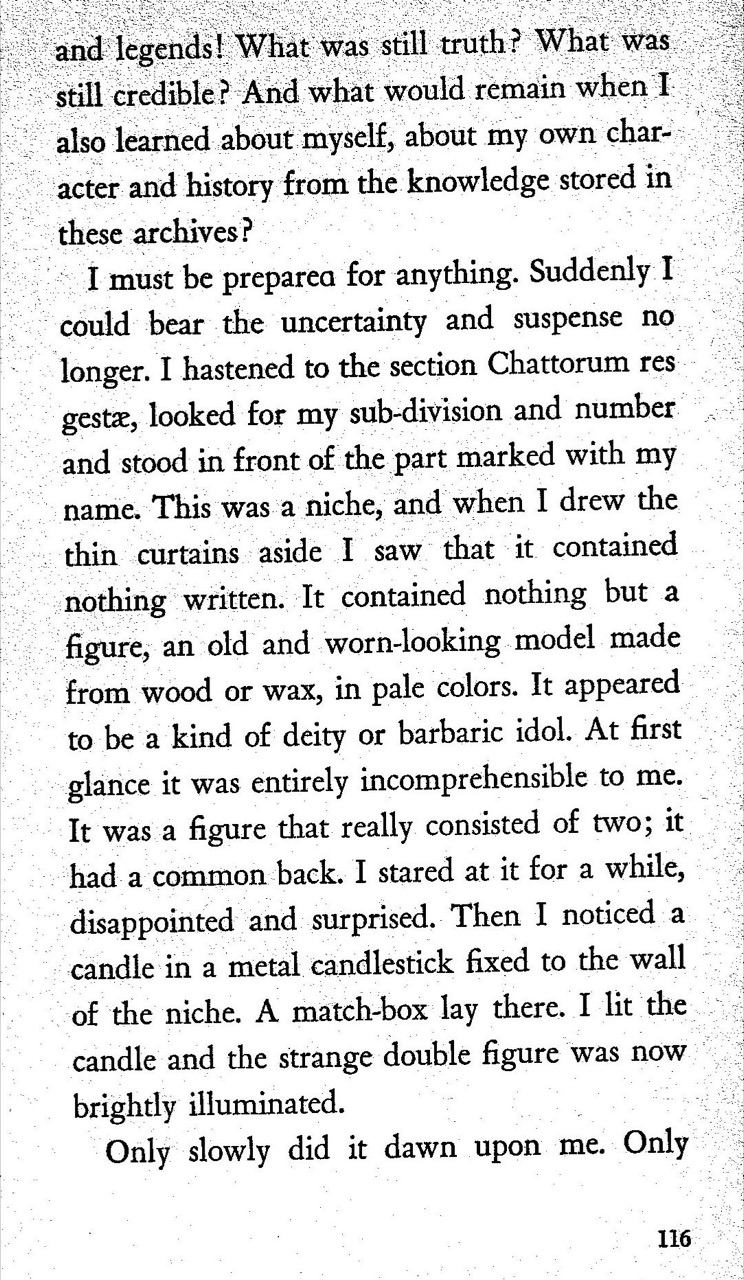
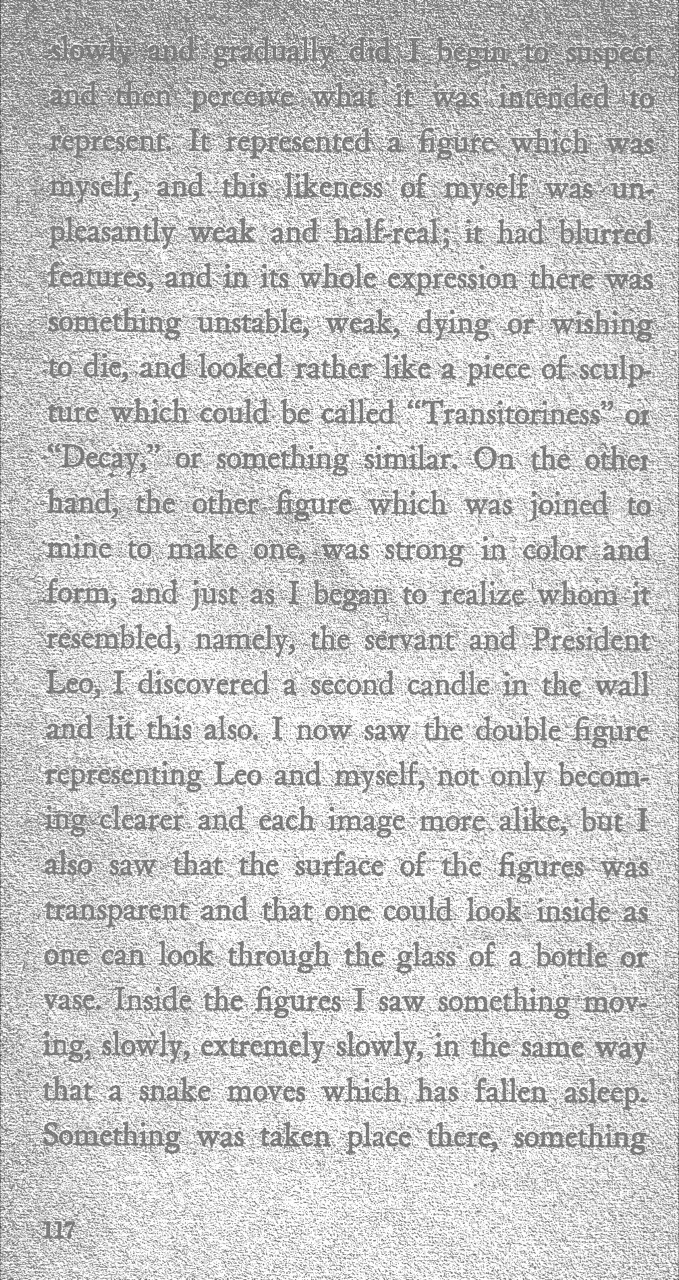
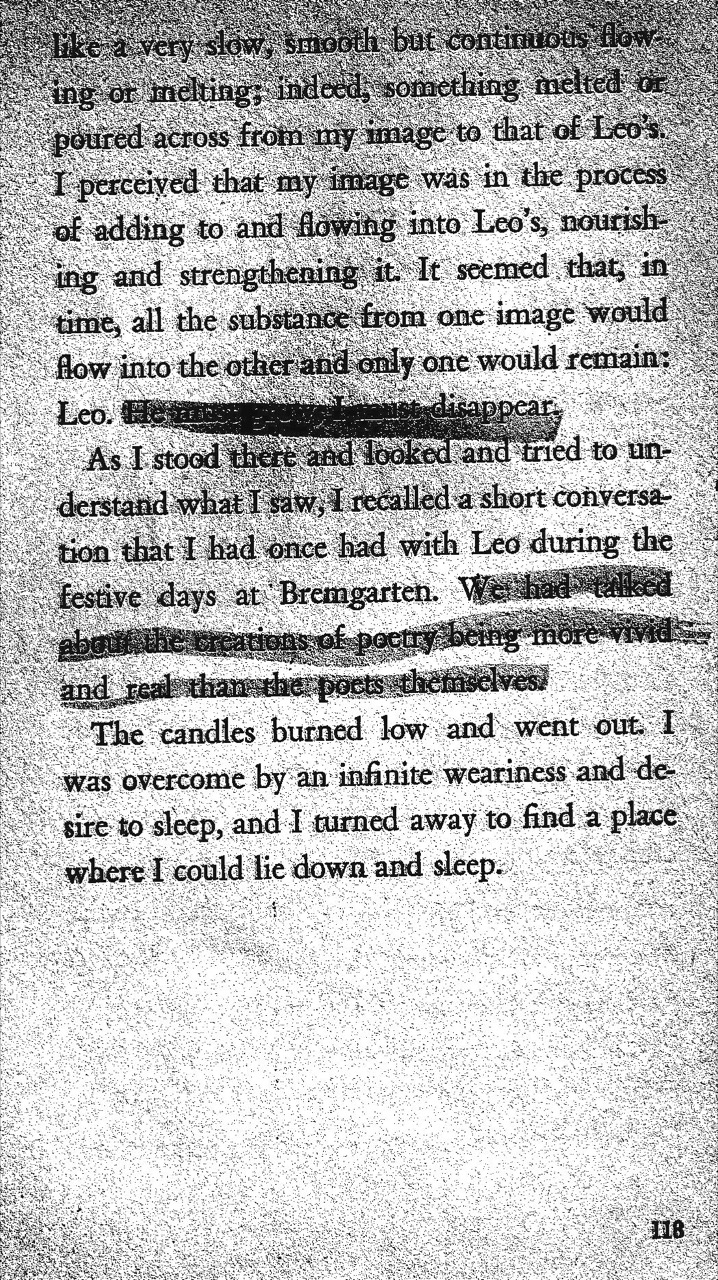
I remember long long ago and far far away John Kloepfer doing absolution in a University Guild setting, and bending over and actually picking up a fistful of sand and doing the short course about life flowing. Each of us comes to consciousness once again this day and is faced with where to direct our flow of life this day. The mark of the Order Ecumenical is most certainly on my forehead and I find that I am engaged in my small town of Lenoir NC in four different groups where I help them be the dynamic of church. In addition I work with Project Vida regularly. When I choose where my flow of life goes--I choose the cruciform deed.....no doubt....and nothing else makes sense to me. I am grateful to John for seeing and sharing the narrative. Don Bushman On Wed, Jun 14, 2017 at 3:57 PM, John Epps via OE <oe@lists.wedgeblade.net> wrote:
It has long been claimed that at the Oaxtapec gathering, the Order was called out of being. That assertion has long troubled me, and it seems time to clear the air.
IMHO, the statement is both sociologically and theologically inaccurate. A more accurate formulation of what happened in Mexico was that we went from a structured to a dispersed form. Something was definitely dissolved at Oaxtapec, but it was not the Order, only a particular form of the Order.
On the sociological side, there is still a lively “we” that once went under the name “Order Ecumenical.” This list-serve and the archives workshops represent some manifestations, but more significant are the personal collegial relationships that persist despite great demographic, cultural, and geographic differences. “We” continue to communicate and to celebrate the life milestones of each other.
“We” continue to engage in the mission of catalyzing and caring for those who care – in multiple sectors and with far greater impact than a single organization could have managed. Some examples include the ToP Network, the IAF, ICA community development work in India, Nepal, Australia, and South America, and environmental preservation efforts in the USA. “We” have published a good number of books making insights available to a wide audience. Colleagues could fill out the list.
Theologically, the Order is a historical dynamic that we’ve been privileged to participate in. It is not something we can disband, even if we wanted to. Just as Niebuhr described the Church as the “sensitive and responsive ones…” that takes many forms, so also is the Order composed of those awakened and catalytic ones who care for those who care. The notion that some of us could dissolve that dynamic confuses the form from the content (the baby from the bathwater to use a less abstract metaphor). I’ve come (reluctantly) to see that we were led to dissolve a particular structure so that the historical dynamic might continue in an enhanced fashion.
Why does this matter? Is it simply a verbal difference having little to do with anything except the neurosis of an old theologian?
It matters because thinking that there is no longer an Order prevents us from wrestling with pertinent questions: How can we remain in touch with the Profound Mystery? How can we continue to access our common insights? What rites and celebrations are appropriate to a dispersed body? How can we account to each other and support each other? How can we stay on the religious and secular edge? What (if any) forms are appropriate for the global and diverse participants in this historical dynamic? In a time when hatred and fear of differences is so rampant, what new experiments might make a difference? What might we learn from *Journey to the East*?
Collegial comments, clarifications, corrections, and additions are most welcome.
Thanks for reading this.
John Epps
_______________________________________________ OE mailing list OE@lists.wedgeblade.net http://lists.wedgeblade.net/listinfo.cgi/oe-wedgeblade.net
Dear All, A big thank you. On next Tuesday I will celebrate 80 years, noting that the spirit is ever-willing tho the body somewhat takes a bit of time and effort to keep up! In dispersement I trained to be a spiritual director and meet with directees here in our home which meets my own needs and hopefully theirs as well. Journey to the East is on my desk in the living room. Dick has now been ‘retired’ for the past 22 years, during which he volunteers with Community Caregivers driving people to medical appointments, ect. thus enhancing their ability to remain in their own homes and ‘age in place’. Colleagues continue to support us in many ways via personal visits, emails and phone calls. Love to you all, Grace & Peace, Ellen Howie On Jun 14, 2017, at 8:52 PM, Don Bushmaen via OE <oe@lists.wedgeblade.net> wrote:
I remember long long ago and far far away John Kloepfer doing absolution in a University Guild setting, and bending over and actually picking up a fistful of sand and doing the short course about life flowing.
Each of us comes to consciousness once again this day and is faced with where to direct our flow of life this day.
The mark of the Order Ecumenical is most certainly on my forehead and I find that I am engaged in my small town of Lenoir NC in four different groups where I help them be the dynamic of church. In addition I work with Project Vida regularly.
When I choose where my flow of life goes--I choose the cruciform deed.....no doubt....and nothing else makes sense to me.
I am grateful to John for seeing and sharing the narrative.
Don Bushman
On Wed, Jun 14, 2017 at 3:57 PM, John Epps via OE <oe@lists.wedgeblade.net> wrote: It has long been claimed that at the Oaxtapec gathering, the Order was called out of being. That assertion has long troubled me, and it seems time to clear the air.
IMHO, the statement is both sociologically and theologically inaccurate. A more accurate formulation of what happened in Mexico was that we went from a structured to a dispersed form. Something was definitely dissolved at Oaxtapec, but it was not the Order, only a particular form of the Order.
On the sociological side, there is still a lively “we” that once went under the name “Order Ecumenical.” This list-serve and the archives workshops represent some manifestations, but more significant are the personal collegial relationships that persist despite great demographic, cultural, and geographic differences. “We” continue to communicate and to celebrate the life milestones of each other.
“We” continue to engage in the mission of catalyzing and caring for those who care – in multiple sectors and with far greater impact than a single organization could have managed. Some examples include the ToP Network, the IAF, ICA community development work in India, Nepal, Australia, and South America, and environmental preservation efforts in the USA. “We” have published a good number of books making insights available to a wide audience. Colleagues could fill out the list.
Theologically, the Order is a historical dynamic that we’ve been privileged to participate in. It is not something we can disband, even if we wanted to. Just as Niebuhr described the Church as the “sensitive and responsive ones…” that takes many forms, so also is the Order composed of those awakened and catalytic ones who care for those who care. The notion that some of us could dissolve that dynamic confuses the form from the content (the baby from the bathwater to use a less abstract metaphor). I’ve come (reluctantly) to see that we were led to dissolve a particular structure so that the historical dynamic might continue in an enhanced fashion.
Why does this matter? Is it simply a verbal difference having little to do with anything except the neurosis of an old theologian?
It matters because thinking that there is no longer an Order prevents us from wrestling with pertinent questions: How can we remain in touch with the Profound Mystery? How can we continue to access our common insights? What rites and celebrations are appropriate to a dispersed body? How can we account to each other and support each other? How can we stay on the religious and secular edge? What (if any) forms are appropriate for the global and diverse participants in this historical dynamic? In a time when hatred and fear of differences is so rampant, what new experiments might make a difference? What might we learn from Journey to the East?
Collegial comments, clarifications, corrections, and additions are most welcome.
Thanks for reading this.
John Epps
_______________________________________________ OE mailing list OE@lists.wedgeblade.net http://lists.wedgeblade.net/listinfo.cgi/oe-wedgeblade.net
_______________________________________________ OE mailing list OE@lists.wedgeblade.net http://lists.wedgeblade.net/listinfo.cgi/oe-wedgeblade.net
Dear Ellen, I hope that your 80th Birthday was very joyful and lots of fun and wonderful significant moments.!🎈🎈🎉 May the Spirit continue to guide your path as you embrace the next decade of adventure and gentle passion. With love and in peace, From Isobel Bishop and the island continent of Australia. Rejoice! Sent from my iPhone
On 15 Jun 2017, at 8:52 pm, Ellen and Dick Howie via OE <oe@lists.wedgeblade.net> wrote:
Dear All, A big thank you. On next Tuesday I will celebrate 80 years, noting that the spirit is ever-willing tho the body somewhat takes a bit of time and effort to keep up! In dispersement I trained to be a spiritual director and meet with directees here in our home which meets my own needs and hopefully theirs as well. Journey to the East is on my desk in the living room. Dick has now been ‘retired’ for the past 22 years, during which he volunteers with Community Caregivers driving people to medical appointments, ect. thus enhancing their ability to remain in their own homes and ‘age in place’. Colleagues continue to support us in many ways via personal visits, emails and phone calls. Love to you all, Grace & Peace, Ellen Howie
On Jun 14, 2017, at 8:52 PM, Don Bushmaen via OE <oe@lists.wedgeblade.net> wrote:
I remember long long ago and far far away John Kloepfer doing absolution in a University Guild setting, and bending over and actually picking up a fistful of sand and doing the short course about life flowing.
Each of us comes to consciousness once again this day and is faced with where to direct our flow of life this day.
The mark of the Order Ecumenical is most certainly on my forehead and I find that I am engaged in my small town of Lenoir NC in four different groups where I help them be the dynamic of church. In addition I work with Project Vida regularly.
When I choose where my flow of life goes--I choose the cruciform deed.....no doubt....and nothing else makes sense to me.
I am grateful to John for seeing and sharing the narrative.
Don Bushman
On Wed, Jun 14, 2017 at 3:57 PM, John Epps via OE <oe@lists.wedgeblade.net> wrote: It has long been claimed that at the Oaxtapec gathering, the Order was called out of being. That assertion has long troubled me, and it seems time to clear the air.
IMHO, the statement is both sociologically and theologically inaccurate. A more accurate formulation of what happened in Mexico was that we went from a structured to a dispersed form. Something was definitely dissolved at Oaxtapec, but it was not the Order, only a particular form of the Order.
On the sociological side, there is still a lively “we” that once went under the name “Order Ecumenical.” This list-serve and the archives workshops represent some manifestations, but more significant are the personal collegial relationships that persist despite great demographic, cultural, and geographic differences. “We” continue to communicate and to celebrate the life milestones of each other.
“We” continue to engage in the mission of catalyzing and caring for those who care – in multiple sectors and with far greater impact than a single organization could have managed. Some examples include the ToP Network, the IAF, ICA community development work in India, Nepal, Australia, and South America, and environmental preservation efforts in the USA. “We” have published a good number of books making insights available to a wide audience. Colleagues could fill out the list.
Theologically, the Order is a historical dynamic that we’ve been privileged to participate in. It is not something we can disband, even if we wanted to. Just as Niebuhr described the Church as the “sensitive and responsive ones…” that takes many forms, so also is the Order composed of those awakened and catalytic ones who care for those who care. The notion that some of us could dissolve that dynamic confuses the form from the content (the baby from the bathwater to use a less abstract metaphor). I’ve come (reluctantly) to see that we were led to dissolve a particular structure so that the historical dynamic might continue in an enhanced fashion.
Why does this matter? Is it simply a verbal difference having little to do with anything except the neurosis of an old theologian?
It matters because thinking that there is no longer an Order prevents us from wrestling with pertinent questions: How can we remain in touch with the Profound Mystery? How can we continue to access our common insights? What rites and celebrations are appropriate to a dispersed body? How can we account to each other and support each other? How can we stay on the religious and secular edge? What (if any) forms are appropriate for the global and diverse participants in this historical dynamic? In a time when hatred and fear of differences is so rampant, what new experiments might make a difference? What might we learn from Journey to the East?
Collegial comments, clarifications, corrections, and additions are most welcome.
Thanks for reading this.
John Epps
_______________________________________________ OE mailing list OE@lists.wedgeblade.net http://lists.wedgeblade.net/listinfo.cgi/oe-wedgeblade.net
_______________________________________________ OE mailing list OE@lists.wedgeblade.net http://lists.wedgeblade.net/listinfo.cgi/oe-wedgeblade.net
_______________________________________________ OE mailing list OE@lists.wedgeblade.net http://lists.wedgeblade.net/listinfo.cgi/oe-wedgeblade.net
Thank you, John, for sharing your reflection here. As Ken and Ruth Gilbert said recently in a gathering in Chicago, The Order and the ICA have shaped our whole adult lives. Mary Laura Jones Grants Resource Development Consultant 1454 W. Fargo Avenue Chicago, IL 60626 cell: 773 636-2022 mljones2022@gmail.com On Wed, Jun 14, 2017 at 4:57 PM, John Epps via OE <oe@lists.wedgeblade.net> wrote:
It has long been claimed that at the Oaxtapec gathering, the Order was called out of being. That assertion has long troubled me, and it seems time to clear the air.
IMHO, the statement is both sociologically and theologically inaccurate. A more accurate formulation of what happened in Mexico was that we went from a structured to a dispersed form. Something was definitely dissolved at Oaxtapec, but it was not the Order, only a particular form of the Order.
On the sociological side, there is still a lively “we” that once went under the name “Order Ecumenical.” This list-serve and the archives workshops represent some manifestations, but more significant are the personal collegial relationships that persist despite great demographic, cultural, and geographic differences. “We” continue to communicate and to celebrate the life milestones of each other.
“We” continue to engage in the mission of catalyzing and caring for those who care – in multiple sectors and with far greater impact than a single organization could have managed. Some examples include the ToP Network, the IAF, ICA community development work in India, Nepal, Australia, and South America, and environmental preservation efforts in the USA. “We” have published a good number of books making insights available to a wide audience. Colleagues could fill out the list.
Theologically, the Order is a historical dynamic that we’ve been privileged to participate in. It is not something we can disband, even if we wanted to. Just as Niebuhr described the Church as the “sensitive and responsive ones…” that takes many forms, so also is the Order composed of those awakened and catalytic ones who care for those who care. The notion that some of us could dissolve that dynamic confuses the form from the content (the baby from the bathwater to use a less abstract metaphor). I’ve come (reluctantly) to see that we were led to dissolve a particular structure so that the historical dynamic might continue in an enhanced fashion.
Why does this matter? Is it simply a verbal difference having little to do with anything except the neurosis of an old theologian?
It matters because thinking that there is no longer an Order prevents us from wrestling with pertinent questions: How can we remain in touch with the Profound Mystery? How can we continue to access our common insights? What rites and celebrations are appropriate to a dispersed body? How can we account to each other and support each other? How can we stay on the religious and secular edge? What (if any) forms are appropriate for the global and diverse participants in this historical dynamic? In a time when hatred and fear of differences is so rampant, what new experiments might make a difference? What might we learn from *Journey to the East*?
Collegial comments, clarifications, corrections, and additions are most welcome.
Thanks for reading this.
John Epps
_______________________________________________ OE mailing list OE@lists.wedgeblade.net http://lists.wedgeblade.net/listinfo.cgi/oe-wedgeblade.net
Thank you, John -- right on! Grace and Peace, Roxana On Wed, Jun 14, 2017 at 2:57 PM, John Epps via OE <oe@lists.wedgeblade.net> wrote:
It has long been claimed that at the Oaxtapec gathering, the Order was called out of being. That assertion has long troubled me, and it seems time to clear the air.
IMHO, the statement is both sociologically and theologically inaccurate. A more accurate formulation of what happened in Mexico was that we went from a structured to a dispersed form. Something was definitely dissolved at Oaxtapec, but it was not the Order, only a particular form of the Order.
On the sociological side, there is still a lively “we” that once went under the name “Order Ecumenical.” This list-serve and the archives workshops represent some manifestations, but more significant are the personal collegial relationships that persist despite great demographic, cultural, and geographic differences. “We” continue to communicate and to celebrate the life milestones of each other.
“We” continue to engage in the mission of catalyzing and caring for those who care – in multiple sectors and with far greater impact than a single organization could have managed. Some examples include the ToP Network, the IAF, ICA community development work in India, Nepal, Australia, and South America, and environmental preservation efforts in the USA. “We” have published a good number of books making insights available to a wide audience. Colleagues could fill out the list.
Theologically, the Order is a historical dynamic that we’ve been privileged to participate in. It is not something we can disband, even if we wanted to. Just as Niebuhr described the Church as the “sensitive and responsive ones…” that takes many forms, so also is the Order composed of those awakened and catalytic ones who care for those who care. The notion that some of us could dissolve that dynamic confuses the form from the content (the baby from the bathwater to use a less abstract metaphor). I’ve come (reluctantly) to see that we were led to dissolve a particular structure so that the historical dynamic might continue in an enhanced fashion.
Why does this matter? Is it simply a verbal difference having little to do with anything except the neurosis of an old theologian?
It matters because thinking that there is no longer an Order prevents us from wrestling with pertinent questions: How can we remain in touch with the Profound Mystery? How can we continue to access our common insights? What rites and celebrations are appropriate to a dispersed body? How can we account to each other and support each other? How can we stay on the religious and secular edge? What (if any) forms are appropriate for the global and diverse participants in this historical dynamic? In a time when hatred and fear of differences is so rampant, what new experiments might make a difference? What might we learn from *Journey to the East*?
Collegial comments, clarifications, corrections, and additions are most welcome.
Thanks for reading this.
John Epps
_______________________________________________ OE mailing list OE@lists.wedgeblade.net http://lists.wedgeblade.net/listinfo.cgi/oe-wedgeblade.net
-- *"Even if I knew that tomorrow the world would go to pieces, I would still plant my apple tree."* -- Martin Luther
Thank you, John, for articulating the “life after Oaxtapec” so well. Catherine Welch From: John Epps via OE Sent: Wednesday, June 14, 2017 3:57 PM To: Order Ecumenical Community Subject: [Oe List ...] The Order and Oaxtapec It has long been claimed that at the Oaxtapec gathering, the Order was called out of being. That assertion has long troubled me, and it seems time to clear the air. IMHO, the statement is both sociologically and theologically inaccurate. A more accurate formulation of what happened in Mexico was that we went from a structured to a dispersed form. Something was definitely dissolved at Oaxtapec, but it was not the Order, only a particular form of the Order. On the sociological side, there is still a lively “we” that once went under the name “Order Ecumenical.” This list-serve and the archives workshops represent some manifestations, but more significant are the personal collegial relationships that persist despite great demographic, cultural, and geographic differences. “We” continue to communicate and to celebrate the life milestones of each other. “We” continue to engage in the mission of catalyzing and caring for those who care – in multiple sectors and with far greater impact than a single organization could have managed. Some examples include the ToP Network, the IAF, ICA community development work in India, Nepal, Australia, and South America, and environmental preservation efforts in the USA. “We” have published a good number of books making insights available to a wide audience. Colleagues could fill out the list. Theologically, the Order is a historical dynamic that we’ve been privileged to participate in. It is not something we can disband, even if we wanted to. Just as Niebuhr described the Church as the “sensitive and responsive ones…” that takes many forms, so also is the Order composed of those awakened and catalytic ones who care for those who care. The notion that some of us could dissolve that dynamic confuses the form from the content (the baby from the bathwater to use a less abstract metaphor). I’ve come (reluctantly) to see that we were led to dissolve a particular structure so that the historical dynamic might continue in an enhanced fashion. Why does this matter? Is it simply a verbal difference having little to do with anything except the neurosis of an old theologian? It matters because thinking that there is no longer an Order prevents us from wrestling with pertinent questions: How can we remain in touch with the Profound Mystery? How can we continue to access our common insights? What rites and celebrations are appropriate to a dispersed body? How can we account to each other and support each other? How can we stay on the religious and secular edge? What (if any) forms are appropriate for the global and diverse participants in this historical dynamic? In a time when hatred and fear of differences is so rampant, what new experiments might make a difference? What might we learn from Journey to the East? Collegial comments, clarifications, corrections, and additions are most welcome. Thanks for reading this. John Epps -------------------------------------------------------------------------------- _______________________________________________ OE mailing list OE@lists.wedgeblade.net http://lists.wedgeblade.net/listinfo.cgi/oe-wedgeblade.net
Thank you John for initiating this fabulous discussion that I have long wanted to have. Yes, no one can call this community out of being. It was not man-made but by spirit. Only the grave after the inevitable greying will put an end to us. The Order was an overwhelming part of my identity. It is still there but in the background. Now it is those whom I meet or work with face to face who are my community. As we say, change begins in the local. But there are moments when I am at a meeting - either at my workplace or with a community group - when I look at the people around the table and think "This is a community, a profound reality, but it is not aware of itself." We were not like that because we had learnt a discipline. We knew what was happening and had the language to discuss it. So that is where part of our non-ending mission is. I remember three things that JWM said. We had a 40-year task and when it was done, we would call ourselves out of being. Another was that when we met, we would expect the other to expect me to be plugging away at that one task that I had decided was important. And finally, he said when he died and went to heaven, he would stand outside waiting for us to show up. One question I have John and others who know. What do you remember that JWM said that you feel relates to the time after our 40-year task? regardsDharma On Friday, 16 June 2017, 2:35, Catherine Welch via OE <oe@lists.wedgeblade.net> wrote: Thank you, John, for articulating the “life after Oaxtapec” so well. Catherine Welch From: John Epps via OE Sent: Wednesday, June 14, 2017 3:57 PMTo: Order Ecumenical Community Subject: [Oe List ...] The Order and Oaxtapec It has long been claimed that at the Oaxtapec gathering, the Order was called out of being. That assertion has long troubled me, and it seems time to clear the air. IMHO, the statement is both sociologically and theologically inaccurate. A more accurate formulation of what happened in Mexico was that we went from a structured to a dispersed form. Something was definitely dissolved at Oaxtapec, but it was not the Order, only a particular form of the Order. On the sociological side, there is still a lively “we” that once went under the name “Order Ecumenical.” This list-serve and the archives workshops represent some manifestations, but more significant are the personal collegial relationships that persist despite great demographic, cultural, and geographic differences. “We” continue to communicate and to celebrate the life milestones of each other. “We” continue to engage in the mission of catalyzing and caring for those who care – in multiple sectors and with far greater impact than a single organization could have managed. Some examples include the ToP Network, the IAF, ICA community development work in India, Nepal, Australia, and South America, and environmental preservation efforts in the USA. “We” have published a good number of books making insights available to a wide audience. Colleagues could fill out the list. Theologically, the Order is a historical dynamic that we’ve been privileged to participate in. It is not something we can disband, even if we wanted to. Just as Niebuhr described the Church as the “sensitive and responsive ones…” that takes many forms, so also is the Order composed of those awakened and catalytic ones who care for those who care. The notion that some of us could dissolve that dynamic confuses the form from the content (the baby from the bathwater to use a less abstract metaphor). I’ve come (reluctantly) to see that we were led to dissolve a particular structure so that the historical dynamic might continue in an enhanced fashion. Why does this matter? Is it simply a verbal difference having little to do with anything except the neurosis of an old theologian? It matters because thinking that there is no longer an Order prevents us from wrestling with pertinent questions: How can we remain in touch with the Profound Mystery? How can we continue to access our common insights? What rites and celebrations are appropriate to a dispersed body? How can we account to each other and support each other? How can we stay on the religious and secular edge? What (if any) forms are appropriate for the global and diverse participants in this historical dynamic? In a time when hatred and fear of differences is so rampant, what new experiments might make a difference? What might we learn from Journey to the East? Collegial comments, clarifications, corrections, and additions are most welcome. Thanks for reading this.John Epps_______________________________________________ OE mailing list OE@lists.wedgeblade.net http://lists.wedgeblade.net/listinfo.cgi/oe-wedgeblade.net _______________________________________________ OE mailing list OE@lists.wedgeblade.net http://lists.wedgeblade.net/listinfo.cgi/oe-wedgeblade.net
Dear John and Dharma and all, So well said. To this day we are part of the spirit movement – the order ecumenical – the crimson line - and always will be. We are grateful that this spirit dynamic could never be called out of being, and is still so alive today. When we speak about this with others, who are not part of this particular order – occasionally – they do understand what that means. There are so many people today, who are part of this wider spirit movement. All this is what energizes us to keep at ‘the mission’ until we can no more. Dharma, the question that JWM asked me (John) 50 years ago was: DO YOU LOVE THE CHURCH? (repeated 3 x) The question and answer is no different today (albeit the words are secular), and we see people asking and answering that question in so many practical secular ways, undergirded by spirit – the invisible/visible order we are a part of – standing between the no longer and the not yet. The new 40 year timeline has started again with profound new questions and responses to be created. Grace and Peace, John PS John and Dharma, this seems like the beginning of a good secular-religious article for Winds and Waves on medium.com!!!??? Robyn From: OE [mailto:oe-bounces@lists.wedgeblade.net] On Behalf Of Dharmalingam Vinasithamby via OE Sent: Friday, 16 June 2017 10:14 AM To: Catherine Welch; John Epps; Order Ecumenical Community; Order Ecumenical Community Subject: Re: [Oe List ...] The Order and Oaxtapec Thank you John for initiating this fabulous discussion that I have long wanted to have. Yes, no one can call this community out of being. It was not man-made but by spirit. Only the grave after the inevitable greying will put an end to us. The Order was an overwhelming part of my identity. It is still there but in the background. Now it is those whom I meet or work with face to face who are my community. As we say, change begins in the local. But there are moments when I am at a meeting - either at my workplace or with a community group - when I look at the people around the table and think "This is a community, a profound reality, but it is not aware of itself." We were not like that because we had learnt a discipline. We knew what was happening and had the language to discuss it. So that is where part of our non-ending mission is. I remember three things that JWM said. We had a 40-year task and when it was done, we would call ourselves out of being. Another was that when we met, we would expect the other to expect me to be plugging away at that one task that I had decided was important. And finally, he said when he died and went to heaven, he would stand outside waiting for us to show up. One question I have John and others who know. What do you remember that JWM said that you feel relates to the time after our 40-year task? regards Dharma On Friday, 16 June 2017, 2:35, Catherine Welch via OE <oe@lists.wedgeblade.net> wrote: Thank you, John, for articulating the “life after Oaxtapec” so well. Catherine Welch From: John Epps via OE <mailto:oe@lists.wedgeblade.net> Sent: Wednesday, June 14, 2017 3:57 PM To: Order Ecumenical Community <mailto:oe@wedgeblade.net> Subject: [Oe List ...] The Order and Oaxtapec It has long been claimed that at the Oaxtapec gathering, the Order was called out of being. That assertion has long troubled me, and it seems time to clear the air. IMHO, the statement is both sociologically and theologically inaccurate. A more accurate formulation of what happened in Mexico was that we went from a structured to a dispersed form. Something was definitely dissolved at Oaxtapec, but it was not the Order, only a particular form of the Order. On the sociological side, there is still a lively “we” that once went under the name “Order Ecumenical.” This list-serve and the archives workshops represent some manifestations, but more significant are the personal collegial relationships that persist despite great demographic, cultural, and geographic differences. “We” continue to communicate and to celebrate the life milestones of each other. “We” continue to engage in the mission of catalyzing and caring for those who care – in multiple sectors and with far greater impact than a single organization could have managed. Some examples include the ToP Network, the IAF, ICA community development work in India, Nepal, Australia, and South America, and environmental preservation efforts in the USA. “We” have published a good number of books making insights available to a wide audience. Colleagues could fill out the list. Theologically, the Order is a historical dynamic that we’ve been privileged to participate in. It is not something we can disband, even if we wanted to. Just as Niebuhr described the Church as the “sensitive and responsive ones…” that takes many forms, so also is the Order composed of those awakened and catalytic ones who care for those who care. The notion that some of us could dissolve that dynamic confuses the form from the content (the baby from the bathwater to use a less abstract metaphor). I’ve come (reluctantly) to see that we were led to dissolve a particular structure so that the historical dynamic might continue in an enhanced fashion. Why does this matter? Is it simply a verbal difference having little to do with anything except the neurosis of an old theologian? It matters because thinking that there is no longer an Order prevents us from wrestling with pertinent questions: How can we remain in touch with the Profound Mystery? How can we continue to access our common insights? What rites and celebrations are appropriate to a dispersed body? How can we account to each other and support each other? How can we stay on the religious and secular edge? What (if any) forms are appropriate for the global and diverse participants in this historical dynamic? In a time when hatred and fear of differences is so rampant, what new experiments might make a difference? What might we learn from Journey to the East? Collegial comments, clarifications, corrections, and additions are most welcome. Thanks for reading this. John Epps _____ _______________________________________________ OE mailing list OE@lists.wedgeblade.net http://lists.wedgeblade.net/listinfo.cgi/oe-wedgeblade.net _______________________________________________ OE mailing list OE@lists.wedgeblade.net http://lists.wedgeblade.net/listinfo.cgi/oe-wedgeblade.net --- This email has been checked for viruses by Avast antivirus software. https://www.avast.com/antivirus
jean long - John & Robyn - As in Neihbor's "church as the sensitive and responsive ones in each organization" I continue to look for and love the church as they search for a way to care for the growing suffering of neighbor and globe. I remember Joe saying when the time comes when there is no longer a common mission- go home. It is only our passion for an agreed upon way to alleviate human suffering that allows us to accept each others' warts and bruises and sons of bitchedness and work together day after day in profound forgiveness. That had begun to happen in Denver before the house was sold out from under us by some sons of bitchedness and we became the caring community in dispersion. The Order is alive and well in the persons of our ICA staff people. They hunger for the spirit dimension that they sense in us old Orderly people. And they go after it in our Archives. They found Brian Stanfield's Courage to Care with its end of chapter reflections and use it now as the spirit intro for many of their meetings with the 77Neighborhoods and the agency folks. Bless Tim Wegner, MIke Tippett, John Cock who maintain our structural connectedness - and our master ITs, Wendell Rafior, Doug Druckenmiller, Steve Eddiger - who lives in intentional community on the seventh floor - and all the rest of us working with the Global Archives who have sweat blood and underwritten the creation of the ICA Global Archives through which to make our methods available to those who may be searching for them as resources with which to deal with the suffering of these times. You will be getting info soon about the Week of October 8-13 when the Archives Sojourn week will host three tracks - 1. The Celebration of the Band of the 24; 2. The ongoing work and unveiling of the Archives Website; and 3. Tagging committee whose task it will be to, after identifying the communities we interact with, list the tags (labels) that they might use to find our documents. Right now we have 2000 scanned and ready to drop into the website, but without relevant tags after their document name on a spreadsheet in the database, they will probably never connect to "The New Religious Mode" - or as I see it "The New Mode of the Religious". We are having the joyous task of calling many of you who were in the projects to make you aware of this wonderful week of celebration and giving our methods to the future. Any questions, call me at 720-633-5008. Only costs, your time, air/carfair and board and room - $30/single, $45/double on the 8th floor - $10/day food. After rooms go, hotel rooms and friends/relatives guest rooms. The Order is, indeed, alive and well and doing our damdest to get our methods into the future. To you all I can say, Grace and Peace., Jean Long Global Archives Chicago On Sun, Jun 18, 2017 at 2:07 AM, John & Robyn Hutchinson via OE < oe@lists.wedgeblade.net> wrote:
Dear John and Dharma and all,
So well said. To this day we are part of the spirit movement – the order ecumenical – the crimson line - and always will be. We are grateful that this spirit dynamic could never be called out of being, and is still so alive today.
When we speak about this with others, who are not part of this particular order – occasionally – they do understand what that means. There are so many people today, who are part of this wider spirit movement. All this is what energizes us to keep at ‘the mission’ until we can no more.
Dharma, the question that JWM asked me (John) 50 years ago was: DO YOU LOVE THE CHURCH? (repeated 3 x) The question and answer is no different today (albeit the words are secular), and we see people asking and answering that question in so many practical secular ways, undergirded by spirit – the invisible/visible order we are a part of – standing between the no longer and the not yet. The new 40 year timeline has started again with profound new questions and responses to be created.
Grace and Peace, John
PS John and Dharma, this seems like the beginning of a good secular-religious article for Winds and Waves on medium.com!!!??? Robyn
*From:* OE [mailto:oe-bounces@lists.wedgeblade.net] *On Behalf Of *Dharmalingam Vinasithamby via OE *Sent:* Friday, 16 June 2017 10:14 AM *To:* Catherine Welch; John Epps; Order Ecumenical Community; Order Ecumenical Community *Subject:* Re: [Oe List ...] The Order and Oaxtapec
Thank you John for initiating this fabulous discussion that I have long wanted to have. Yes, no one can call this community out of being. It was not man-made but by spirit. Only the grave after the inevitable greying will put an end to us.
The Order was an overwhelming part of my identity. It is still there but in the background. Now it is those whom I meet or work with face to face who are my community. As we say, change begins in the local. But there are moments when I am at a meeting - either at my workplace or with a community group - when I look at the people around the table and think "This is a community, a profound reality, but it is not aware of itself." We were not like that because we had learnt a discipline. We knew what was happening and had the language to discuss it. So that is where part of our non-ending mission is.
I remember three things that JWM said. We had a 40-year task and when it was done, we would call ourselves out of being. Another was that when we met, we would expect the other to expect me to be plugging away at that one task that I had decided was important. And finally, he said when he died and went to heaven, he would stand outside waiting for us to show up.
One question I have John and others who know. What do you remember that JWM said that you feel relates to the time after our 40-year task?
regards
Dharma
On Friday, 16 June 2017, 2:35, Catherine Welch via OE < oe@lists.wedgeblade.net> wrote:
Thank you, John, for articulating the “life after Oaxtapec” so well.
Catherine Welch
*From:* John Epps via OE <oe@lists.wedgeblade.net>
*Sent:* Wednesday, June 14, 2017 3:57 PM
*To:* Order Ecumenical Community <oe@wedgeblade.net>
*Subject:* [Oe List ...] The Order and Oaxtapec
It has long been claimed that at the Oaxtapec gathering, the Order was called out of being. That assertion has long troubled me, and it seems time to clear the air.
IMHO, the statement is both sociologically and theologically inaccurate. A more accurate formulation of what happened in Mexico was that we went from a structured to a dispersed form. Something was definitely dissolved at Oaxtapec, but it was not the Order, only a particular form of the Order.
On the sociological side, there is still a lively “we” that once went under the name “Order Ecumenical.” This list-serve and the archives workshops represent some manifestations, but more significant are the personal collegial relationships that persist despite great demographic, cultural, and geographic differences. “We” continue to communicate and to celebrate the life milestones of each other.
“We” continue to engage in the mission of catalyzing and caring for those who care – in multiple sectors and with far greater impact than a single organization could have managed. Some examples include the ToP Network, the IAF, ICA community development work in India, Nepal, Australia, and South America, and environmental preservation efforts in the USA. “We” have published a good number of books making insights available to a wide audience. Colleagues could fill out the list.
Theologically, the Order is a historical dynamic that we’ve been privileged to participate in. It is not something we can disband, even if we wanted to. Just as Niebuhr described the Church as the “sensitive and responsive ones…” that takes many forms, so also is the Order composed of those awakened and catalytic ones who care for those who care. The notion that some of us could dissolve that dynamic confuses the form from the content (the baby from the bathwater to use a less abstract metaphor). I’ve come (reluctantly) to see that we were led to dissolve a particular structure so that the historical dynamic might continue in an enhanced fashion.
Why does this matter? Is it simply a verbal difference having little to do with anything except the neurosis of an old theologian?
It matters because thinking that there is no longer an Order prevents us from wrestling with pertinent questions: How can we remain in touch with the Profound Mystery? How can we continue to access our common insights? What rites and celebrations are appropriate to a dispersed body? How can we account to each other and support each other? How can we stay on the religious and secular edge? What (if any) forms are appropriate for the global and diverse participants in this historical dynamic? In a time when hatred and fear of differences is so rampant, what new experiments might make a difference? What might we learn from *Journey to the East*?
Collegial comments, clarifications, corrections, and additions are most welcome.
Thanks for reading this.
John Epps ------------------------------
_______________________________________________ OE mailing list OE@lists.wedgeblade.net http://lists.wedgeblade.net/listinfo.cgi/oe-wedgeblade.net
_______________________________________________ OE mailing list OE@lists.wedgeblade.net http://lists.wedgeblade.net/listinfo.cgi/oe-wedgeblade.net
<https://www.avast.com/sig-email?utm_medium=email&utm_source=link&utm_campaign=sig-email&utm_content=emailclient> Virus-free. www.avast.com <https://www.avast.com/sig-email?utm_medium=email&utm_source=link&utm_campaign=sig-email&utm_content=emailclient> <#m_-5569319134808935950_DAB4FAD8-2DD7-40BB-A1B8-4E2AA1F9FDF2>
_______________________________________________ OE mailing list OE@lists.wedgeblade.net http://lists.wedgeblade.net/listinfo.cgi/oe-wedgeblade.net
As Lingo used to say everyone in the Order has their own story and take on it. I’ve appreciated the replies to Epps email and his thoughts. Mine is slightly different, though I can identify with much that has been said. We came to the Order from Louisiana. We had been working with Civil Rights, helped start a project in South Baton Rouge that was one of the first Poverty Programs to get funded and took OE courses and participated in the New Orleans cadre. The turning point came for us when our Bishop decided to assign us to a church in North Louisiana where part of the leadership were officers in the KKK and we didn’t exactly hit it off with them. In fact they had a file on us. We were focused on finding ways to empower people who were on the outside. So we went to Chicago, principly for the learning of and participation in 5th City. That did not immediately come true but eventually got to work in 5th City. Learned a lot from George West and so many others. Then assigned to Asia, Mowanjum, stateside in Uptown and then back to Asia for a number of projects. We departed from the order in 1980, intending to return, but we were broke and extended family needs were needing to be addressed. We pulled our daughter out of the student house upon learning of the abuse there. By the time we were able to return, the order had changed and appeared to us not to be doing anything more than we were at the time. I was not enthused by our turning away from the human development projects and the turn to the corporations. I had appreciated the work done on the LENS, the NRM and the Social Process and benefited from them all. In the meantime we were sought out by Bishop in the Philippines to help out in a new Seminary, village development and Peace with Justice work in the Philippines through the GBGM. We worked there for several years. We were asked by GBGM to coordinate Mission work in Asia and returned to the US in 2000. All this while our Order experience was at the base of what we did. Through all this I did learn that their was not a general acceptance of the hard work and time it took to train and assist a village into practicing the methods. Folks were more looking for their own success. And this even short changed some of our endeavors in the Order, but particularly so in the denomination. I do appreciate that where the methods got a footing good things happened and people grew much beyond what many thought possible. I remember being in Manila in the 1990’s when a knock came at the door and there stood a fellow from Taiwan. We didn’t at first make the connection but he was from Hai Ou. Someone had told him where we were. He had been a young man when ICA was there. He had learned from the Prawn project and had built a business establishing fish and prawn farms in Indonesia, Vietnam, Philippines, etc. He wanted to thank us. Even to this day folks who were kids then find us on Facebook and email (how I don’t know). A couple of kids from Kwangyan Il are now US citizens living in Illinois. Some didn’t have good water or electricity back in the day and now they’re using computers. We have much to be thankful for and our colleagueship with what ever negatives you want to throw at it, has been sustaining and meaningful. I doubt that any of us can really account for the impact the Order has had on so many. The creative lives of those that peopled the Order continue to amaze me. George Holcombe geowanda1@me.com "Whatever the problem, community is the answer. There is no power greater than a community discovering what it cares about." Margaret Wheatley
On Jun 22, 2017, at 5:58 PM, Jean Long via OE <oe@lists.wedgeblade.net> wrote:
jean long - John & Robyn - As in Neihbor's "church as the sensitive and responsive ones in each organization" I continue to look for and love the church as they search for a way to care for the growing suffering of neighbor and globe.
I remember Joe saying when the time comes when there is no longer a common mission- go home. It is only our passion for an agreed upon way to alleviate human suffering that allows us to accept each others' warts and bruises and sons of bitchedness and work together day after day in profound forgiveness.
That had begun to happen in Denver before the house was sold out from under us by some sons of bitchedness and we became the caring community in dispersion.
The Order is alive and well in the persons of our ICA staff people. They hunger for the spirit dimension that they sense in us old Orderly people. And they go after it in our Archives. They found Brian Stanfield's Courage to Care with its end of chapter reflections and use it now as the spirit intro for many of their meetings with the 77Neighborhoods and the agency folks.
Bless Tim Wegner, MIke Tippett, John Cock who maintain our structural connectedness - and our master ITs, Wendell Rafior, Doug Druckenmiller, Steve Eddiger - who lives in intentional community on the seventh floor - and all the rest of us working with the Global Archives who have sweat blood and underwritten the creation of the ICA Global Archives through which to make our methods available to those who may be searching for them as resources with which to deal with the suffering of these times.
You will be getting info soon about the Week of October 8-13 when the Archives Sojourn week will host three tracks - 1. The Celebration of the Band of the 24; 2. The ongoing work and unveiling of the Archives Website; and 3. Tagging committee whose task it will be to, after identifying the communities we interact with, list the tags (labels) that they might use to find our documents. Right now we have 2000 scanned and ready to drop into the website, but without relevant tags after their document name on a spreadsheet in the database, they will probably never connect to "The New Religious Mode" - or as I see it "The New Mode of the Religious". We are having the joyous task of calling many of you who were in the projects to make you aware of this wonderful week of celebration and giving our methods to the future.
Any questions, call me at 720-633-5008. Only costs, your time, air/carfair and board and room - $30/single, $45/double on the 8th floor - $10/day food. After rooms go, hotel rooms and friends/relatives guest rooms.
The Order is, indeed, alive and well and doing our damdest to get our methods into the future.
To you all I can say, Grace and Peace.,
Jean Long Global Archives Chicago
On Sun, Jun 18, 2017 at 2:07 AM, John & Robyn Hutchinson via OE <oe@lists.wedgeblade.net <mailto:oe@lists.wedgeblade.net>> wrote: Dear John and Dharma and all,
So well said. To this day we are part of the spirit movement – the order ecumenical – the crimson line - and always will be. We are grateful that this spirit dynamic could never be called out of being, and is still so alive today.
When we speak about this with others, who are not part of this particular order – occasionally – they do understand what that means. There are so many people today, who are part of this wider spirit movement. All this is what energizes us to keep at ‘the mission’ until we can no more.
Dharma, the question that JWM asked me (John) 50 years ago was: DO YOU LOVE THE CHURCH? (repeated 3 x) The question and answer is no different today (albeit the words are secular), and we see people asking and answering that question in so many practical secular ways, undergirded by spirit – the invisible/visible order we are a part of – standing between the no longer and the not yet. The new 40 year timeline has started again with profound new questions and responses to be created.
Grace and Peace, John
PS John and Dharma, this seems like the beginning of a good secular-religious article for Winds and Waves on medium.com <http://medium.com/>!!!??? Robyn
From: OE [mailto:oe-bounces@lists.wedgeblade.net <mailto:oe-bounces@lists.wedgeblade.net>] On Behalf Of Dharmalingam Vinasithamby via OE Sent: Friday, 16 June 2017 10:14 AM To: Catherine Welch; John Epps; Order Ecumenical Community; Order Ecumenical Community Subject: Re: [Oe List ...] The Order and Oaxtapec
Thank you John for initiating this fabulous discussion that I have long wanted to have. Yes, no one can call this community out of being. It was not man-made but by spirit. Only the grave after the inevitable greying will put an end to us.
The Order was an overwhelming part of my identity. It is still there but in the background. Now it is those whom I meet or work with face to face who are my community. As we say, change begins in the local. But there are moments when I am at a meeting - either at my workplace or with a community group - when I look at the people around the table and think "This is a community, a profound reality, but it is not aware of itself." We were not like that because we had learnt a discipline. We knew what was happening and had the language to discuss it. So that is where part of our non-ending mission is.
I remember three things that JWM said. We had a 40-year task and when it was done, we would call ourselves out of being. Another was that when we met, we would expect the other to expect me to be plugging away at that one task that I had decided was important. And finally, he said when he died and went to heaven, he would stand outside waiting for us to show up.
One question I have John and others who know. What do you remember that JWM said that you feel relates to the time after our 40-year task?
regards
Dharma
On Friday, 16 June 2017, 2:35, Catherine Welch via OE <oe@lists.wedgeblade.net <mailto:oe@lists.wedgeblade.net>> wrote:
Thank you, John, for articulating the “life after Oaxtapec” so well.
Catherine Welch
From: John Epps via OE <mailto:oe@lists.wedgeblade.net> Sent: Wednesday, June 14, 2017 3:57 PM
To: Order Ecumenical Community <mailto:oe@wedgeblade.net> Subject: [Oe List ...] The Order and Oaxtapec
It has long been claimed that at the Oaxtapec gathering, the Order was called out of being. That assertion has long troubled me, and it seems time to clear the air.
IMHO, the statement is both sociologically and theologically inaccurate. A more accurate formulation of what happened in Mexico was that we went from a structured to a dispersed form. Something was definitely dissolved at Oaxtapec, but it was not the Order, only a particular form of the Order.
On the sociological side, there is still a lively “we” that once went under the name “Order Ecumenical.” This list-serve and the archives workshops represent some manifestations, but more significant are the personal collegial relationships that persist despite great demographic, cultural, and geographic differences. “We” continue to communicate and to celebrate the life milestones of each other.
“We” continue to engage in the mission of catalyzing and caring for those who care – in multiple sectors and with far greater impact than a single organization could have managed. Some examples include the ToP Network, the IAF, ICA community development work in India, Nepal, Australia, and South America, and environmental preservation efforts in the USA. “We” have published a good number of books making insights available to a wide audience. Colleagues could fill out the list.
Theologically, the Order is a historical dynamic that we’ve been privileged to participate in. It is not something we can disband, even if we wanted to. Just as Niebuhr described the Church as the “sensitive and responsive ones…” that takes many forms, so also is the Order composed of those awakened and catalytic ones who care for those who care. The notion that some of us could dissolve that dynamic confuses the form from the content (the baby from the bathwater to use a less abstract metaphor). I’ve come (reluctantly) to see that we were led to dissolve a particular structure so that the historical dynamic might continue in an enhanced fashion.
Why does this matter? Is it simply a verbal difference having little to do with anything except the neurosis of an old theologian?
It matters because thinking that there is no longer an Order prevents us from wrestling with pertinent questions: How can we remain in touch with the Profound Mystery? How can we continue to access our common insights? What rites and celebrations are appropriate to a dispersed body? How can we account to each other and support each other? How can we stay on the religious and secular edge? What (if any) forms are appropriate for the global and diverse participants in this historical dynamic? In a time when hatred and fear of differences is so rampant, what new experiments might make a difference? What might we learn from Journey to the East?
Collegial comments, clarifications, corrections, and additions are most welcome.
Thanks for reading this.
John Epps
_______________________________________________ OE mailing list OE@lists.wedgeblade.net <mailto:OE@lists.wedgeblade.net> http://lists.wedgeblade.net/listinfo.cgi/oe-wedgeblade.net <http://lists.wedgeblade.net/listinfo.cgi/oe-wedgeblade.net> _______________________________________________ OE mailing list OE@lists.wedgeblade.net <mailto:OE@lists.wedgeblade.net> http://lists.wedgeblade.net/listinfo.cgi/oe-wedgeblade.net <http://lists.wedgeblade.net/listinfo.cgi/oe-wedgeblade.net>
<https://www.avast.com/sig-email?utm_medium=email&utm_source=link&utm_campaign=sig-email&utm_content=emailclient> Virus-free. www.avast.com <https://www.avast.com/sig-email?utm_medium=email&utm_source=link&utm_campaign=sig-email&utm_content=emailclient> <x-msg://4/#m_-5569319134808935950_DAB4FAD8-2DD7-40BB-A1B8-4E2AA1F9FDF2> _______________________________________________ OE mailing list OE@lists.wedgeblade.net <mailto:OE@lists.wedgeblade.net> http://lists.wedgeblade.net/listinfo.cgi/oe-wedgeblade.net <http://lists.wedgeblade.net/listinfo.cgi/oe-wedgeblade.net>
_______________________________________________ OE mailing list OE@lists.wedgeblade.net http://lists.wedgeblade.net/listinfo.cgi/oe-wedgeblade.net
Thanks for this, John. I totally agree and long for ways to sustain ourselves in our scattered state. Joyce On Jun 14, 2017 4:57 PM, "John Epps via OE" <oe@lists.wedgeblade.net> wrote:
It has long been claimed that at the Oaxtapec gathering, the Order was called out of being. That assertion has long troubled me, and it seems time to clear the air.
IMHO, the statement is both sociologically and theologically inaccurate. A more accurate formulation of what happened in Mexico was that we went from a structured to a dispersed form. Something was definitely dissolved at Oaxtapec, but it was not the Order, only a particular form of the Order.
On the sociological side, there is still a lively “we” that once went under the name “Order Ecumenical.” This list-serve and the archives workshops represent some manifestations, but more significant are the personal collegial relationships that persist despite great demographic, cultural, and geographic differences. “We” continue to communicate and to celebrate the life milestones of each other.
“We” continue to engage in the mission of catalyzing and caring for those who care – in multiple sectors and with far greater impact than a single organization could have managed. Some examples include the ToP Network, the IAF, ICA community development work in India, Nepal, Australia, and South America, and environmental preservation efforts in the USA. “We” have published a good number of books making insights available to a wide audience. Colleagues could fill out the list.
Theologically, the Order is a historical dynamic that we’ve been privileged to participate in. It is not something we can disband, even if we wanted to. Just as Niebuhr described the Church as the “sensitive and responsive ones…” that takes many forms, so also is the Order composed of those awakened and catalytic ones who care for those who care. The notion that some of us could dissolve that dynamic confuses the form from the content (the baby from the bathwater to use a less abstract metaphor). I’ve come (reluctantly) to see that we were led to dissolve a particular structure so that the historical dynamic might continue in an enhanced fashion.
Why does this matter? Is it simply a verbal difference having little to do with anything except the neurosis of an old theologian?
It matters because thinking that there is no longer an Order prevents us from wrestling with pertinent questions: How can we remain in touch with the Profound Mystery? How can we continue to access our common insights? What rites and celebrations are appropriate to a dispersed body? How can we account to each other and support each other? How can we stay on the religious and secular edge? What (if any) forms are appropriate for the global and diverse participants in this historical dynamic? In a time when hatred and fear of differences is so rampant, what new experiments might make a difference? What might we learn from *Journey to the East*?
Collegial comments, clarifications, corrections, and additions are most welcome.
Thanks for reading this.
John Epps
_______________________________________________ OE mailing list OE@lists.wedgeblade.net http://lists.wedgeblade.net/listinfo.cgi/oe-wedgeblade.net
Hello John, Yes your questions are excellent and deserve further pondering and discussion. I saved your note to return and have a further Refection. Thankyou for raising these profound points.. In love and peace, Isobel Bishop Sent from my iPhone
On 1 Jul 2017, at 5:52 am, Joyce Sloan via OE <oe@lists.wedgeblade.net> wrote:
Thanks for this, John. I totally agree and long for ways to sustain ourselves in our scattered state.
Joyce
On Jun 14, 2017 4:57 PM, "John Epps via OE" <oe@lists.wedgeblade.net> wrote: It has long been claimed that at the Oaxtapec gathering, the Order was called out of being. That assertion has long troubled me, and it seems time to clear the air.
IMHO, the statement is both sociologically and theologically inaccurate. A more accurate formulation of what happened in Mexico was that we went from a structured to a dispersed form. Something was definitely dissolved at Oaxtapec, but it was not the Order, only a particular form of the Order.
On the sociological side, there is still a lively “we” that once went under the name “Order Ecumenical.” This list-serve and the archives workshops represent some manifestations, but more significant are the personal collegial relationships that persist despite great demographic, cultural, and geographic differences. “We” continue to communicate and to celebrate the life milestones of each other.
“We” continue to engage in the mission of catalyzing and caring for those who care – in multiple sectors and with far greater impact than a single organization could have managed. Some examples include the ToP Network, the IAF, ICA community development work in India, Nepal, Australia, and South America, and environmental preservation efforts in the USA. “We” have published a good number of books making insights available to a wide audience. Colleagues could fill out the list.
Theologically, the Order is a historical dynamic that we’ve been privileged to participate in. It is not something we can disband, even if we wanted to. Just as Niebuhr described the Church as the “sensitive and responsive ones…” that takes many forms, so also is the Order composed of those awakened and catalytic ones who care for those who care. The notion that some of us could dissolve that dynamic confuses the form from the content (the baby from the bathwater to use a less abstract metaphor). I’ve come (reluctantly) to see that we were led to dissolve a particular structure so that the historical dynamic might continue in an enhanced fashion.
Why does this matter? Is it simply a verbal difference having little to do with anything except the neurosis of an old theologian?
It matters because thinking that there is no longer an Order prevents us from wrestling with pertinent questions: How can we remain in touch with the Profound Mystery? How can we continue to access our common insights? What rites and celebrations are appropriate to a dispersed body? How can we account to each other and support each other? How can we stay on the religious and secular edge? What (if any) forms are appropriate for the global and diverse participants in this historical dynamic? In a time when hatred and fear of differences is so rampant, what new experiments might make a difference? What might we learn from Journey to the East?
Collegial comments, clarifications, corrections, and additions are most welcome.
Thanks for reading this.
John Epps
_______________________________________________ OE mailing list OE@lists.wedgeblade.net http://lists.wedgeblade.net/listinfo.cgi/oe-wedgeblade.net
OE mailing list OE@lists.wedgeblade.net http://lists.wedgeblade.net/listinfo.cgi/oe-wedgeblade.net
Am in accord with all the previous reflections and the need to share them. Our history together as a dynamic is overflowing with collective effulgent events that continue to the present. As one of the churches I have attended proclaims, "Let us grow our spirit together." The passing of the baton, the torch and the cross have become corporate symbols of our commitment to the task which is no less than forging History and rebuilding the Earth. May we continue to demonstrate the interconnectedness of all Beings as People related to The Source, The New Reality and the Course of Empathetic Energy to recreate the Will of our Creator with disciplined fortitude. "We must not die the dead cry out within, 'Finish our Work, finish our work'" There is more than enough for a lifetime to carry forward into the future. Let our mindfulness and singleness of purpose allow us to rest in faithfulness to the task with hearts emblazoned with constant vigilance to the Call and our Response to actualize our sacred duty with honor, humility and compassion. Peace, Hope and Joy, Dawn P.S. I started my journey of re-entry into the fold by rereading Journey to the East. I think it is something of a talisman to reigniting our passion for the Vision and Missional Engagement. ".Rejoice in the Lord always, again I will say, rejoice. Let your reasonableness be known to everyone. The Source is [amidst us]."-Philippians 4:4-5 On Saturday, July 1, 2017 1:05 AM, Isobel Bishop via OE <oe@lists.wedgeblade.net> wrote: Hello John,Yes your questions are excellent and deserve further pondering and discussion.I saved your note to return and have a further Refection.Thankyou for raising these profound points..In love and peace,Isobel Bishop Sent from my iPhone On 1 Jul 2017, at 5:52 am, Joyce Sloan via OE <oe@lists.wedgeblade.net> wrote: Thanks for this, John. I totally agree and long for ways to sustain ourselves in our scattered state. Joyce On Jun 14, 2017 4:57 PM, "John Epps via OE" <oe@lists.wedgeblade.net> wrote: It has long been claimed that atthe Oaxtapec gathering, the Order was called out of being. That assertion haslong troubled me, and it seems time to clear the air. IMHO, the statement is bothsociologically and theologically inaccurate. A more accurate formulation ofwhat happened in Mexico was that we went from a structured to a dispersed form.Something was definitely dissolved at Oaxtapec, but it was not the Order, onlya particular form of the Order. On the sociological side, thereis still a lively “we” that once went under the name “Order Ecumenical.” This list-serve and the archives workshops represent some manifestations, but moresignificant are the personal collegial relationships that persist despite greatdemographic, cultural, and geographic differences. “We” continue to communicateand to celebrate the life milestones of each other. “We” continue to engage in themission of catalyzing and caring for those who care – in multiple sectors andwith far greater impact than a single organization could have managed. Someexamples include the ToP Network, the IAF, ICA community development work inIndia, Nepal, Australia, and South America, and environmental preservationefforts in the USA. “We” have published a good number of books making insightsavailable to a wide audience. Colleagues could fill out the list. Theologically, the Order is ahistorical dynamic that we’ve been privileged to participate in. It is notsomething we can disband, even if we wanted to. Just as Niebuhr described theChurch as the “sensitive and responsive ones…” that takes many forms, so alsois the Order composed of those awakened and catalytic ones who care for thosewho care. The notion that some of us could dissolve that dynamic confuses theform from the content (the baby from the bathwater to use a less abstractmetaphor). I’ve come (reluctantly) to see that we were led to dissolve aparticular structure so that the historical dynamic might continue in anenhanced fashion. Why does this matter? Is itsimply a verbal difference having little to do with anything except theneurosis of an old theologian? It matters because thinking thatthere is no longer an Order prevents us from wrestling with pertinentquestions: How can we remain in touch with the Profound Mystery? How can wecontinue to access our common insights? What rites and celebrations areappropriate to a dispersed body? How can we account to each other and supporteach other? How can we stay on the religious and secular edge? What (if any)forms are appropriate for the global and diverse participants in thishistorical dynamic? In a time when hatred and fear of differences is so rampant,what new experiments might make a difference? What might we learn from Journeyto the East? Collegial comments,clarifications, corrections, and additions are most welcome. Thanks for reading this.John Epps ______________________________ _________________ OE mailing list OE@lists.wedgeblade.net http://lists.wedgeblade.net/ listinfo.cgi/oe-wedgeblade.net _______________________________________________ OE mailing list OE@lists.wedgeblade.net http://lists.wedgeblade.net/listinfo.cgi/oe-wedgeblade.net _______________________________________________ OE mailing list OE@lists.wedgeblade.net http://lists.wedgeblade.net/listinfo.cgi/oe-wedgeblade.net
participants (18)
-
 Catherine Welch via OE
 -
Dawn Collins via OE
-
Dharmalingam Vinasithamby via OE
-
Don Bushman via OE
-
Doris Hahn via OE
-
Ellen and Dick Howie via OE
-
Elsa Batica via OE
-
George Holcombe via OE
-
Isobel Bishop via OE
-
Jean Long via OE
-
John & Robyn Hutchinson via OE
-
John Epps via OE
-
Joyce Sloan via OE
-
Ken Fisher via OE
-
Marianna Bailey via OE
-
ML Jones via OE
-
Nancy Grow via OE
-
Roxana Harper via OE