|
|
|
Are We Modern Yet?
By Fred C. Plumer
 About
ten years ago, I attended a two day conference that garnered a lot of anticipation and excitement about the topics, which were: a new way of communicating our religious beliefs and the discussion of
postmodern theology. Near the end of the conference, I was ready for it to be over. It had been a good conference. The keynote speakers were well respected and leaders in their fields. But I was done. About
ten years ago, I attended a two day conference that garnered a lot of anticipation and excitement about the topics, which were: a new way of communicating our religious beliefs and the discussion of
postmodern theology. Near the end of the conference, I was ready for it to be over. It had been a good conference. The keynote speakers were well respected and leaders in their fields. But I was done.
It had been my understanding that the postmodern theology perspective would allow the different Christian factions to find
more in common with each other and better ways to communicate. I thought I understood what the presenters meant by the term
postmodern, but I had difficulty trying to discern how this new approach would make it easier to overcome major theological and Christological barriers.
Just as I thought that we were about to close the event, an
elderly gentleman (elderly means someone at least ten years older than me at any given time) stood up in the back of the room and asked if he might make a statement. Although I did not know who this
man was, the fact that no one groaned was an indication that he was known and respected by most of the people in the room.
He started his comments by saying that he wanted to thank everyone for the event and the hard work that went into its planning.
He went on to say that the conference helped him understand a little better what is meant by
postmodern theology. Then he said with a strong voice:
“The fact is that you
postmodern folks seem to be avoiding the real issues. Was Jesus God or wasn’t he? Was he killed in some cosmic, sacrificial act by God to redeem the souls of believing sinners or did he die as a result
of his controversial teachings and his unwillingness to bend his knee to Caesar? Was Jesus about abundant life or life in the hereafter? These are the questions that have been left unresolved for over 1600 years. It seems to me that until we can talk about
those issues openly, we are not post
anything.”
Then he sat down. As I remember it, there was little response from the speakers and the conference ended shortly after that.
Afterwards, a large group of us ended up in the lounge after the last session and even though we had listened to two days of lectures, we all seemed to focus on this man’s two minute comment. Everyone at the table seemed to agree that he was right. How can
you be post if we have not openly addressed a battle that has been going on since Constantine pushed the bishops into the Cathedral in Nicene and told them they better not come out until they agreed
on the “right beliefs?”
I speak in churches across the country on a pretty regular basis. Before I travel, I normally ask to see a few copies of a
church’s newsletters and some of the church bulletins. I am usually more interested in the classes, workshops and announcements that these churches are providing than I am in the order of worship (although these can also be very revealing.) If the information
that I have been able to glean by this moderate research is any indication, with some incredible exceptions, most of our mainline churches are not publicly
post much of anything at this stage.
Most of the monthly Christian publications seem to be avoiding these issues as well. Someone recently called my attention to
a liberal Christian publication that has been around since the 1800s. She thought I might be interested because there had been a change in management and the monthly publication had “really been updated,” according to her. I read through a couple of issues,
and yes, the print, the layout, and the supportive website were vastly improved, but content had not changed much since I started reading the publication in the late 1970s. I was reminded of the time a young man told me he went to a church that was totally
cool. The pastor was “really a cool, liberal guy,” because he wore Hawaiian shirts and no socks. This young enthusiast was referring to the Southern Baptist minister, Rick Warren, founding minister of the super, megachurch, Saddleback Church. I wonder, sometimes,
if we progressives are making any progress.
For far too long, we have made the Christian experience a head trip and have somehow forgotten the heart along the way. We
have confused our intellect with our beingness. We have assumed that we were correct and others were ignorant. After all, we are the elite Christians, with the best educated clergy — so sophisticated
that we use words like hermeneutic and exegesis. We are so learned that we debate whether Jesus was apocalyptic or eschatological. We are so knowledgeable that we can debate the scholarly reasons for changing the red letters in the Bible.
In the meantime, one of the fastest growing segments in our society is made up of people who call themselves
spiritual but not religious and no longer attend church. There is another segment that report they are no longer satisfied with the church. The
millennials, roughly 18-40 years old, have in large part given up on church. We are talking here about the largest generation of young people in history. In a recent study it appears that fewer than 10% of them ever plan on attending church, including Easter
and Christmas.
I want to be clear. I do not necessarily expect progressive churches to provide classes that continue to deconstruct the Jesus
story. Frankly that is being done every day by scholars and seminarians alike. The Jesus Seminar has done an extraordinary job of that for over three decades, freeing all of us to move in new directions. That work continues in literally dozens of websites
and hundreds of scholarly books. Over the years, I have become less interested in who or what Jesus was, and much more interested in the content of his teachings and purpose in his path. If the email I receive is any indication, I am not alone.
But it seems until we deal with these issues directly and forthrightly in our churches, our Christian publications, and our
conversations, we will still seem to be promoting the tribal warfare of my God against your God that has chased so many people away from religion and churches for the last six decades. Can we not let Jesus be an extraordinary man who had a powerful, real experience
of the Holy, of God, of
Sacred Unity that transformed his life, his perspective, his vision of reality and as a result began to teach a way for others to have that same experience? So what if it sounds a little
Gnostic or a little
Arian? We now know that the vast majority of first century Christians would have fallen into those camps by a definition the church later deemed heretical.
The reality is that Christianity started as a spiritual path and has always had a rich contemplative tradition that is largely
ignored or misunderstood today. I suppose that it should not be surprising that it is being rediscovered by many people who are hungry for such a path. There is a growing interest in people who want to “have the eyes to see and the ears to hear” to experience
their reality in a new and different way. Maybe it is time for more churches to find ways to reclaim, to repair and to begin to build a transformative, spiritual path that provides an opportunity to experience the
Ultimate Reality, the
Sacred Unity, God, the
Holy, Allah, or…
If Christianity, as we understand it, has any future, we will have to create ways to reunite religion and spirituality again.
The good news is that there are plenty of models and resources to help us do that. The only limitations are our imaginations and our will.
~ Fred C. Plumer, President
ProgressiveChristianity.org
Read the essay online
here.
|
|
Question & Answer
Becky via Facebook, writes:
Question:
Why is it that our children can't read a Bible in school, but they can in prison?
Answer:
By Rev. David Felten
Not to put too fine a point on it, but where did you get the idea that children can’t read a Bible in school?! Of course kids
are allowed to read the Bible in school – ANY tax-supported public school. I’d hope the school would expect the students to complete their other class work prior to reading their Bible, though. Kids are in our public schools for a general education, not religious
training.
As I see it, this is one of those trigger questions that usually exists for the sole purpose of provoking a self-righteous
tsk-tsk-tsk and a head-shaking “Isn’t it a shame what our country has come to?” response. Most of those who “like” or “share” these intentionally incendiary questions don’t actually follow up on whether the questions are based in reality or not. They’re simply
happy to point to another supposed example “proving” their bias that liberals are disrespecting the Bible and ruining the country.
But regardless of whether this is a provocative rhetorical question designed to stir righteous indignation or a legitimate
question, it deserves a legitimate answer.
At present, the “establishment clause” of the First Amendment has been interpreted as guaranteeing both the respect of and
freedom from religion, so the issue is not primarily about the individual student’s rights as it is about school sponsorship. In practice, Supreme Court rulings basically steer schools toward establishing a non-religious or neutral atmosphere – which is why
teachers are discouraged from overt displays of religious paraphernalia at their desks and church groups are not allowed to hand out Bibles and other evangelistic propaganda at public schools.
Why would distributing Bibles at schools be a bad thing? Well, for one thing, not all Bibles are created equal. I wouldn’t
want para-church groups distributing The Living Bible, for instance.
The Living Bible is a loose paraphrase that, wherever possible, opts for anti-Semitic and homophobic language in its paraphrase – all the better to shore up their pre-existing prejudices.
When I was attending public High School, I took a course that had been intentionally designed as a non-devotional and impartial
look at “The Bible as Literature.” This class familiarized us with the text, its origins, and from an objective perspective, analyzed the literary forms and stories in a variety of versions. Extra care was exercised by the teacher to make sure there was no
proselytizing and that politically biased translation choices were acknowledged for what they were: theological propaganda. This academic approach to the Bible did not go over well with the more pious students who were not only unable to make the leap to reading
the Bible critically, but saw the exercise as an attack on their faith.
And that’s the rub. Many fervently religious Americans just don’t get the fact that the beauty of our civic life together is
its intentionally secular nature. This is not an attack on religion but the creation of one of the greatest gifts of democracy to the Western world: an open and tolerant society free from the disruptive influence of religious extremism. Schools and other public
institutions must constantly defend against the encroachment of religious bias – or risk the proverbial slippery slope that, unguarded, leads to various worst-case-scenario “Handmaid’s Tale”-style theocracies.
So while Bibles and Bible reading are allowed in our schools, it is with the express understanding that the school is not sponsoring
devotional Bible reading. The establishment clause was included in the First Amendment as a safeguard against the tyranny of the religious majority crushing the minority. To that end, it is the obligation
of our schools that classrooms remain free of actions or displays by a dominant religious voice that intimidates or discriminates against those of a minority – or no – religious tradition.
Likewise, schools are not allowed to sanction prayer at official events. As a pastor and father, I agree. I am opposed to school
prayer on two grounds: compulsion and content. As with Bible reading, I don’t want my kids forced into compulsory prayer and I don’t want to open the door to Evangelical or Fundamentalist Christians shaping the content of those prayers.
There are plenty of opportunities to cover the content of various religions and the influence of religious figures in history
class, literature, and social studies. But if the Bible reading you do at home and at church is not enough, then you may want to investigate enrolling your child at a private religious school where devotional Bible reading is part of the curriculum. However,
be forewarned. Many schools that include devotional Bible reading will often promote doctrinal compliance over critical thought – and may even expect your child to believe that dinosaurs and humans co-existed together on a 6,000-year-old flat earth created
in six literal days.
So, be not afraid of the zealous but ill-informed Christians who continue to warn of certain apocalypse because Bibles are
not allowed in schools. Bibles most certainly are allowed – and are sometimes even studied. They just aren’t allowed as a means of evangelism, discrimination, or intimidation.
Read and share online
here
David Felten is a full-time pastor at
The Fountains, a United Methodist Church in Fountain Hills, Arizona. David and fellow United Methodist Pastor, Jeff Procter-Murphy, are the creators of the DVD-based discussion series for Progressive Christians, “Living
the Questions”.
_____________________________________________________
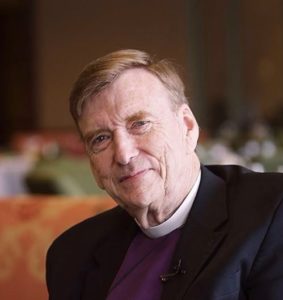
Bishop John Shelby Spong Revisited
The Terrible Texts:
The Attitude of the Bible Toward Women – Part I
 “For
the man is not of the woman, but the woman of the man. Neither was the man created for the woman but the woman for the man.” I Cor. 11:8, 9. “For
the man is not of the woman, but the woman of the man. Neither was the man created for the woman but the woman for the man.” I Cor. 11:8, 9.
“I permit no woman to have authority over men. She is to be silent.” 1 Timothy 2:12.
“Wives, be subject to your husbands as to the Lord.” Ephesians 5:22
These are just a few of the many texts present in the Sacred Scriptures of the Judeo-Christian tradition that have been used
over the centuries to denigrate women, to assign them to second class positions, to prevent them from exercising such rights of citizenship as the vote, to prohibit them from being educated, to close the doors on their aspirations to enter the professions
and to forbid them from functioning in roles of religious leadership. Assertions are made in the Bible that women are subhuman, that women do not bear the divine image and that women can be considered the property, first of her father, later of her husband.
Every advance that women have made in western civilization has had to contend against these biblical definitions.
With the claim being made that the Bible is either the dictated or the divinely inspired “Word of God,” the struggle for equality
for women has also been, far more than we would like to admit, a struggle against God. The fact that God was envisioned in the Judeo-Christian tradition almost exclusively in male terms has only added fuel to the fires of male oppression of women. That oppression
has not disappeared even in this 21st century. I think the case can be made, however, that as religion recedes in value, the emancipation of women has grown in direct proportion. The anti-women bias is today far stronger in the dying church than it is in the
emerging secular society. Indeed, the Christian Church is today the major bulwark of patriarchy.
Religious negativity toward women, however, is not limited to the Judeo-Christian tradition; it appears in other non-western
cultures and most of the great religions of the world. This realization points, I believe, to the fact that there is something universal in the human psyche that fuels an anti-female bias. If it is not a human phenomenon, it is at least present in the depths
of the male psyche and, therefore, must be assumed to express a mortal fear or to minister to a primal threat. This can be illustrated with an assortment of quotations from pre-Christian philosophers and from the sacred writings of each of the world’s great
religions.
Plato, in The Republic, records Socrates as saying: “Do you know anything at all practiced among mankind in which the male
sex is not far better than the female?” Xenophon stated that, “the ideal woman should see as little as possible, hear as little as possible and ask as little as possible.”
In the sacred texts of the Hindus, we are told: “It is the highest duty of a woman to immolate herself after her husband’s
death.” In another part of the Hindu tradition, we read: “Women are to be debarred from being competent students of the Vedas.” In the laws of Manu, we read: “In childhood a female is subject to her father. In youth a female is subject to her husband. When
her Lord is dead, she shall be subject to her sons. A woman must never be independent.”
In Buddhism one is reborn a woman because of one’s bad karma. Buddhist prayers include: “I pray that I may be reborn a male
in a future existence.”
From a book of Jewish prayers, Jewish men are taught to say: “Blessed be the God who has not created me a heathen, a slave
or a woman.” Talmudic writers added: “It would be better to burn the words of Torah than to entrust them to a woman.”
In the Muslim Qu’ran (Koran) we learn that the woman is regarded as “half a man” and that “forgetfulness overcomes the woman.
They are inherently weaker in rational judgment.”
The reasons for this negativity are varied but its reality is consistent. For some cultures it was rooted in nothing less than
size and physical competence. The woman generally did not grow to be as large as the man and her ability to run or to compete in various tests of strength, upon which the survival of the tribe depended, was obviously limited. She was thus determined to be
something of a second class human being. For others it was the vulnerability of childbirth and the dependency the woman exhibited of necessity, both in the later stages of pregnancy and while nursing, that cast her in the role of “the weaker sex.”
The mother and the child were bound to each other in such a way as to put both out of circulation for long periods of time
causing women and children to be thought of similarly. The phase, “women and children first,” which we associate in our own folklore with the sinking of the great ship Titanic, captured this ancient attitude that defined both the female and children as the
weak, helpless and dependent ones of the society, who are quite obviously not to be treated as equals. Male children might grow out of this second-class status, but the woman, it was thought by the act of creation itself, could never escape her destiny.
In other cultures it was the function of menstruation to which the negativity toward women was attached. Ancient peoples reveal
enormous fear of and prejudice against menstruation that many suggest was rooted in the qualities attributed to blood. Ancient people tended to identify blood with life, a connection still noted in our language. “The shedding of blood” still means death. Military
campaigns are justified by their combatants’ willingness to offer their blood, a synonym for their lives, for the righteousness of their cause. Historic battlefields like Hastings or Gettysburg are said to have been hallowed by the blood that was spilled there.
If blood was assumed to be the place in which life itself was located, there must have been enormous speculation and fear, perhaps even jealousy, that women had a magical and mysterious ability to bleed regularly, and yet they did not die. The ideas that developed
around menstruation are quite revealing.
Anthropologists, and mythologists like Joseph Campbell, suggest that there was a time in human history when the feminine was
the analogy by which the Divine One was defined. The fertility cults of pre-history were dedicated to the earth mother, who was seen as the source and sustainer of tribal life. In time the male deity who lived beyond the sky, who impregnated a passive mother
earth with the rains of divine semen, replaced her. This deity was also modeled by the tribal chief, whose strength led the tribe both in battle and in the hunt.
This shift can be discovered in the lingering tension that existed in the ancient world between nomadic people always seeking
food and water for their herds, which tended to produce a male deity who governed the wind and the rain; and settled agricultural people always seeking to cause the earth to bring forth a sufficient amount of food to sustain their life, which tended to produce
a female deity of fertility. In the nomadic societies, better weapons were developed to fight off predators, both human and animal. It was not enough to hurl rocks and fight assailants with sticks. Long-range projectiles, either spears or arrows sent forth
from primitive bows, were better guarantors of success. These weapons reminded these ancient warriors, albeit subconsciously, of their own thrusting male power. After all these weapons were so obviously phallic symbols and they would be developed into more
and more overt phallic forms as the years went by. Guns, rifles and artillery were simply erect rods which exploded, hurling their payload at their enemies. On psychological levels surely this identification was clear. The analogy between the male organ being
thrust into its partner encouraged, I believe, the growing hostile male definition of a woman. Our slang expressions for sexual intercourse reveal enormous hostility even today. Words like “make,” “screw” or “f–k”, are not gentle, loving words and when males
refer to lovemaking as a conquest, the military connections are manifest. More than we seem to recognize, women historically came to be thought of as the enemy of men.
There is also a sense in which women were treated throughout the ages, in male dominated societies, almost as “prisoners of
war.” They had few rights. Their freedom was curtailed both by social pressure and by male power. Their mobility was compromised sometimes by a cruel but culturally approved method of binding their feet. The power they had to change their surroundings was
minimal, resulting in their acceptance of abuse as both their fate and their due, their inability to talk back without punishment, their vulnerability to beatings, and the fact that men had legal protection no matter how they treated their wives. Men exercised
authority over both the bodies and the lives of women. The woman’s only real power was found in her feminine charms, her ability to attract, to seduce and to create in the male a desire and yearning for her body. This power also threatened the male sense of
independence and was both enjoyed and resented. Those feminine wiles were a technique learned by women in the school of hard knocks. While the sources of the hostility that men have expressed toward women over the centuries can be debated, there is no debate
about the fact that this hostility is real. There is also no doubt that this hostility has been justified as a virtue in religious circles. So it was said that the all-powerful God of the universe, who was predominantly male, at least in the religions of the
western world, meant for life to be organized in this male dominant way.
If an attitude finds expression in every prevailing religious system in the world, and in almost every society, one begins
to suspect that it has its roots in something very basic in our humanity. Religion incorporates and explains human content far more than it creates human content. The universality of this negativity requires that we look within and beneath all of our social
systems for a new understanding. Why is there such a consistent need among men to put down, to conquer, and to oppress half of the human race? What universal fear, hidden inside our masculine humanity, feeds the need to dominate? To press this topic more deeply
will be my task in future weeks, when our examination of the “Terrible Texts” of the Bible continues.
Originally published December 3, 2003
|
|
|
|
|
|