A Mini-Library for a 21st Century Spirit Movement

As a part of our 50th anniversary celebration: A Mini-Library for a 21st Century Spirit Movement Dear Old Colleagues and New Acquaintances, I want you to have and reflect upon the following reviews of some of the visionary writing that expresses our common experience. My hope is that this overview can generate additional commonality and consensus building among us. For a viable and flourishing humanity on planet Earth and a vital resurgence of Christian practice, Gene Marshall

Good list! Of course there will always be books that others would have included. One I would add is Ethics by Dietrich Bonhoeffer, from whence the "Freedom" paper came. Randy "Listen to what is emerging from yourself to the course of being in the world; not to be supported by it, but to bring it to reality as it desires." -Martin Buber (adapted) ________________________________ From: Ken Fisher <hkf232@gmail.com> To: Order Ecumenical Community <oe@wedgeblade.net>; Colleague Dialogue <dialogue@lists.wedgeblade.net> Cc: Gene Marshall <jgmarshall@cableone.net> Sent: Thursday, August 9, 2012 9:26 AM Subject: [Dialogue] A Mini-Library for a 21st Century Spirit Movement As a part of our 50th anniversary celebration: A Mini-Library for a 21st Century Spirit Movement Dear Old Colleagues and New Acquaintances, I want you to have and reflect upon the following reviews of some of the visionary writing that expresses our common experience. My hope is that this overview can generate additional commonality and consensus building among us. For a viable and flourishing humanity on planet Earth and a vital resurgence of Christian practice, Gene Marshall _______________________________________________ Dialogue mailing list Dialogue@lists.wedgeblade.net http://lists.wedgeblade.net/listinfo.cgi/dialogue-wedgeblade.net

This would not be my list. Herman _____ From: oe-bounces@lists.wedgeblade.net [mailto:oe-bounces@lists.wedgeblade.net] On Behalf Of Ken Fisher Sent: Thursday, August 09, 2012 10:27 AM To: Order Ecumenical Community; Colleague Dialogue Cc: Gene Marshall Subject: [Oe List ...] A Mini-Library for a 21st Century Spirit Movement As a part of our 50th anniversary celebration: A Mini-Library for a 21st Century Spirit Movement Dear Old Colleagues and New Acquaintances, I want you to have and reflect upon the following reviews of some of the visionary writing that expresses our common experience. My hope is that this overview can generate additional commonality and consensus building among us. For a viable and flourishing humanity on planet Earth and a vital resurgence of Christian practice, Gene Marshall

Dear Colleagues around the world, I just returned from a journey to Istanbul and a great visit with my longtime colleague Christina Bache Fidan who agreed to be our presenter for the first virtual presentation of the Peace and Governance Theme of the ICA Nepal Conference on August 30th...just a few days away. Christina will lead a dialogue on the volatile dynamics in the Middle East, focused on Turkey's internal challenges and its relationship with Iraq, particularly northern Iraq. I hope you will join us and invite other colleagues to join us as well. I agreed to join the leadership team of the Peace and Governance Theme because of my lifelong passion for peace and the Virtual type conference where all can participate from wherever they are located in the world before, during and after the conference and/or by being present in Nepal. Christina will also be one of our virtual presenters during the conference in Nepal from Istanbul. ALSO, visit the ICA Human Development Conference Site, Peace and Governance Theme and join in by taking the Poll and helping to select the 10 of 32 Critical Conditions for Peace Building: http://www.conference.ica-nepal.org http://www.virtual.ica-nepal.org If you have any problems taking Poll Taking or have questions about the two technologies for the Virtual Presentation, Please contact the two Sherpas for the Peace & Governance Theme: Tornbom Catherine: catherine@interfuseassociates.com Jean Watts: jeanwatts@cox.net PLEASE come join the Peace and Governance Theme of the ICA Nepal Conference for our first virtual presentation Special Program on Peace Building in the Middle East - Turkey and Iraq August 30 - 6:00 am PT/ 7:00 am MT/ 8:00 am CT/ 9:00 am ET USA Time We will begin with questions, many questions. Questions that beg responses based in research, based in practice, based in intuition, based on experience, and based in the heart. Together we will move into an exploration of the vast journey of peace and find the path that brings concrete action to our beloved communities. Join us on August 30 with my longtime colleague Christina Bache Fidan. Fidan will lead a dialogue on the volatile dynamics in the Middle East, focused on Turkey's internal challenges and its relationship with Iraq, particularly northern Iraq. Christina is a doctoral candidate whose gift and passion as a peacemaker finds her working with refugees in neighborhoods in Turkey; has developed a professional woman's organization to expand services to refugees; and maintains her work in international relations. August 30 - 6:00 am PT/ 7:00 am MT/ 8:00 am CT/ 9:00 am ET USA Time We will use two technologies: 1. Adobe Connect for the visual: http://top.adobeconnect.com/peace-building-turkey/ 2. Go-To-Meeting for the audio: https://www3.gotomeeting.com/join/335229006 Use your microphone and speakers (VoIP) - a headset is recommended. Or, call in using your telephone. Dial +1 (773) 897-3015 Access Code: 335-229-006 Audio PIN: Shown after joining the meeting Meeting ID: 335-229-006 Register for this session here in Groupsite. As we confirm our additional guest speakers, we will send invitations letting you know the time and date. Please Catherine Tornbomt me if you have any questions. Interfuse Associates Cell/Text: 520.289.7117 Website: interfuseassociates.com About the ICAI Nepal Conference
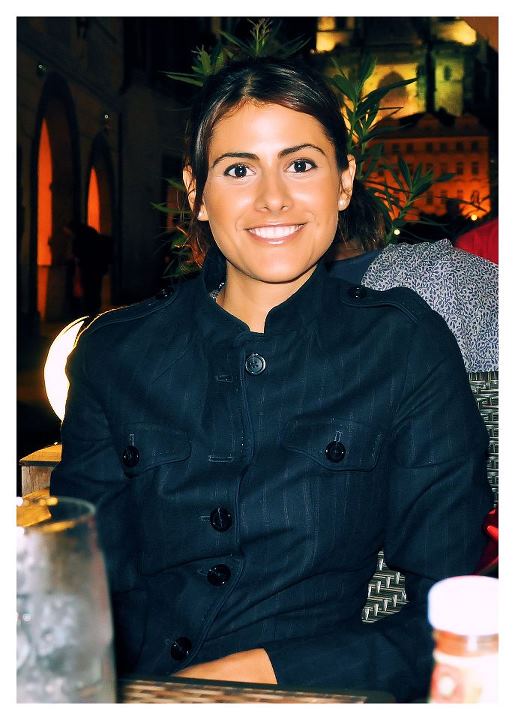

George and Wanda, This looks great! I hope to participate tomorrow (Thursday Aug. 30 9 a.m. eastern). Thanks much for the info. Who is the "I" who just returned from Istanbul? And who is the beautiful person in the picture? Not really clear. Janice Ulangca ----- Original Message ----- From: Wanda Holcombe To: Colleague Dialogue Sent: Tuesday, August 28, 2012 5:34 PM Subject: [Dialogue] Join the Virtual Presentation On Peace Building in theMiddle East August 30 - 6:00 am PT/ 7:00 am MT/ 8:00 am CT/9:00 am ET USA Time Dear Colleagues around the world, I just returned from a journey to Istanbul and a great visit with my longtime colleague Christina Bache Fidan who agreed to be our presenter for the first virtual presentation of the Peace and Governance Theme of the ICA Nepal Conference on August 30th...just a few days away. Christina will lead a dialogue on the volatile dynamics in the Middle East, focused on Turkey's internal challenges and its relationship with Iraq, particularly northern Iraq. I hope you will join us and invite other colleagues to join us as well. I agreed to join the leadership team of the Peace and Governance Theme because of my lifelong passion for peace and the Virtual type conference where all can participate from wherever they are located in the world before, during and after the conference and/or by being present in Nepal. Christina will also be one of our virtual presenters during the conference in Nepal from Istanbul. ALSO, visit the ICA Human Development Conference Site, Peace and Governance Theme and join in by taking the Poll and helping to select the 10 of 32 Critical Conditions for Peace Building: http://www.conference.ica-nepal.org http://www.virtual.ica-nepal.org If you have any problems taking Poll Taking or have questions about the two technologies for the Virtual Presentation, Please contact the two Sherpas for the Peace & Governance Theme: Tornbom Catherine: catherine@interfuseassociates.com Jean Watts: jeanwatts@cox.net PLEASE come join the Peace and Governance Theme of the ICA Nepal Conference for our first virtual presentation Special Program on Peace Building in the Middle East - Turkey and Iraq August 30 - 6:00 am PT/ 7:00 am MT/ 8:00 am CT/ 9:00 am ET USA Time We will begin with questions, many questions. Questions that beg responses based in research, based in practice, based in intuition, based on experience, and based in the heart. Together we will move into an exploration of the vast journey of peace and find the path that brings concrete action to our beloved communities. Join us on August 30 with my longtime colleague Christina Bache Fidan. Fidan will lead a dialogue on the volatile dynamics in the Middle East, focused on Turkey's internal challenges and its relationship with Iraq, particularly northern Iraq. Christina is a doctoral candidate whose gift and passion as a peacemaker finds her working with refugees in neighborhoods in Turkey; has developed a professional woman's organization to expand services to refugees; and maintains her work in international relations. August 30 - 6:00 am PT/ 7:00 am MT/ 8:00 am CT/ 9:00 am ET USA Time We will use two technologies: 1. Adobe Connect for the visual: http://top.adobeconnect.com/peace-building-turkey/ 2. Go-To-Meeting for the audio: https://www3.gotomeeting.com/join/335229006 Use your microphone and speakers (VoIP) - a headset is recommended. Or, call in using your telephone. Dial +1 (773) 897-3015 Access Code: 335-229-006 Audio PIN: Shown after joining the meeting Meeting ID: 335-229-006 Register for this session here in Groupsite. As we confirm our additional guest speakers, we will send invitations letting you know the time and date. Please Catherine Tornbomt me if you have any questions. Interfuse Associates Cell/Text: 520.289.7117 Website: interfuseassociates.com About the ICAI Nepal Conference ------------------------------------------------------------------------------ _______________________________________________ Dialogue mailing list Dialogue@lists.wedgeblade.net http://lists.wedgeblade.net/listinfo.cgi/dialogue-wedgeblade.net
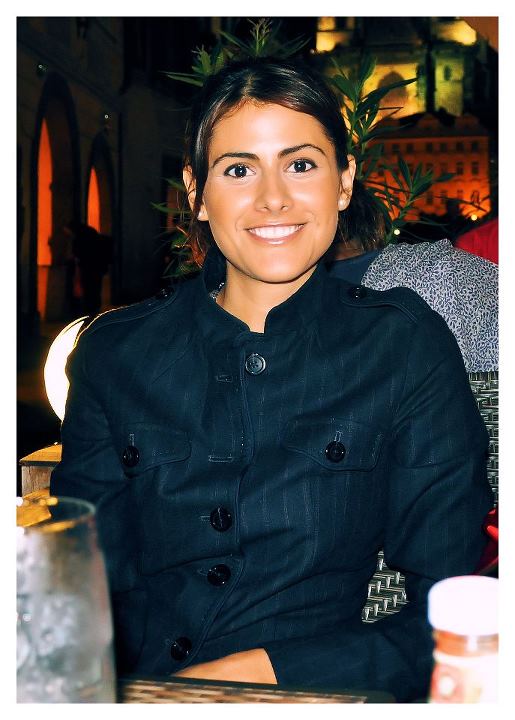

Wanda is the "I" that just returned from Istanbul. The photo is Christina Bache Fidan who will be the presenter in the first Virtual Presentation for the Peace Building & Governance Theme Team. Christina is a longtime peace maker colleague who met Firat Fidan when they were both getting their Masters at American University in Washington DC, Christina in Conflict Resolution and Firat in International Business. It was an honor to attend their wedding six years ago in Istanbul. They are an awesome "international" couple as they both are engaged in different ways caring for the world from Istanbul. Christina is also a Phd candidate on International Relations. I do hope you will join us in the "virtual" type dialogue on peace building. Wanda Sent from my iPhone On Aug 29, 2012, at 9:12 AM, "Janice Ulangca" <aulangca@stny.rr.com> wrote:
George and Wanda, This looks great! I hope to participate tomorrow (Thursday Aug. 30 9 a.m. eastern). Thanks much for the info.
Who is the "I" who just returned from Istanbul? And who is the beautiful person in the picture? Not really clear.
Janice Ulangca ----- Original Message ----- From: Wanda Holcombe To: Colleague Dialogue Sent: Tuesday, August 28, 2012 5:34 PM Subject: [Dialogue] Join the Virtual Presentation On Peace Building in theMiddle East August 30 - 6:00 am PT/ 7:00 am MT/ 8:00 am CT/9:00 am ET USA Time
Dear Colleagues around the world,
I just returned from a journey to Istanbul and a great visit with my longtime colleague Christina Bache Fidan who agreed to be our presenter for the first virtual presentation of the Peace and Governance Theme of the ICA Nepal Conference on August 30th...just a few days away. Christina will lead a dialogue on the volatile dynamics in the Middle East, focused on Turkey's internal challenges and its relationship with Iraq, particularly northern Iraq. I hope you will join us and invite other colleagues to join us as well.
I agreed to join the leadership team of the Peace and Governance Theme because of my lifelong passion for peace and the Virtual type conference where all can participate from wherever they are located in the world before, during and after the conference and/or by being present in Nepal. Christina will also be one of our virtual presenters during the conference in Nepal from Istanbul.
ALSO, visit the ICA Human Development Conference Site, Peace and Governance Theme and join in by taking the Poll and helping to select the 10 of 32 Critical Conditions for Peace Building: http://www.conference.ica-nepal.org http://www.virtual.ica-nepal.org
If you have any problems taking Poll Taking or have questions about the two technologies for the Virtual Presentation, Please contact the two Sherpas for the Peace & Governance Theme: Tornbom Catherine: catherine@interfuseassociates.com Jean Watts: jeanwatts@cox.net
PLEASE come join the Peace and Governance Theme of the ICA Nepal Conference for our first virtual presentation Special Program on Peace Building in the Middle East - Turkey and Iraq August 30 - 6:00 am PT/ 7:00 am MT/ 8:00 am CT/ 9:00 am ET USA Time
We will begin with questions, many questions. Questions that beg responses based in research, based in practice, based in intuition, based on experience, and based in the heart. Together we will move into an exploration of the vast journey of peace and find the path that brings concrete action to our beloved communities.
Join us on August 30 with my longtime colleague Christina Bache Fidan. Fidan will lead a dialogue on the volatile dynamics in the Middle East, focused on Turkey's internal challenges and its relationship with Iraq, particularly northern Iraq. Christina is a doctoral candidate whose gift and passion as a peacemaker finds her working with refugees in neighborhoods in Turkey; has developed a professional woman's organization to expand services to refugees; and maintains her work in international relations.
August 30 - 6:00 am PT/ 7:00 am MT/ 8:00 am CT/ 9:00 am ET USA Time
We will use two technologies:
1. Adobe Connect for the visual: http://top.adobeconnect.com/peace-building-turkey/
2. Go-To-Meeting for the audio: https://www3.gotomeeting.com/join/335229006 Use your microphone and speakers (VoIP) - a headset is recommended.
Or, call in using your telephone.
Dial +1 (773) 897-3015
Access Code: 335-229-006
Audio PIN: Shown after joining the meeting
Meeting ID: 335-229-006
Register for this session here in Groupsite.
As we confirm our additional guest speakers, we will send invitations letting you know the time and date.
Please Catherine Tornbomt me if you have any questions.
Interfuse Associates Cell/Text: 520.289.7117 Website: interfuseassociates.com About the ICAI Nepal Conference
<Christina Fidan 1.jpg>
_______________________________________________ Dialogue mailing list Dialogue@lists.wedgeblade.net http://lists.wedgeblade.net/listinfo.cgi/dialogue-wedgeblade.net _______________________________________________ Dialogue mailing list Dialogue@lists.wedgeblade.net http://lists.wedgeblade.net/listinfo.cgi/dialogue-wedgeblade.net

Hi Folks, I ran across the following summary of our history which I thought worth looking at: http://luigimorelli.wordpress.com/2011/02/15/a-story-of-organizational-chang... What do you like about it? What would you change in it? What do you know about .."A Revolution of Hope"? Len

Would it be possible to send this attachment in a different format? Thanks- Ann -----Original Message----- From: Ken Fisher <hkf232@gmail.com> To: Order Ecumenical Community <oe@wedgeblade.net>; Colleague Dialogue <dialogue@lists.wedgeblade.net> Cc: Gene Marshall <jgmarshall@cableone.net> Sent: Thu, Aug 9, 2012 10:27 am Subject: [Dialogue] A Mini-Library for a 21st Century Spirit Movement As a part of our 50th anniversary celebration: A Mini-Library for a 21st Century Spirit Movement Dear Old Colleagues and New Acquaintances, I want you to have and reflect upon the following reviews of some of the visionary writing that expresses our common experience. My hope is that this overview can generate additional commonality and consensus building among us. For a viable and flourishing humanity on planet Earth and a vital resurgence of Christian practice, Gene Marshall _______________________________________________ Dialogue mailing list Dialogue@lists.wedgeblade.net http://lists.wedgeblade.net/listinfo.cgi/dialogue-wedgeblade.net

George, Here it is. Jack A Mini-Library for a 21st Century Spirit Movement This brief book list is constructed around the notion that the life, work, and legacy of Joseph W. Mathews constitutes a revelatory event which has both an “Old Testament” set of writings that illuminates it and a “New Testament” set of writings that also illuminates it. For my “before Mathews” selections, I have chosen one easy to read book from each of the five theologians who most influenced Mathews' life and contributions. And for my “After Mathews” selections, I am listing what I believe have been the most significant books that have been written about Joe Mathews or written in the wake of Joe Mathews by some of those who were “shaped” by him and who attempted to further expand and update the opening in Spirit living that he initiated. (Assembled by Gene Marshall and reviews written by Joyce Marshall, Gene Marshall, Alan Richard, Ken Fisher) Selections of Classic 20th Century Theology H. Richard Niebuhr -- Radical Monotheism and Western Culture Paul Tillich -- The Shaking of the Foundations Dietrich Bonhoeffer -- Life Together Rudolf Bultmann -- Primitive Christianity in its Contemporary Setting Søren Kierkegaard -- The Sickness Unto Death Each of these authors wrote many other books, and many other authors (secular and religious) shaped Mathews thinking and life. But these selections provide a baseline grasp of where he was grounded in the Spirit upwellings of his century. Spirit Movement Writings Theology and Spirit John Epps -- Bending History: Talks of Joseph Wesley Mathews with: John Cock, George Holcombe, Betty Pesek, and George Walters Richard Elliot -- Falling in Love with Mystery: We Don’t Have to Pretend Anymore John Cock -- The Transparent Event: Post-Modern Christ Images -- Our Universal Spirit Journey: Reflection and Verse for Creation’s Sake Brian Stanfield -- The Courage to Lead: Transform Self, Transform Society John Baggett -- Seeing Through the Eyes of Jesus: His Revolutionary View of Reality & His Transcendent Significance for Faith Wesley Lachman -- The Shortest Way Home: A contemplative Path to God Desmond Avery -- Beyond Power: Simone Weil and the Notion of Authority Gene Marshall -- The Enigma of Consciousness: A Philosophy of Profound Humanness & Religion -- Jacob’s Dream: A Christian Inquiry into Spirit Realization -- The Call of the Awe: Rediscovering Christian Profundity in an Interreligious Era -- Great Paragraphs of Protestant Theology Biography and Autobiography James K. Mathews -- Brother Joe: A 20th Century Apostle John Cock -- Called to Be: A Spirit Odyssey Jeanette Stanfield -- “Just Checkin’ on ya”: My journey of being a caregiver for a loved one Social Vision and Life Methods John Epps -- Bending History: Talks of Joseph W. Mathews, Vol. II, toward a New Social Vehicle with: James Campbell, James Wiegel, Clarence Mann, Marilyn Crocker, and George Holcombe Gene Marshall -- The Road from Empire to Eco-Democracy with: Ben Ball, Marsha Buck, Ken Kreutziger, and Alan Richard Brian Stanfield -- The Art of Focused Conversation: 100 Ways to Access Group Wisdom in the Workplace -- The Workshop Book: From Individual Creativity to Group Action Priscilla Wilson -- The Facilitative Way: Leadership that Makes the Difference with: Kathleen Harnish and Joel Wright - 1 - Brief Reviews of A Mini-Library for a 21st Century Spirit Movement written and edited by Gene Marshall, Joyce Marshall, Alan Richard, and Ken Fisher Selections of Classic 20th Century Theology Radical Monotheism and Western Culture H. Richard Niebuhr Harper Torchbooks: 1943 This book defines the very word “theology” for the 20th Century Theological Revolution in Christian thought. So defined, theology is not about believing in a supreme being or power. The struggle is not between a theism that believes in such a divine being and an atheism that does not. In the Niebuhr analysis everyone has faith in something that serves as his or her God or gods and goddesses. Whatever gives meaning to your life is properly called your worship. Niebuhr defines three types of worship: (1) polytheism in which many meaning givers characterize your worship, (2) henotheism in which your social group provides your overarching meaning and loyalty, and (3) monotheism is which Reality as a Whole is your worship – in which faith or trust is attached to the Void out of which all things come and to which all things return. This Void is also the Every-thing in which all things cohere. Niebuhr then shows how radical monotheism relates to Incarnation, Revelation, Religion, Politics, and Science. If the shapers of a Next Christianity were to read only one book of 20th Century theology, this is it. The Shaking of the Foundations Paul Tillich Charles Scribner’s Sons: 1948 This collection of 22 sermons on Old and New Testament passages shows clearly how the basic breakthrough in Christian understanding requires a shake up in our culture’s familiar presuppositions, overall attitudes, and programs of action. In these talks Tillich clarifies how a contemporary person of integrity can appropriate words and topics such as: God, Time, Existence, Holy, Religion, Providence, Love, Truth, Spirit, Christ, Sin, Grace, and more. These topics are not skimmed over but probed deeply. If these sermons seem difficult it is not because they are hard to read, but because what is said requires so much re-evaluation of life on the part the reader. We may need to read other books by this author to meet Tillich, the philosopher, social critic, and systematic theologian, but this book allows you to meet Tillich, the person – and perhaps your own person as well. Life Together Dietrich Bonhoeffer Harper and Row: 1954 The communal nature of Christian practice was a core theme in Bonhoeffer’s life and writings that characterized everything, beginning in his 20s with his fabulous doctoral thesis and lasting to his death at the hands of the national Nazi “anti-community” that he so thoroughly opposed. Life Together goes straight to the vulnerable heart of living together within the Word of forgiveness that restores humans to their authenticity. He makes it painfully clear that Christian community is not an ideal that progressive - 2 - leaning leaders impose upon the reality of a group of people. And he also makes it clear that the “real” community of Christian living is not about the idolization of the ego strengths of an accomplished leader who binds others to his charisma. Though some of Bonhoeffer’s orthodox language needs to be translated for our times, he may be, among all the great 20th Century theologians, the most existentially personal. It is essential to a viable spirit movement that we take this interpersonal wisdom into our intimate circles of practice. Primitive Christianity in its Contemporary Setting Rudolf Bultmann Meridian Books: 1956 Bultmann’s emphasis was excellence in scientific New Testament scholarship and the translation of the New Testament message from two-story metaphors into one-realm down-to-Earth ways of talking about our fundamental existence. So penetrating was his work, that theologians in this century tend to be divided into (1) those who think he went too far and (2) those who think he did not go far enough. Primitive Christianity is a helpful choice from among his many writings, for it explores in an existential manner the historical context for the New Testament writings. With respect to our own lives, we get an understandable summary of the Old Testament Heritage, first Century Judaism, the Greek Heritage, Stoicism, Gnosticism, and more. Then we get an exploration of how the original Christian community used and opposed all these influences. At some point in our Christian education, we all need this grasp of our origins as a community of faith, and we need to learn Bultmann’s method of seeking the existential truth that breaks open for our era these Spirit expressions from an ancient time. The Sickness Unto Death Søren Kierkegaard first published in 1849 under the pseudonym Anti-Climacus. Princeton University Press: 1941 published with Fear and Trembling Kierkegaard considered Sickness “his most perfect book.” In it he defines sin, not as the opposite of virtue, but as the opposite of faith (by which he meant trust in the given Mysterious Eternality with which we are inescapably related). Because we are inescapably a Mystery-related mystery ourselves, our unwillingness to be so related is a condition that can be described as despair. Sin is despair. We can be in an unconscious form of despair in which the despairer hides this unacknowledged sickness. Or our despair can become painfully conscious, but still hidden away behind a reserved, accommodating exterior. Or despair can break to the outside into a desperate plunge into noble work or sensual debauchery. And despair can become a defiant project of self-created selfhood that can be resolved in the twinkling of the eye into the nothingness that it is. Finally, despair can become a defiant project of dismal living that “proves” to the despairer and to the world that the whole of Reality is “no damned good.” Kierkegaard satirical description of these states of despair needs to have its place as a vivid picture in the memory of every leader of Spirit transformation and nurture. - 3 - Spirit Movement Writings Theology and Spirit Bending History Talks of Joseph Wesley Mathews John Epps with: John Cock, George Holcombe, Betty Pesek, and George Walters Resurgence Publishing: 2005 This first of two volumes of Mathews’ talks focuses upon the religious and Christian aspects of Joe’s ministry. These well-selected sets of talks reveal the “soul” of this amazingly intuitive and creative critic and formulator of religious understanding. Without ever ceasing to be a Christian and a church renewal advocate, Mathews looked into the profound humanness that all religions access in their various ways. He spoke of the revelation of a New Religious Mode that any religious renewal movement can ignore only at the peril of losing all relevance for our times. His talks are spellbinding in their colorfulness and aggressive combativeness with illusion. The editors of this book have done an excellent job of choosing, arranging, and contexting these wild and widely scattered contributions that Joe Mathews put forth. Take your time in reading this book, and promise yourself to read it over again, for it is deep enough to continue addressing us decade after decade into the future. Falling in Love with Mystery We Don’t Have to Pretend Anymore Richard Elliott Dorrance Publishing: 1998 This book is an exception to the rule that theological writers are confused in their use of the word, “God.” With simple, readable, and colorful life stories, Elliott tells us what it means to confront the actual Mystery that will not go away and call that Mystery “God.” He also explores the various tragedies which characterize most Christian religion. He makes clear again and again how our religion is alienated from the actual living of our lives. And he shares his breakthroughs on how we can proceed in constructing a meaningful and relevant contemporary Christian spirituality. This book makes a good study resource for small groups, and it can be read in small portions for a daily solitary reflection. The Transparent Event Post-Modern Christ Images John Cock tranScribe books: 2001 Second Edition The core of this book makes it plain to us that everyone has some image of Jesus, of what he means to us, and of what it means, or does not mean, to call him “the Christ.” In this sense Christology is a pattern of thought for every human being. Cock constructs exercises that enable the reader to discover what his or her current “Christology” might actually be. In Section Two, Cock summarizes how a list of renowned theologians think about this topic. Then in Section Three: “The Dynamics of the Christ Event,” he republishes the amazing essay by Joe Mathews, “The Christ of History,” and spends the next chapter discussing it. He then writes a chapter on “The Christ Event in Life and Art” in which he shows how the dynamics of the transforming Christ event appear in ordinary secular art and thus in our everyday lives. In one - 4 - illustration in this chapter, he walks us through the Christ event in the life of Mountain Rivera in the movie, Requiem for a Heavyweight. Moving from the turning point contained in this gem, Cock goes on to explore further his own Christology and share other gems that might be helpful to the reader. In the end Cock returns the reader to the challenge to work through his or her very own Christology. Our Universal Spirit Journey Reflection and Verse for Creation’s Sake John Cock transScribe books: 2002 This book, completed under the emotional shadow of the September 2001 attack on the World Trade Center, attempts to develop an inter-religious language for the central experiences of profound humanness expressed in the key symbols of the Christian tradition. Cock takes up the challenge of the “secular religious” – the search for a language of awe that we can share in common among historic religious traditions and outside those traditions. In order to meet this challenge, he focuses on the word “Spirit” which has been as troublesome for most of us as the word “God.” In order to invite secular people into the conversation about the meaning of “Spirit,” Cock uses a mixture of poetry, aphorism, and essay to show how Spirit is revealed in the ordinary experiences of everyday life. This book can be useful for anyone interested in interreligious dialogue and in the renewal of traditional theological language. The Courage to Lead Transform Self, Transform Society by Brian Stanfield New Society Publishers: 2000 Second Edition, iUniverse: 2012 Also Available from: ica-usa.org or ica-associates.ca The premise of this book is that to transform society, we first need to transform ourselves. The book includes a history of the Christian Faith and Life Community, the Ecumenical Institute, the Order:Ecumenical, and the Institute of Cultural Affairs – as well as a summary of these sixty-years of amazing in-depth research and practical experience by this network of people. The book is presently a bestseller on the iUniverse bookstore site, having sold 9500 hard copies. And at least 1500 persons have been in Courage to Lead study groups. The recent editing of this latest edition has made the book even more accessible. Under the four headings of Relation to Life, Self, World, and Society, 12 stances of an effective leader are laid out: everyday care, disciplined lucidity, continual affirmation, secular depth, self-reflectiveness, radical vocatedness, historical involvement, comprehensive perspective, inclusive responsibility, social pioneer, transestablishment style, and signal presence. While often autobiographical, the lives being shared illuminate all our lives. This book is for the thousands of us who have participated in this 60-year journey, and it is also for all “Those Who Care” who have found themselves called to lead. Seeing Through the Eyes of Jesus His Revolutionary View of Reality & His Transcendent Significance for Faith John Baggett William B. Eerdmans: 2008 A whole new library of scholarly work on the historical Jesus has been produced over the last three decades, much of it historically and exegetically rich but almost all of it - 5 - theologically thin. In Seeing Through the Eyes of Jesus, John Baggett addresses this problem, showing how the painstaking historical and archaeological work these scholars have performed can help us clear from our minds our obsolete images of Jesus. Baggett devotes the first part of the book to a highly readable and insightful “biography” of Jesus informed by this scholarship. In the second part of the book, he argues in detail that we must also clear away obsolete images of God and world as well in order to hear the full impact of the address of Jesus' life to our own. In both parts Baggett uses the device of seeing through the eyes of Jesus, which means placing our own lives within his life and thus rendering all these topics fully existential in their meanings for the reader. The Shortest Way Home A contemplative Path to God Wesley Lachman O Street Publishing: 2008 Lachman, like many of us in recent decades, has been gripped by the power of meditation/contemplation as a method of accelerating our Spirit journey into the depths of our being. In the first eight chapters he shows us how contemplative work is a valid quest for truth and how the contemplative heritage of Christianity is a strong heritage along with the teachings from Hinduism and Buddhism that are making such inroads in the awareness of so many of us. In chapter nine Lachman shows us how contemplative wisdom illuminates the meaning of key Christian terms like “God,” “Christ,” and “Holy Spirit.” The way he contrasts Holy Spirit with the ego’s humanly created “story of I” is most illuminating. Here is a line that might stand as a summary of the book: “Freed from the myopia caused by living within our own story of I, we begin to appreciate the strange, wondrous people and things around us, as if for the first time.” Lachmann illustrates how true compassion or Spirit love is a given part of our being that bubbles to the surface of our living when the old stories of I are put in their place. Freedom, too, is what we have left when stories of I no longer dominate. This short book can be read again and again and still be a challenge. Beyond Power Simone Weil and the Notion of Authority Desmond Avery Lexington Books, Rowman & Littlefield: 2008 This is an immaculately scholarly and profoundly existential book. In terms of those two criteria, its equal cannot be found among all the other great books produced by descendants of the Joe Mathews breakthrough. Beyond Power is an illuminating combination of Avery’s mastery of the Joe Mathews’ heritage and his thorough dialogue with a truly great philosophical and religious writer. In philosophical and sociological depth, Simone Weil is the equal of more well known figures like Simone de Beauvoir and Susan K. Langer. T. S. Eliot and Albert Camus acknowledged her as one of the great writers of their century. Avery reveals her value for Christian renewal, has mastered her story and writings, and has made her available to us in an accessible style. A Jew by birth, Weil forged for herself a radical Christian practice in the Roman Catholic style. Her decision not to be baptized had to do with her realization of the contradiction between an honest mystical faith and the misuses of Christian institutional power. This book is not an easy read, but not because of a cryptic style on the part of Avery or Weil. It is challenging because of the profound nature of the insights being shared. She has raised issues that are still living-edge topics. We can profit from reading this book, every page of it. - 6 - The Enigma of Consciousness A Philosophy of Profound Humanness & Religion Gene Marshall To be available in paperback in late 2012 or 2013 An advanced draft of this book can be downloaded now from: http://www.RealisticLiving.org/PDF/Enigma/ In Part One of this book, a philosophy of truth is laid out in an accessible manner, honoring the scientific approach to truth, but making clear that the contemplative approach to truth is also crucial and absolutely essential for an exploration of profound humanness and religion. Part Two uses the contemplative approach to truth to examine and theorize about the basic enigma of consciousness as it appears in the human species. In Part Three, profound humanness or Spirit is explored, described, and shown to be a given within human existence. In Part Four, “religion” is redefined for our time (a New Religious Mode) and various practices that characterize the meaning of “religion” are described. Using the category of “Primal Metaphors” rather than Joe Mathews’ “Ur-Images,” Part Five explores the vast diversity of religious expression on this planet. Part Six deals with “doing,” “historical engagement,” or “responsible action” that derives from the states of Being outlined in Part Three. This is an ambitious thought project, bringing to further clarity breakthroughs that Joe Mathews intuited but did not live to finish fleshing out. Jacob’s Dream A Christian Inquiry into Spirit Realization Gene Marshall iUniverse: 2008 Part One of this book is about the discovery of soul or the essence of being human. Part Two describes the states of profound humanness pulled through the basic Christian categories of Trust, Love, and Freedom. Using the enneagram typology of human personalities, Part Three describes the Fall from Spirit authenticity into personality identifications. Part Four describes the stages of the journey home to our Spirit authenticity. Part Five explores the solitary, but also profoundly communal, nature of the Christian life. This book focuses on the fulness of Spirit realization. To put this in Christian language, it focuses on sanctification rather than justification. With help from the enneagram heritage as well as from the current planet-wide flourishing of Eastern religions, this book adds clarity on the fall from our posited authenticity to our self-created and thereby illusory selfhoods. The capacity of the human species to create symbols for and models of our reality turns out to be both our glory and power but also our ability to lose ourselves in illusory facsimiles of the truth about ourselves and our world. Our journey home to our reality entails becoming disentangled from this illusion-making creativity and allowing our posited being to flower. Our own journey and our witness to others requires this kind of clarity. The Call of the Awe Rediscovering Christian Profundity in an Interreligious Era Gene Marshall iUniverse: 2003 This book was the last of many attempts by the author to pull together the theological revolution that rankled the Christian churches of the mid 20th Century and inspired so many of us to teach courses in basic theology to tens of thousands of clergy and laity in the decades of the nineteen sixties and seventies. Part One of this book moves through - 7 - the basic themes of Christian Heritage: Awe, Spirit, God, History, Jesus, Christ, Personality, Religion, and the Authority of Authenticity. Part Two is about the enrichment of interreligious dialogue: (1) The Children of Abraham, Yahweh and Allah, (2) The Asian Enrichment (especially Hinduism, Buddhism, and Taoism), and (3) The Return to antiquity (the Great Goddess recovery and the manyness of the Divine in ancient tribal life). All these topics have needed and still need freshening up for the 21st Century. This book provides some basic summaries and ways to keep moving on these topics. Great Paragraphs of Protestant Theology Gene Marshall Realistic Living Press: 2005 This spiral-bound booklet focuses on key paragraphs from the writings of Rudolf Bultmann, H. Richard Niebuhr, Paul Tillich, and Dietrich Bonhoeffer. Each of the nine chapters of Part Two provides a commentary on paragraphs taken from an essay or chapter by one of these four authors. The aim is to break open the sometimes cryptic language used by these authors in order to allow a more thorough grounding in our lives of these groundbreaking insights. Part One introduces this process of discovery by exploring three approaches to truth and the relation of these approaches to the three aspects of the triune experience of God that has characterized Christian heritage. Part Three explores three types of Unitarianism that have fragmented the triune experience. Part Three also demonstrates the openendedness of good Trinitarian theology rather than the sort of dogmatic cocoon or box that orthodox Trinitarian theology has often constructed. Biography and Autobiography Brother Joe: A 20th Century Apostle James K. Mathews Resurgence Publishing: 2006 Joe Mathews’ younger brother James became a progressive Bishop in the Methodist Church, serving first in India and then in Boston. The two brothers were quite close, assisting one another in important ways. Though less flamboyant than Joe, James was a solid theologian and a forceful and beloved leader. Perhaps no one was more qualified to write an intimate and yet objective story of Joe’s life than Jim. Those who worked with Joe day-to-day in the Order:Ecumenical may have a more detailed view of some aspects of Joe's creativity, but Jim’s story is a fair one and his skills as a writer have served us well in giving us a picture of Joe’s complex story in easily understandable chapters. This book definitely belongs in our mini-library of Spirit movement books. Called to Be A Spirit Odyssey John Cock transScribe books: 2000 This spiritual memoir contains the author's careful and passionate reflection on crucial events and images recalled from his lifetime of inquiry into what it means to be a human being standing before vast and impenetrable mystery. The Order: Ecumenical is at the core of the book, both in terms of the amount of pages devoted to it and the - 8 - central role it plays in the author's self-understanding. The pages devoted to explaining why the author ultimately left a body that had given him a sense of Spirit vocation he could not find in the congregational church or secular society are worth the price alone. Spirit colleagues who were in the Order or connected with it will find much to delight in and much to ponder. And those who were never directly involved in the Order but who see in it clues to a potential Christian renewal in the third millennium will want to put this book on their shelf alongside Bishop James K. Mathews' Brother Joe. “Just Checkin’ on Ya” My Journey of Being a Caregiver for a Loved One by Jeanette Stanfield, 2009 Available from ica-usa.org or ica-associates.ca Many of us may face going through the death process with a loved one. Jeanette Stanfield describes her own walk on that path with unflinching honesty. Her writing is matter-of-fact, straightforward, and thereby deeply moving. Brian Stanfield was a fivefoot giant of a man. Jeanette decided soon after she met him that she did not want to miss sharing her life with this man. The main gift of this book is the attitude with which Brian and Jeanette face death. Recognizing death as a natural and good part of life, they handle whatever sorrows and inconveniences it brings with wholehearted creativity, not blaming or complaining, simply living it to the full. Social Vision and Life Methods Bending History: Talks of Joseph W. Mathews, Vol. II, toward a New Social Vehicle John Epps with: James Campbell, James Wiegel, Clarence Mann, Marilyn Crocker, and George Holcombe Resurgence Publishing: 2011 This book contains some of Joe Mathews best talks, certainly his best talks on the spirit dimension of envisioning and building a New Social Vehicle. Joe’s interest in social engagement is part of his religious vision, his insight that the discovery of profound humanness is also a discovery of the journey of “return” to the real world as a servant, a servant who understands that in this day and age “all the Earth belongs to all the people.” This includes all the economic resources, all the political decisions, all the cultural gifts. For the individual person of any race or sex living in any place on the planet, the whole story of life on this planet is her or his story and each person is to be given the opportunity to participate in helping to create that story. This perspective is an anathema toward an upper class who owns almost half of the economic resources, makes all the big decisions, and hoards the best information, education, and cultural wisdom. Structures need to be built that change that topdown pattern, that make economic, political, and cultural democracy real in a very practical way. Joe was passionate about steps that could be taken by “Those who Care” way ahead of the political establishment, way sooner than anything we could vote for. So this book includes talks on methods of action as well as challenges to Spirit depth and a prophetic vision of the future. It may be surprising to some readers to see so much thoughtfulness in the awareness of a mid-20th-Century person that still applies today. Also the contexts and explanations applied to the various sections of this book by the editors are excellent. - 9 - The Road from Empire to Eco-Democracy Gene Marshall with: Ben Ball, Marsha Buck, Ken Kreutziger, and Alan Richard iUniverse and Berrett-Koehler: 2011 This book is also about the master picture of a New Social Vehicle, herein called Eco- Democracy. By “empire” is meant a quality built into the mode of social organization we have called “civilization.” A core vision of this book is seeing how we are in the midst of a massive turning in human history that is at least as radical as the turning from tribal societies to the pattern of civilization. Civilization is ending. Humanity does not have to end with the end of civilization, but an alternative to civilization has to be built with considerable haste. The ecological crisis was not as visible to Joe Mathews as it is to the prophetic voices of the 21st Century. We can now see that our very first priority is to reconstruct the economic, political, and cultural structures of human life into compatibility with the real limits and possibilities of planet Earth. Part One of the book is about ten basic ways that civilized people are waking up to the extent of our crisis. Part Two and Three are about comprehensively envisioning an alternative future. Part Four is about the “road” or “way” from our tragic “here” to a viable and flourishing “there.” Part Four examines the plausibility of finding whistle points and avalanches of change that can slide toward the unprecedented future we need to have. It is also about the forces that can envision, occasion, and guide that massive change. It is about the strategies that can be employed and the roles each of us might take in lifting our tiny corner of this massive weight. The insights of this committee-written book have been fought over for four years, and the product has turned out better than any of the coauthors imagined when they started. We need this book. The Art of Focused Conversation 100 Ways to Access Group Wisdom in the Workplace Brian Stanfield New Society Publishers, 2000 Brian Stanfield and his colleagues pulled together scores of uses of the art form conversation method pioneered by Joseph W. Mathews. This book focuses on its use in the workplace, but it is adaptable to any group. If you are interested in community or involved in any groups, no process is more valuable than this conversation. This book tells the history of the creation of this method following Mathews' experience as a chaplain in World War II, explains its purpose and its parts, tells how to lead such a conversation, and offers 100 sample conversations for specific situations. The purpose of such a conversation is to allow a group of people to process their experience (to experience their experience, so to speak) by asking a series of questions in four different levels: the objective, the reflective, the interpretive, and the decisional. This conversation gives form to a natural process which (1) grounds us first in the reality of life, (2) acknowledges the reality of our feelings, (3) looks at meaning based on the first two steps, not on some abstract idea, and (4) moves us into the future from the wisdom just discovered. This is a book of practical inspiration. The Workshop Book From Individual Creativity to Group Action Brian Stanfield New Society Publishers: 2002 This wonderfully practical book is a manual not only on the workshop method but on consensus process and its facilitation, which essentially is how to enable full - 10 - participation and make meetings fun and meaningful. It is amazing how many miserable meetings take place without anyone knowing that they could be different if some basic skills were learned and used. Stanfield tells the history of the consensus workshop method and its development and its use by the Institute of Cultural Affairs since the 1960s. He lays out and explains the workshop steps of contexting the group, brainstorming the ideas, clustering the ideas, naming the clusters, and resolving to implement the results with a chapter on each of these five steps. He explains the role and necessary skills of the facilitator, noting that when facilitators are best, people barely notice them, thinking they did the work themselves. Included in the responsibility of the facilitator is attention to space, time, mood, and the group itself. Stanfield discusses each of these as well as potentially difficult situations, most of which are dealt with by appropriate contexting and methods that focus and enable full participation. The Facilitative Way Leadership that Makes the Difference Priscilla Wilson with: Kathleen Harnish and Joel Wright TeamTech Press: 2003 Since the sixties, probably half a million workshops have taken place world wide, based on the methods created by The Institute of Cultural Affairs. The Facilitative Way is a highly motivating and comprehensive rendering of that intellectual capital. As our times require corporations, government agencies and non-profits to evolve responses to global transformation, this book provides practical and inspiring approaches to engage organizational creativity and resolve. Commencing with “Leading is a Decision, not a Job Description,” there are seven successive, well-illustrated vistas: Make a Difference, Mobilize Energy, Orchestrate Interactions, Generate Reflection, Ignite Action, Capture Learning, and What it Takes. Revisiting activities such as setting a context, cultivating a compelling story, and others flow together to illuminate the timely role of the facilitative leader. Concluding Comments Every specific movement of Spirit rediscovery or of social change has its Old and New Testament. The writings of H. Richard Niebuhr, Paul Tillich, Dietrich Bonhoeffer, Rudolf Bultmann, and Søren Kierkegaard are clearly Old Testament to the movement that Joe Mathews initiated. Other writers and their books may also qualify. Rudolf Otto’s The Idea of the Holy probably qualifies. Susan K. Langer’s Philosophy in a New Key and Thomas Kuhn’s The Structure of Scientific Revolutions may also fill an essential niche. Herman Hesse’s Journey to the East and Nikos Kazantzakis’ Saviors of God were determinative literature for Joe and many others. And we cannot omit the works of Fyodor Dostoyevsky, especially The Brothers Karamazov. Also, Picasso, especially his “Guernica” painting, has Old Testament standing for this movement. And this list is far from complete. The “New Testament” writings for this movement are also larger in number than those selected above. The talks of Joe Mathews are certainly core, and we believe the writings listed and reviewed above can each be experienced as important clarifications in the wake of this pivotal person. These diverse writings, though they may be somewhat inconsistent with one another, nevertheless each give guidance to whatever - 11 - movement of humanity continues to revere the inspiration that dawned in Joe Mathews. It does not matter that those of us who knew Joe best also knew his limitations and failings. The important fact is that this limited person was willing to be selected by Reality to be an initiator of a vast bending of history. Actually, his life was only a potential for a vast bending of history. The baton has been passed to those of us who have taken it or will take it. The “Augustine” who will synthesize our offerings for the centuries to come may not yet have been born. And he or she may not be born unless some of us run our laps of this race with sufficient effectiveness. Bending history is an ongoing bending that in the end requires millions of benders. We have made a beginning. Still to be realized is that fully effective coming together of a well-ordered network that calls forth the millions of benders needed to realize the potential we have glimpsed. - 12 - On Aug 9, 2012, at 2:32 PM, Gwensinger wrote:
Would it be possible to send this attachment in a different format? Thanks- Ann
participants (9)
-
 Gwensinger
 -
 Herman Greene
 -
 Jack Gilles
 -
 Janice Ulangca
 -
 Ken Fisher
 -
 Len Hockley
 -
 R Williams
 -
 Wanda Holcombe
 -
 Wanda Holcombe