New Chronology of Imaginal Education for a New Website

Looking for a little help building a fuller chronology of Imaginal Education approaches and curriculum application examples (not 1 time events) Not about facilitation and planning, but about teaching imaginal learning both depth inquiry & designing/creating innovations from preschool to adult education. Three Imaginal Education Approaches - Seminar approach - Action-research project (like a PSU) - Simulation (like Training Inc and Machakos) Can you add some more approaches or educational curricula to the Global Archives? 2010s Recent Chronology of Aproaches and learning curriculum - *John Oyler: 2010 Arizona Partners in Participation, Arizona Community Youth Resources* - *Gilles: JWM Legacy Project* In 2011 Jack did a skype call at Litibu on JWM Legacy - *Addington & Berdgall et al: Accelerate 77 Action Based Community Development Project* In 2011-2 Jim Addingtion and Terry Bergdall used a combination of depth inquiry seminars and intern action research with university class interns to build the Accelerate 77 Chicago neighborhoods project. Write up by Karen Snyder - *Gilles Social Process Triangle Research 2014 *Jack did an action research project partially online and onsite using google documents and a google hangout. - Phillbrook: Social Process Triangle Applications, Taiwan - Weybright: Nepal School Photo-Story School Project TRC School Kathmandu and ICE School New York City - Wiegel: Online Book Studies: ReInventing Organizations, So Far From Home; Bengals: *Buddha's Brain* seminar in Boston - Stover: Emerging Ecology Action Research for Greensboro NC Global Archives Imaginal Education Collection Chronology for New Website 1960s-1970s - *Summer 65 Research Assembly* Oral history writeup David Scott. The Scotts and the Fishels were tasked by Mathews to build the 1st Summer Program in 1965 and they meet as peers and adapted the CFLC curriculum + some of the 5th City research to that task. - *Advanced ITI Hong Kong* (no record in the Archives) where David said there was seminar inquiry but also for local church cadres in SE Asia a lot of very specific PSUs on moving local churches forward - I guess beginning with something like the Lynch gridding model. 1980s 1990s - *Westside Leadership* John Cock, Karen Snyder created a 1 day orientation for community leaders of ICA methods - *Training Inc* By the 1980s both approaches were used in Training Inc for direct instruction, for doing world-of-work assignments inside a context. A 3rd imaginal education approach -simulation of a business was also developed. There were as many as 9 independent Training Inc in operation. - *Machakos Simulation Game* Sue Wegner LaDonna Wagner developed and delivered a 4 hour board game used in Universities and USAID and ICA events to simulate local village development and replication - I*maginal Education Methods* in 1990 OliveAnn Slotta wrote a book Seminar approach for classroom teachers, - *Project Based Inquiry *one on the Project Based Inquiry (action-research) approach Any suggestions for a more simple form to commission and or document a seminar or a project? If you have one, I'd like to write it up and include it. Steve [image: Inline image 2] --
Still unclear on focus of this . . . Wonder if the creation implementation and revision of the Human Development Training Schools (HDTS) / Human Development Training Institutes (HDTI) might count. Designed by a task group during the Global Research Assembly in the summer of 1975 or 76, revised on site in Maliwada, tested with 60 or so participants in the autumn of that year, revised, taught again in Maliwada, revised, taught again in Maliwada, then streamlined to produce larger numbers of graduates over the next several years. There is a bound, mimeographed copy of that curriculum in the archives (may be in the unaccessioned files that came from Phoenix). I also have a copy at my house. Curriculum was taken and revised / evolved for use a number of places, including Kenya, The Philippines, Indonesia and North America. Evolutions included 3 week versions, adaptations to developed urban situations and others. In each situation, the core of the curriculum was the actual host community and the development taking place there. A combination of imaginal frameworks, participatory learning approaches operating as a disciplined community and teams and development of participant capacity with ICA methods wrought substantial change in participants. This effort went on long enough and in several situations of close follow up that revisions were specifically crafted and redrafted to produce better results. Is this at all the kind of thing you are looking for?? Jim Wiegel 401 North Beverly Way, Tolleson, Arizona 85353 Tel. 011-623-936-8671 or 011-623-363-3277 jfwiegel@yahoo.com www.partnersinparticipation.com [We have] been pressed so hard towards useful work and rational calculation [that we have] all but forgotten the joy of ecstatic celebration. Harvey Cox Get ready to Celebrate the 25th Anniversary of the ToP Network. January 8-11, 2016. Here in Arizona. http://youtu.be/2uEoJlDC5mg Upcoming public course opportunities click here http://partnersinparticipation.com/?page_id=10 For online registration go to http://www.top-training.net The AZ ToP® Community of Practice meets the 1st Friday, 1-4 pm, starting again on Sept 5th at ACYR, 648 N. 5th Avenue, Phoenix, AZ 85003 AICP Planners: 14.5 CM for all ToP® courses
On Jul 6, 2015, at 08:30, steve har <stevehar11201@gmail.com> wrote:
Looking for a little help building a fuller chronology of Imaginal Education approaches and curriculum application examples (not 1 time events)
Not about facilitation and planning, but about teaching imaginal learning both depth inquiry & designing/creating innovations from preschool to adult education. Three Imaginal Education Approaches Seminar approach Action-research project (like a PSU) Simulation (like Training Inc and Machakos)
Can you add some more approaches or educational curricula to the Global Archives?
2010s Recent Chronology of Aproaches and learning curriculum John Oyler: 2010 Arizona Partners in Participation, Arizona Community Youth Resources Gilles: JWM Legacy Project In 2011 Jack did a skype call at Litibu on JWM Legacy Addington & Berdgall et al: Accelerate 77 Action Based Community Development Project In 2011-2 Jim Addingtion and Terry Bergdall used a combination of depth inquiry seminars and intern action research with university class interns to build the Accelerate 77 Chicago neighborhoods project. Write up by Karen Snyder Gilles Social Process Triangle Research 2014 Jack did an action research project partially online and onsite using google documents and a google hangout. Phillbrook: Social Process Triangle Applications, Taiwan Weybright: Nepal School Photo-Story School Project TRC School Kathmandu and ICE School New York City Wiegel: Online Book Studies: ReInventing Organizations, So Far From Home; Bengals: Buddha's Brain seminar in Boston Stover: Emerging Ecology Action Research for Greensboro NC
Global Archives Imaginal Education Collection Chronology for New Website 1960s-1970s Summer 65 Research Assembly Oral history writeup David Scott. The Scotts and the Fishels were tasked by Mathews to build the 1st Summer Program in 1965 and they meet as peers and adapted the CFLC curriculum + some of the 5th City research to that task. Advanced ITI Hong Kong (no record in the Archives) where David said there was seminar inquiry but also for local church cadres in SE Asia a lot of very specific PSUs on moving local churches forward - I guess beginning with something like the Lynch gridding model. 1980s 1990s Westside Leadership John Cock, Karen Snyder created a 1 day orientation for community leaders of ICA methods Training Inc By the 1980s both approaches were used in Training Inc for direct instruction, for doing world-of-work assignments inside a context. A 3rd imaginal education approach -simulation of a business was also developed. There were as many as 9 independent Training Inc in operation. Machakos Simulation Game Sue Wegner LaDonna Wagner developed and delivered a 4 hour board game used in Universities and USAID and ICA events to simulate local village development and replication Imaginal Education Methods in 1990 OliveAnn Slotta wrote a book Seminar approach for classroom teachers, Project Based Inquiry one on the Project Based Inquiry (action-research) approach
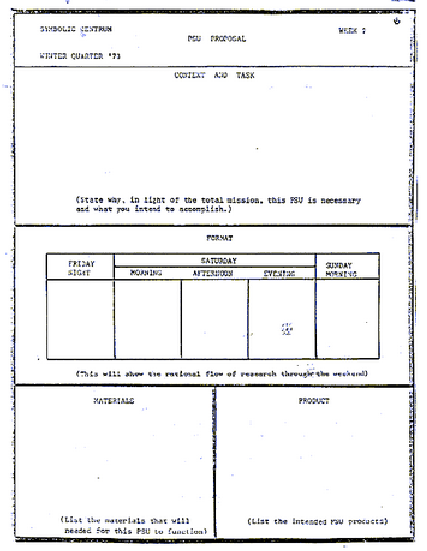
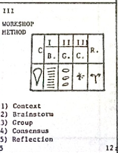
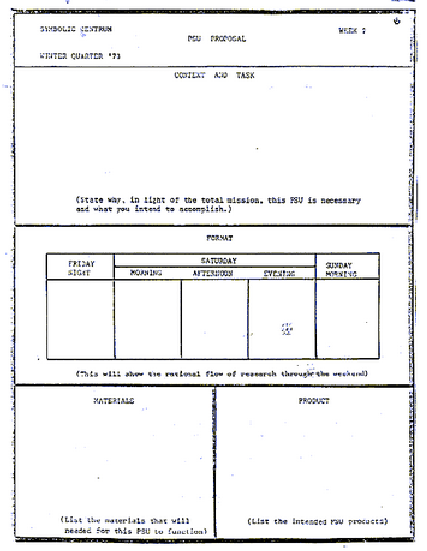
Any suggestions for a more simple form to commission and or document a seminar or a project? If you have one, I'd like to write it up and include it.
Steve <Screen Shot 2015-07-06 at 7.19.32 AM.png>
--
<Screen Shot 2015-07-06 at 7.12.00 AM.png>
Yes, Human Development Training Schools (HDTS) / Human Development Training Institutes (HDTI) counts, absolutely as a Imaginal Education application in local community development Got a date, author, title on your mimeograph copy? Let's try to see if it is - in a "private stash" somewhere that we can locate, scan and Dropbox to the Archives (your copy?) or - a findable digital item via the Archives Online database Find function Let's do put it in the Imaginal Education Collection chronology list as soon as we have a digital copy. Other Imaginal Education Applications to add? Steve — Sent from Mailbox On Tue, Jul 7, 2015 at 12:58 PM, James Wiegel <jfwiegel@yahoo.com> wrote:
Still unclear on focus of this . . . Wonder if the creation implementation and revision of the Human Development Training Schools (HDTS) / Human Development Training Institutes (HDTI) might count. Designed by a task group during the Global Research Assembly in the summer of 1975 or 76, revised on site in Maliwada, tested with 60 or so participants in the autumn of that year, revised, taught again in Maliwada, revised, taught again in Maliwada, then streamlined to produce larger numbers of graduates over the next several years. There is a bound, mimeographed copy of that curriculum in the archives (may be in the unaccessioned files that came from Phoenix). I also have a copy at my house. Curriculum was taken and revised / evolved for use a number of places, including Kenya, The Philippines, Indonesia and North America. Evolutions included 3 week versions, adaptations to developed urban situations and others. In each situation, the core of the curriculum was the actual host community and the development taking place there. A combination of imaginal frameworks, participatory learning approaches operating as a disciplined community and teams and development of participant capacity with ICA methods wrought substantial change in participants. This effort went on long enough and in several situations of close follow up that revisions were specifically crafted and redrafted to produce better results. Is this at all the kind of thing you are looking for?? Jim Wiegel 401 North Beverly Way, Tolleson, Arizona 85353 Tel. 011-623-936-8671 or 011-623-363-3277 jfwiegel@yahoo.com www.partnersinparticipation.com [We have] been pressed so hard towards useful work and rational calculation [that we have] all but forgotten the joy of ecstatic celebration. Harvey Cox Get ready to Celebrate the 25th Anniversary of the ToP Network. January 8-11, 2016. Here in Arizona. http://youtu.be/2uEoJlDC5mg Upcoming public course opportunities click here http://partnersinparticipation.com/?page_id=10 For online registration go to http://www.top-training.net The AZ ToP® Community of Practice meets the 1st Friday, 1-4 pm, starting again on Sept 5th at ACYR, 648 N. 5th Avenue, Phoenix, AZ 85003 AICP Planners: 14.5 CM for all ToP® courses
On Jul 6, 2015, at 08:30, steve har <stevehar11201@gmail.com> wrote:
Looking for a little help building a fuller chronology of Imaginal Education approaches and curriculum application examples (not 1 time events)
Not about facilitation and planning, but about teaching imaginal learning both depth inquiry & designing/creating innovations from preschool to adult education. Three Imaginal Education Approaches Seminar approach Action-research project (like a PSU) Simulation (like Training Inc and Machakos)
Can you add some more approaches or educational curricula to the Global Archives?
2010s Recent Chronology of Aproaches and learning curriculum John Oyler: 2010 Arizona Partners in Participation, Arizona Community Youth Resources Gilles: JWM Legacy Project In 2011 Jack did a skype call at Litibu on JWM Legacy Addington & Berdgall et al: Accelerate 77 Action Based Community Development Project In 2011-2 Jim Addingtion and Terry Bergdall used a combination of depth inquiry seminars and intern action research with university class interns to build the Accelerate 77 Chicago neighborhoods project. Write up by Karen Snyder Gilles Social Process Triangle Research 2014 Jack did an action research project partially online and onsite using google documents and a google hangout. Phillbrook: Social Process Triangle Applications, Taiwan Weybright: Nepal School Photo-Story School Project TRC School Kathmandu and ICE School New York City Wiegel: Online Book Studies: ReInventing Organizations, So Far From Home; Bengals: Buddha's Brain seminar in Boston Stover: Emerging Ecology Action Research for Greensboro NC
Global Archives Imaginal Education Collection Chronology for New Website 1960s-1970s Summer 65 Research Assembly Oral history writeup David Scott. The Scotts and the Fishels were tasked by Mathews to build the 1st Summer Program in 1965 and they meet as peers and adapted the CFLC curriculum + some of the 5th City research to that task. Advanced ITI Hong Kong (no record in the Archives) where David said there was seminar inquiry but also for local church cadres in SE Asia a lot of very specific PSUs on moving local churches forward - I guess beginning with something like the Lynch gridding model. 1980s 1990s Westside Leadership John Cock, Karen Snyder created a 1 day orientation for community leaders of ICA methods Training Inc By the 1980s both approaches were used in Training Inc for direct instruction, for doing world-of-work assignments inside a context. A 3rd imaginal education approach -simulation of a business was also developed. There were as many as 9 independent Training Inc in operation. Machakos Simulation Game Sue Wegner LaDonna Wagner developed and delivered a 4 hour board game used in Universities and USAID and ICA events to simulate local village development and replication Imaginal Education Methods in 1990 OliveAnn Slotta wrote a book Seminar approach for classroom teachers, Project Based Inquiry one on the Project Based Inquiry (action-research) approach
Any suggestions for a more simple form to commission and or document a seminar or a project? If you have one, I'd like to write it up and include it.
Steve <Screen Shot 2015-07-06 at 7.19.32 AM.png>
--
<Screen Shot 2015-07-06 at 7.12.00 AM.png>
participants (2)
-
 James Wiegel via Dialogue
 -
steve har via Dialogue